Jonathan Chew · · 8 min read
What Singapore does differently to fuel emerging tech

Summary:
- Partnering with corporates gives startups opportunities to test their technology against real operational needs and deliver meaningful impact at scale.
- Bringing deeptech solutions to market requires individuals who combine commercial experience with technical domain expertise, which can be supported by Singapore’s tight-knit ecosystem.
- Startups looking to scale beyond Singapore can navigate unfamiliar regulatory landscapes and different customer needs by leveraging ecosystem platforms like SWITCH and the Global Innovation Alliance to connect with overseas partners and test solutions in new markets.
- Discover how Singapore’s innovation ecosystem can help businesses scale globally and experience it firsthand at SWITCH 2026.
1.47 containers every second, or about 127,000 containers every single day – that’s the total handling capacity of Singapore’s ports.

Photo credit: Shutterstock
Now imagine what it’s like having to oversee not just operations in Singapore, but also in 44 other countries. That’s the job of global port operator PSA International.
Even at this scale, the firm continues to explore how new technologies can strengthen its operations. According to Alvin Foo, head of group engineering, technology, and sustainability at PSA International, the company takes a practical approach to innovation, starting with challenges and opportunities within its operations before working with partners to develop and deploy solutions.
One of the best ways for an organization of this size to continuously innovate is to work with startups that would jump at the opportunity to test their solutions in a real-world environment.
What enterprises need
According to Foo, PSA is focusing on AI for its innovation efforts. So far, it has engaged solution providers ranging from full-stack developers to technology component specialists. It also experiments with humanoid robots for coning and deconing operations.
PSA has also been working with Enterprise Singapore, the government agency that drives startup development in the country, to source and develop new technology solutions, including an embodied AI prototype for its stevedoring operations developed in partnership with international startups. The agency helped the port operator link up with both Singapore-based and international startups, giving emerging technology providers opportunities to apply their solutions against actual operational needs.
All this is done with a careful eye, says Foo.
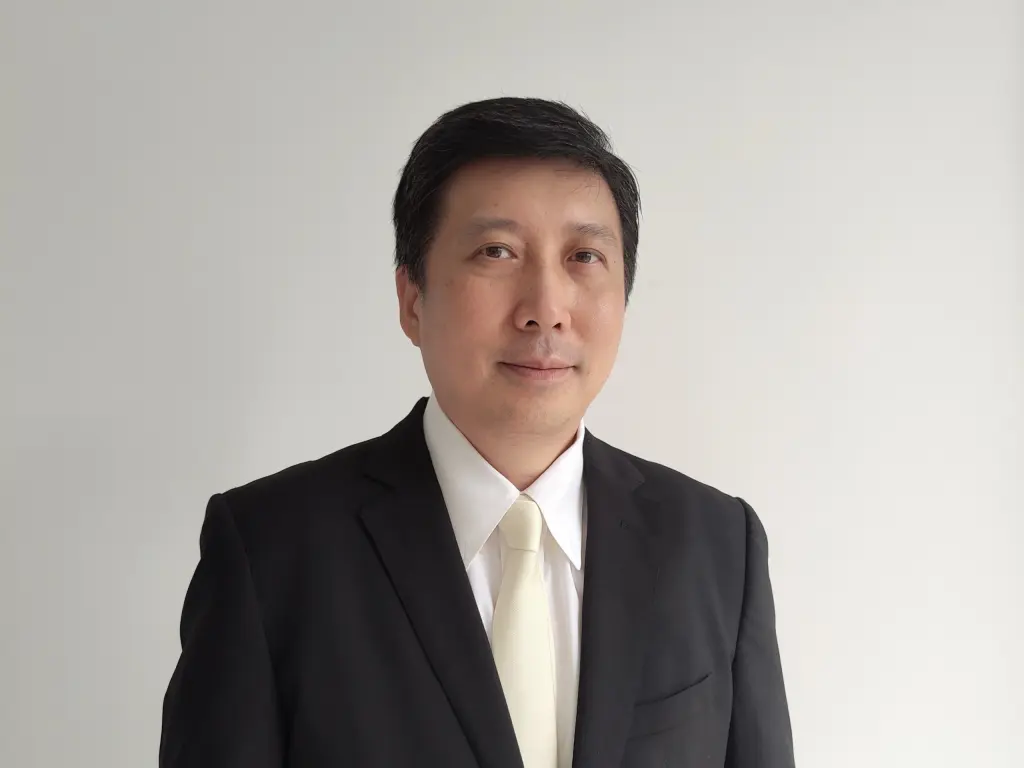
Alvin Foo, head of group engineering, technology, and sustainability at PSA International / Photo credit: PSA International
“PSA looks at factors including clear challenge-solution fit, operational readiness, scalability, and business value,” he explains.
Foo adds that a proposal may open the conversation, but trust is built through delivery. “PSA seeks innovations that can move beyond successful pilots and deliver meaningful impact at scale,” he says.
This shows that it’s imperative for startups to prove that their solutions can perform beyond controlled conditions. Partnering with corporates is often the most viable path, giving startups access to live operating environments as well as deep domain knowledge.
“The strongest startup-corporate partnerships turn promising technology into real-world impact. Startups gain the operational insight to build solutions that can scale, while corporates gain early access to emerging technologies that can sharpen their competitiveness,” says Sophia Ng, executive director for startup ecosystem development at Enterprise Singapore.

Sophia Ng, executive director for startup ecosystem development at Enterprise Singapore / Photo credit: Enterprise Singapore
Testing quantum solutions together
One example of such a partnership is the collaboration between quantum computing firm AngelQ and agri-food company Japfa.
Enterprise Singapore facilitated their connection, with both companies working together to identify use cases where quantum-enhanced methods could be applied in a real industrial setting. Through the partnership, the companies used AngelQ’s AI and quantum tools to analyze operational data and improve recommendations for Japfa’s animal farming and food production.
As the collaboration progressed, AngelQ moved from early modeling and experimentation to a functional system tested by end-users within Japfa’s operations. Working with Japfa’s domain experts helped AngelQ’s technical team adapt their technology to business needs.

Dimitris Angelakis, founder and chief scientist of AngelQ / Photo credit: AngelQ
“The collaboration gave us the opportunity to apply our technology to a genuine industry problem rather than a laboratory benchmark,” says Dimitris Angelakis, founder and chief scientist of AngelQ. “We’ve now established a pathway from proof-of-concept work toward controlled operational testing.”
Commercializing the solution and making it work
Getting solutions to work in real-world settings is an important step. However, turning it into something that’s commercially viable comes with a different set of challenges.
Bringing deeptech solutions to market often requires individuals who combine commercial experience with technical domain expertise, says Melvyn Yeo, founder and managing partner of investment firm Trirec. Founders must also navigate regulatory and compliance requirements that grow more complex as solutions move closer to market – challenges that are rarely isolated, with constraints in one area rippling into others.
“Singapore’s ecosystem is a more tight-knit community with many active private-public sector engagements,” Yeo says. “Most relationships of relevance are within two to three degrees of separation, which accelerates meaningful conversations to drive outcomes and decisions.”
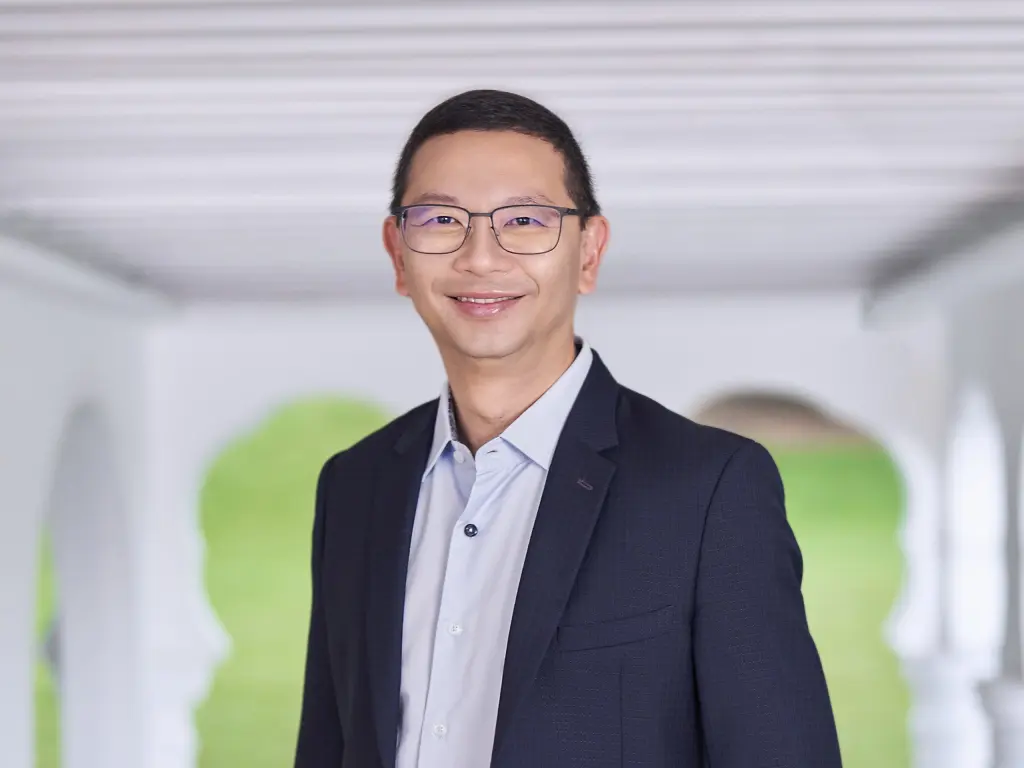
Melvyn Yeo, founder and managing partner of Trirec / Photo credit: Trirec
That density of connection helps with getting talent that has both commercial expertise and technical knowledge.
While Singapore’s pool is compact, it runs deep in research and development, with over 44,000 researchers, scientists, and engineers. Singapore also has programs – such as Entrepass, ONE Pass, and Tech@SG – to attract entrepreneurs and experienced professionals, as well as help startups build their teams and access specialised expertise.
Besides getting the right talent, the journey from lab to market for deeptech companies also tends to be longer and more capital-intensive than other startups.
The Startup SG ecosystem has helpful resources in this area, offering support such as Startup SG Tech’s early-stage funding for proof-of-concept and proof-of-value projects. There is also the Startup SG Equity fund, which co-invests with global institutional investors into Singapore-based deeptech startups and recently received a S$1 billion (US$780 million) top-up in government funding under Budget 2026.

To date, the Singapore government has invested more than S$560 million (US$436 million) and catalyzed over S$2.6 billion (US$2 billion) in private sector investment.
Navigating partners, funding, and talent acquisition can be challenging for startups, which is where Stage One comes in. It serves as a one-stop entry point connecting startups to the community, resources, and opportunities most relevant to where they are in their journey.
From Singapore to the world
For startups ready to scale beyond Singapore, entering a new market means they will deal with unfamiliar regulatory landscapes, different customer needs, and networks that must be built from the ground up.
Singapore’s startup ecosystem offers multiple channels to help firms overcome those challenges.
SWITCH, the Singapore Week of Innovation and Technology, brings together global startups, investors, and innovation partners, giving founders exposure and connections across markets. This year’s edition will also include market-specific programming and an inaugural pavilion dedicated to connecting startups with leading corporates and investors across Southeast Asia.

Last year’s SWITCH event, which focused heavily on AI, quantum tech, and more / Photo credit: Enterprise Singapore
There’s also the Global Innovation Alliance (GIA), which provides access to innovation networks across more than 50 countries. Through its programs, startups can gain market insights, connect with potential customers and partners, and test their solutions in new markets.
For Singapore-based healthtech company Neurowyzr, this meant securing a pilot partnership with chronic care platform OneMedic through GIA’s programme in Ho Chi Minh City, Vietnam.
The collaboration integrated Neurowyzr’s Digital Brain Function Screen into OneMedic’s AI Health Screening Platform, expanding its health screening capabilities to include brain and cognitive health. The completed pilot delivered over 1,000 brain health screenings across four deployments in Can Tho and Da Nang, including a corporate screening programme and a National Health Day event. The pilot allowed Neurowyzr to validate its technology in a new market while addressing Vietnam’s growing need for cognitive health screening.
GIA also facilitated a partnership with Mednefits, a Singapore-based employee benefits platform, opening up opportunities for Neurowyzr to offer brain health screening to companies on Mednefits’ platform in Singapore and Malaysia.
These partnerships have helped Neurowyzr explore new markets and potential customers, showing how access to local partners can help startups test their solutions and build opportunities for growth beyond Singapore.
The common thread
What a startup needs shifts as it grows: patient capital and specialized expertise to commercialize a technology; industry partners and real operating environments to validate it; and local knowledge and market access to expand overseas.
But the underlying need remains constant: access to the right people, resources, and opportunities at each stage of the journey.
“A startup’s trajectory is often determined not only by the strength of its technology, but by whether it can reach the right expertise, partners, and markets at the moment that matters,” says Enterprise Singapore’s Ng. “We are making deliberate efforts to build an ecosystem that enables corporates and startups to make connections more easily, and with the right support levers that enable tech deployment not just here, but globally.”
Currency converted from Singapore dollars to US dollars: S$1 = US$0.78
Enterprise Singapore is the government agency championing enterprise development. It also promotes the development of Singapore as a startup hub. It works with startups, investors, corporates and ecosystem partners to help innovative businesses build, commercialize, and scale globally from Singapore.
Discover how Singapore’s innovation ecosystem can help businesses scale globally and experience it firsthand at SWITCH 2026.
This content was produced by Tech in Asia Studios, which connects brands with Asia’s tech community. Learn more about partnering with Tech in Asia Studios.
Stay updated on the go with our mobile app.
Get latest insights with smoother, more personalized experience through TIA mobile app.
Recommended reads
 The truth about AI language models: No one wants to pay for them
 Tracking AI hiring in Singapore: OpenAI, Anthropic, and more
 Korea’s physical AI ambitions meet the factory’s bottom line
 SEA financials tracker: Moladin’s revenue rises 6% in 2025
 On‑demand services lift Line Man Wongnai’s 2025 revenue to $544m
 Flipkart’s costly late push into quick commerce and food delivery
 Inside Singapore’s government team that kills its own products
 Once an IPO hopeful, SCI Ecommerce nears collapse
 Who’s betting big on ChatGPT ads? Not Asian brands
 VC tracker: Granite Asia launches US$50 million fund





Editing by Stefanie Yeo and Lorenzo Kyle Subido
(And yes, we’re serious about ethics and transparency. More information here.)