- Premium Content It takes our newsroom weeks - if not months - to investigate and produce stories for our premium content. You can’t find them anywhere else.
 Goh Ruoxue · · 5 min read
New Trump tariffs deal ‘massive blow’ to Southeast Asia
On April 2, US President Donald Trump announced harsh trading tariffs, which could diminish Southeast Asia’s appeal for global businesses looking to diversify their supply chains. Billions of dollars in tech exports are poised to be affected.
ASEAN member states were slapped with the levies, ranging from the baseline 10% tax on all American imports to additional reciprocal duties that bring the final tariff to as high as 49%.
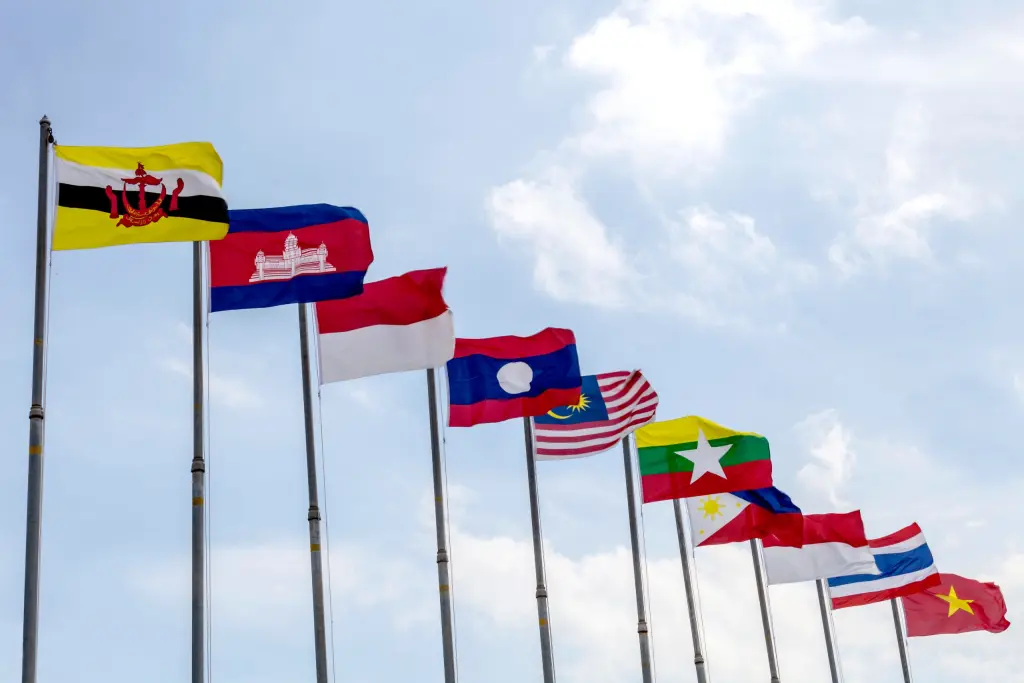
ASEAN member states must urgently diversify their export markets to seize growth opportunities./ Photo credit: Shutterstock
Tariffs are taxes imposed by a country on imports, often in a bid to protect its domestic industries. Putting tariffs on imported goods raises their prices domestically while damaging the exporting country’s economy by reducing their sales and revenue.
Katrina Ell, director and head of Asia-Pacific Economics at Moody’s Analytics, says the region has become increasingly dependent on the US as an export destination in recent years. Countries like Vietnam and Thailand, for instance, have large trade surpluses with the US.
A report from market research firm CreditSights, which is part of the Fitch Group, indicated that Vietnam exported US$48.5 billion worth of tech goods to the US in 2024, US$22.3 billion of which would be affected by the new tariffs. The same figures for Thailand were US$24.1 billion and US$8.7 billion, respectively.
“These latest tariffs are a massive blow for Southeast Asia, where exports are the backbone of the region, and the US is a large – if not the largest – single destination for goods,” Ell says.
Unlike during Trump’s first presidency, she adds, the region is now directly in the firing line for aggressive and high levies. “Trump’s latest tariff policy has made it crystal clear that ASEAN is no longer a viable alternative to circumvent tariffs on China,” she tells The Business Times.
“China plus one” on pause
As the trade war between the world’s two largest economies intensified, Southeast Asian nations had become attractive options for Chinese companies seeking to bypass US restrictions or for firms adopting a China-plus-one strategy. That advantage could soon fade.
Maybank’s regional co-head of macro research Chua Hak Bin says the China-plus-one story is not dead but may be on pause.
See also: The US-China tech rift’s surprising beneficiary: Southeast Asia
As a result of the new tariffs, “multinational corporations will think twice about future foreign direct investment,” he says. Firms that relocated from China to Vietnam, for example, now face high reciprocal US duties of 46%, which narrows the tariff divide with China significantly, he notes.
For China, the final tariffs amount to more than 65% if the freshly announced tariffs of 34% – as well as an earlier 20% levied since March and the existing average taxes of some 10% to 15% – are taken into consideration.
OCBC economists in a note issued on Thursday agreed that China’s prior strategy of sending exports through ASEAN may now be less effective.
Growth hit
Wiggle room
Stay ahead in Asia’s tech landscape
This is premium content. Subscribe to read the full story.
The region is no longer a viable option for multinational corporations seeking to bypass tariffs imposed on China.
We know this is not ideal. ⌛ Sign up in 20 seconds. Cancel anytime.
Our subscriber community includes professionals from these companies:





Stay updated on the go with our mobile app.
Get latest insights with smoother, more personalized experience through TIA mobile app.










📅 Upcoming Events
22 October 2026
Payoneer x CSPN Summit 2026