- Premium Content It takes our newsroom weeks - if not months - to investigate and produce stories for our premium content. You can’t find them anywhere else.
 Aditya Hadi Pratama · · 4 min read
This Indonesian healthtech firm checked out of hospitals to run clinics
Serial entrepreneur Harya Bimo founded Medigo in 2018 because he saw a problem and an opportunity. He had noticed that hospitals in Indonesia still did things manually, so the healthtech startup was born to help digitalize the processes. At around the same time, total spending in the country’s healthcare sector hit US$28 billion, indicating a big market potential.
Soon after being established, Medigo raised seed funding from Venturra Discovery to be more aggressive in penetrating the market.
Medigo started its journey with a bang by signing a partnership to digitalize 70 hospitals belonging to state-owned enterprises. However, it needed a year to complete its first project, with the company handling everything from system implementation to user education.
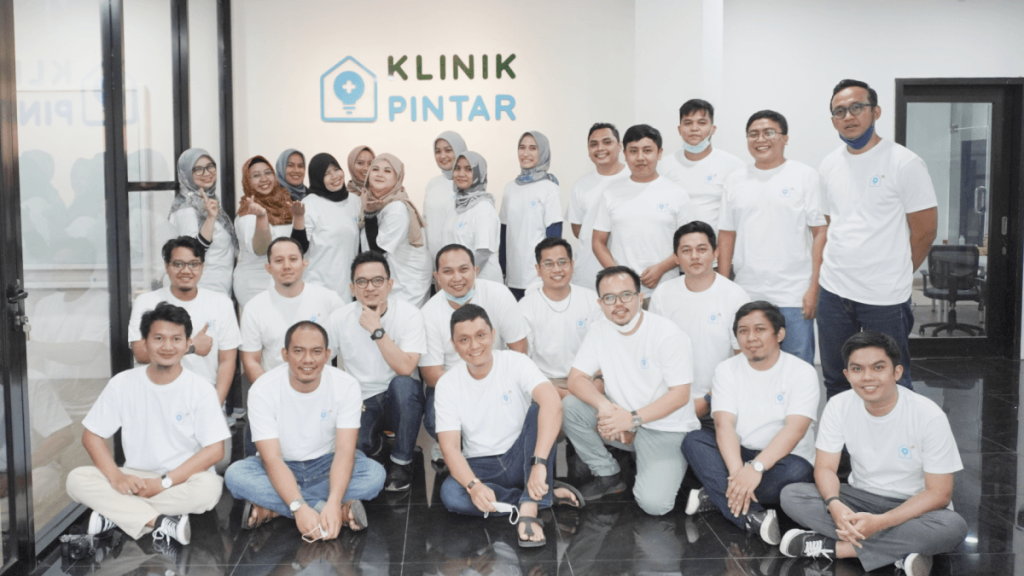
Klinik Pintar team / Photo credit: Klinik Pintar
Despite the good returns, Bimo realized what an arduous task it was to build a sustainable and scalable business model around hospitals.
“If it takes a year to complete digitalization at one hospital, when do we finish with the remaining 69?” Bimo recalled what he thought at that time.
In March 2019, he redirected his focus to clinics. Many locals often get a checkup there first before going to the hospital for further treatment if necessary.
This pivot was followed by Medigo’s rebranding to Klinik Pintar, which means “smart clinics” in English.
The strategy has required huge capital, but the firm believes the change was crucial for its sustainability. To manage the downsides, Klink Pintar looks for non-equity investors who are willing to provide upfront capital and share the clinics’ revenue with them.
As startups cut costs and jobs amid the current economic slowdown, this seems like a good strategy for survival.
Finding the right prescription
Clinics and community health centers are the go-to places for 71% of Indonesians seeking primary care, according to the Ministry of Health. However, they fall behind in terms of satisfaction and still use manual methods for doctor scheduling, patient registration, and transaction processing.
Klinik Pintar provides a software-as-a-service solution to cater those pain points. In its early months, it acquired around 300 clinics as its users. However, the firm admits that the conversion wasn’t really good.
The startup changed its business model once again at the end of 2019 to focus on helping those clinics buy medicine and medical equipment. Bimo recognized this opportunity as many clinics – even those in Jakarta – still procured their medicine supply from black markets.
Different from telemedicine players
Stay ahead in Asia’s tech landscape
This is premium content. Subscribe to read the full story.
Klinik Pintar’s journey evolved from digitalizing state-owned hospitals to ultimately modernizing and managing small clinics.
We know this is not ideal. ⌛ Sign up in 20 seconds. Cancel anytime.
Our subscriber community includes professionals from these companies:





Stay updated on the go with our mobile app.
Get latest insights with smoother, more personalized experience through TIA mobile app.











📅 Upcoming Events
22 October 2026
Payoneer x CSPN Summit 2026