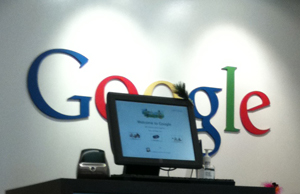
 We learned that Google is on a hiring spree this year. 6000 globally but what’s the breakdown figure for Asia?
We got it: Google plans to recruit more than 500 new googlers in Asia. The job ranges from sales to engineering. If you haven’t already known, Google has recently launched a new sales office in Malaysia to further develop its business in South East Asia.
With so many new googlers in Asia, what is Google up to? We managed to grab hold of Julian Persaud, Managing Director of Google Southeast Asia, to share with us Google’s view and strategy in Asia.
W: I love how Google is focusing on Asia. Care to elaborate?
J: Yes, the Asia Pacific region not only has the highest population (56%) and largest Internet user base (41%) of all the regions, it also has 27% of the world’s GDP. The recent opening of our Malaysia office is the first since Singapore in 2007. It shows our deepening investment and commitment to Asia and more specifically in Southeast Asia, which is one of the world’s fastest-growing regions.
W: So, 500 new Asian googlers. Which Google office and what are the jobs available?
J: Google is hiring in many offices throughout Asia, including over a hundred positions just for Southeast Asia/Singapore alone. The job scope varies from office to office, but the roles will be primarily split between engineering and sales. For all the listings in all our Asian offices, you can visit our jobs site. On the engineering side, many significant projects involving Google Maps, YouTube, Android, Search and Ads are being led by our Asia engineering centers. On the sales side, our new hires will be helping businesses make the most of the Internet to grow their companies and attract more customers in this region.
W: What’s Google’s direction/plan in Asia?
J: Southeast Asia is a very diverse market where you have an advanced tech market like Singapore, maturing tech markets like Malaysia and Thailand, and fast-growing tech markets like Philippines, Indonesia and Vietnam.
For advanced and maturing tech markets, we’re focused on connecting users with advertisers and launching more advanced web services and collaboration platforms like Google Maps and Google Docs. For fast-growing tech markets, we’re trying to expand access to the Internet and present users there with even more reasons to live their lives online.
On the business side, we want to grow the region’s digital economy. With 83% of digital consumers using the Internet to inform their purchase decision, becoming part of that ecosystem should be a priority for all businesses to avoid being left out. To aid this, we are improving the ways in which we connect businesses with consumers searching for their products and services. We are introducing new ad formats that include ones specially tailored to mobile phones. We are also expanding into display advertising, and making sure that even the smallest business can easily have a web presence through which its products are promoted.
We are also excited about Chrome and are looking to expand its usage across the region. Google’s Chrome browser is already widely used; the Philippines, for instance, has the highest Chrome market share in the world (nearly 40% according to third-party website Statcounter). We believe this shows the need for a simple and speeding web browser that lets people experience the richness of the Internet. For similar reasons, we also believe Chrome OS, a web-based operating system modeled after Chrome that is primarily for netbooks, will also be adopted by those living their lives online in Asia. Like the Chrome browser, it is also built around the core tenets of speed, simplicity and security.





Stay updated on the go with our mobile app.
Get latest insights with smoother, more personalized experience through TIA mobile app.










📅 Upcoming Events
22 October 2026
Payoneer x CSPN Summit 2026