- Premium Content It takes our newsroom weeks - if not months - to investigate and produce stories for our premium content. You can’t find them anywhere else.
 Ardi Wirdana · · 7 min read
Are SEA’s tech VCs missing out on the crypto craze?
In 2018, the team at VC firm Intudo Ventures was on its usual hunt for US-based Indonesian founders when it met Jeth Soetoyo. At the time, the Harvard student was starting a cryptocurrency exchange called Pintu.
Like almost all of its peers then, Intudo was not seeking to land a deal in the cryptocurrency space. However, Soetoyo’s “high degree of conviction, passion, and market-fit for Indonesia” convinced the firm’s partners to lead Pintu’s initial financing round in March 2019.
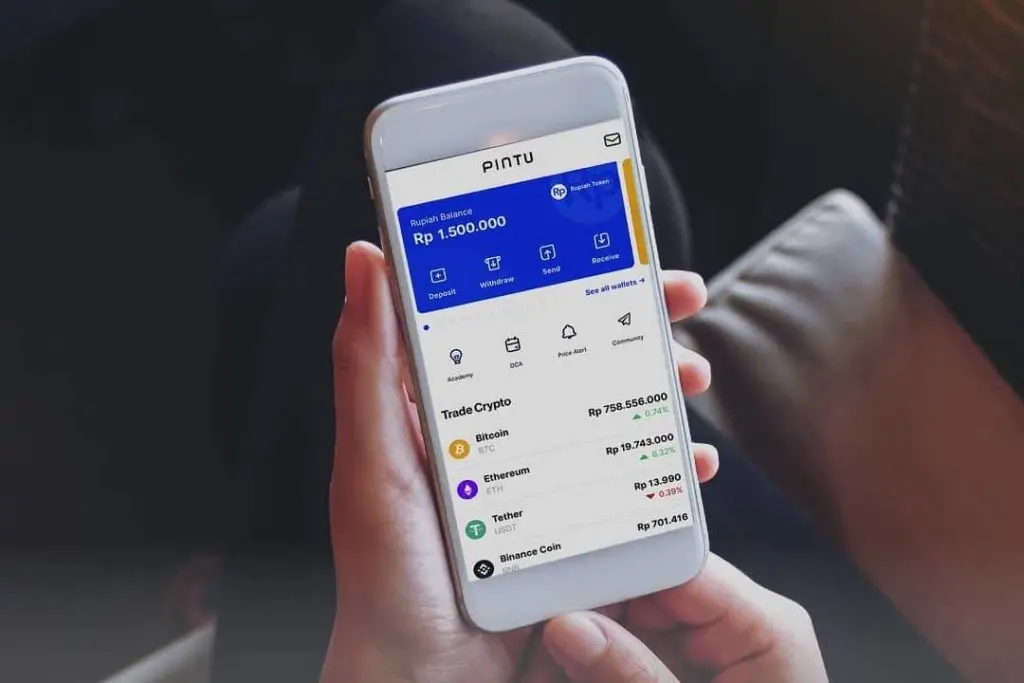
The Pintu app / Photo credit: Pintu
Today, as crypto-related sectors like blockchain, Web3, and the metaverse appear to gain steam, Intudo is still an anomaly. It is one of only a handful of conventional tech VCs in the region that has crypto firms in its portfolio.
When Pintu raised a US$35 million series A+ funding round in August last year, for example, Intudo was one of only two conventional tech VCs on the company’s cap table of 11 investors. The VC firm was also the only one from Southeast Asia, with Pintu’s nine other backers being US and China-based crypto funds.
This is far from an isolated case in the region.
Tech in Asia data shows that Southeast Asia’s crypto startups collectively raised funding from over 150 investors last year. Of these backers, only 11 are conventional tech VCs based in the region. These include Singapore’s Vertex Ventures and B Capital, Indonesia’s BRI Ventures and Intudo, and Thailand’s SCB 10X.
The rest are mostly global VC firms specializing in the crypto sphere, such as Coinbase Ventures, Pantera Capital, and Alameda Research.

Different ball game
For Intudo founding partner Eddy Chan, the limited participation of local tech VCs in the crypto space is not surprising. After all, the nature of crypto investing is markedly different compared to venture investing.
For example, pure-play crypto companies, he explains, often like to build “party rounds,” fundraises where many investors participate but often don’t have a lead backer. These firms seek out investors that can provide access to retail backers and have large global followings.
Typically, the allocations into these rounds are small due to the large number of participating investors, which makes it difficult for VCs to build positions and requires that they employ a more index-based approach to investing.
The way portfolio companies are managed also differs significantly. Traditional tech VCs usually focus on maintaining and growing positions in promising companies over an extended period until a major event like an IPO or M&A. For crypto firms, however, investors may look to liquidity early on or watch trade activity to time sell-offs, operating more like hedge funds. As is the case, managing these companies requires a different set of skills and timeline expectations.
Picking preferred partners
Community over capital
Stay ahead in Asia’s tech landscape
This is premium content. Subscribe to read the full story.
Despite crypto and blockchain technology gaining steam, Southeast Asia’s tech VC firms have been slow to jump on the bandwagon.
We know this is not ideal. ⌛ Sign up in 20 seconds. Cancel anytime.
Our subscriber community includes professionals from these companies:





Stay updated on the go with our mobile app.
Get latest insights with smoother, more personalized experience through TIA mobile app.











📅 Upcoming Events
22 October 2026
Payoneer x CSPN Summit 2026