 Samantha Cheh · · 5 min read
Scaling a startup is hard. Huawei wants to make it easier

Startup life is often romanticized and glamorized, but breaking into scaleup status can be daunting and expensive even for the strongest contenders. Startups are most likely to crash out at this stage because they have limited access to the key resources, talent, or connections that could take them across the threshold.
Since they are critical cogs in the greater economic machine, it’s important that startups get the help they need. As cradles of innovation and experimental thinking, they help address “unmet needs” in society that tend to be ignored by more established firms.
For Chinese tech giant Huawei, supporting digitally-native startups has long been a central pillar of its overall growth strategy.
“Startups are vital contributors to local ecosystems,” said Jacqueline Shi, president of global marketing and sales at Huawei Cloud, in her keynote speech at the recent Huawei Connect 2022 conference. “It’s only when local ecosystems are healthy that you can get sustainable digital transformation that is much deeper.”
A familiar face
Over the years, Huawei has been investing in startups and connecting them to the resources and expertise they need to scale by launching programs and initiatives not just in Southeast Asia but also in Latin America and Africa. Case in point: Huawei Spark Ignite, a competition-like accelerator, gives startups access to the firm’s proprietary cloud computing infrastructure and extensive network.
“The Spark accelerator is all about forging open collaboration and innovation so the right people can connect and flourish,” said Leo Jiang, chief digital officer for Asia Pacific, at the 2022 edition of Huawei’s Spark Founders Summit.

Leo Jiang,Huawei’s chief digital officer for Asia Pacific / Photo credit: Huawei
Huawei’s support is not limited to startups – it has been extended to established firms looking to step up their digital game. One of them is Thailand’s Siam Commercial Bank, which has plans to accelerate its digital lending business and gain 200 million digital users by 2026.
With the help of Huawei’s cloud technology, the bank built a cloud-native platform to support a digital loan application process. This reduced the turnaround time for approvals to minutes, garnering the bank 45,000 new digital customers within a three-month period.
An ecosystem-wide approach
Bolstering startups through financial resources and connections, however, may not be enough if the necessary internet infrastructure and high-speed connections are not in place.
This is especially true in Southeast Asia, where many regions struggle with a persistent digital divide. This is why Huawei has taken a whole-ecosystem approach focused on improving local cloud infrastructure.
At the Connect 2022 conference, the firm unveiled new data centers in Indonesia and Ireland that would expand its network of cloud “regions” to more efficiently address the growing need for high-speed cloud computing capabilities among startups. Huawei Cloud CEO Zhang Ping’an pointed out that the expanded network would allow the company to manage a cloud service for startups, leaving them to focus on scaling.
“It’s as easy as turning on a tap, at a lower cost and smaller carbon footprint,” he said. “This is the future we are looking at – everything on the cloud.”
Shi touched on several “capability programs” that Huawei has devised to support startups looking to scale internationally. Digital advertising firm ReverseAds, for one, leveraged the Huawei Cloud Startup Program to not only expand into Thailand, Singapore, and South America, but also to raise its series A funding. Collectively, Spark’s portfolio startups have raised more than US$50 million in the last 12 months.
This is the future we are looking at – everything on the cloud.
Other programs include the Go Cloud, Go Global initiative, which seeks to empower startups with Huawei’s extensive globalization and localization experience, and the Cloud Native Elite Club, a networking group that aims to advance cloud innovations through collaboration and knowledge sharing.
Jiang shared that in Southeast Asia, Huawei has launched a cloud-based sandbox scaling solution for startups’ software development needs. This combines access to DevCloud – a DevOps platform that makes it easy for startups to write, test, and deploy code at a low cost – and HMS Core, a mobile app development platform.
“The no. 1 challenge for Southeast Asian startups is scaling up and expanding beyond their home country,” said Jiang. “If you are bold enough to build something revolutionary, we’re here to help with your expansion journey.”
Hit the ground running
Judging by the slew of future solutions and initiatives announced at the Connect 2022 conference and the Spark Founders Summit, Huawei is not slowing down its efforts to support startups’ scaling ambitions.
During the event, the company announced more than 15 forthcoming products and services across its cloud native and AI segments that would zero in on innovation-driven impact.
Within the cloud native segment, Huawei plans to release two products: a more powerful container engine called the CCE Turbo and the Ubiquitous Cloud-Native Service, which would enable companies to centralize and speed up their cloud management. According to Shi, both services are designed to help startups expand their reach at minimal cost and labor.
“We believe that cloud native technologies will be the best path for enterprises to embrace agile application modernization,” said Shi. “On the other hand, AI is core to improving the efficiency and innovative experiences needed to drive digital transformation.”
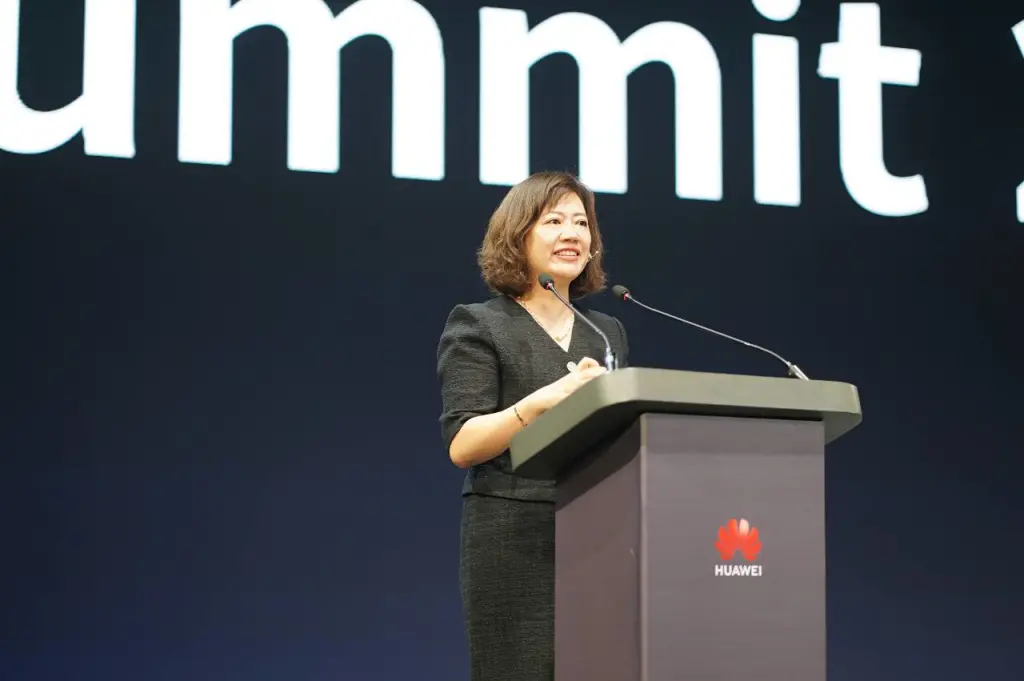
Jacqueline Shi, president of global marketing and sales at Huawei Cloud / Photo credit: Huawei
In order to drive up the accessibility of AI models, Huawei will introduce ModelArts, a single interface system that makes it easier for startups to develop their own algorithms with the support of a library of trainable Pangu foundation models. The Pangu models have already been tapped for drug development, and Shi said they are also currently being used to provide smart marine navigation for sea-based travel.
Jiang shared that the Spark program will continue to build on its momentum with the launch of an incubator that will nurture seed-stage startups based in Singapore. Built in partnership with the city-state’s government, the incubator takes a three-pronged approach, equipping startups with not just tech and funding but also Huawei’s business expertise.
“If startups aspire to become like F1 drivers, we want to be the team that provides them with the best car,” he said in conclusion.
“We’re racing to build out and build up these startups. The question is, are they ready to hit the ground running?”
Huawei Cloud opens up Huawei’s 30-plus years of expertise in ICT and digitalization to partners, customers, and developers. This enables them to dive into the digital world and work with Huawei to build the cloud foundation for an intelligent world.
Find out more about Huawei Cloud on its website.
This content was produced by Tech in Asia Studios, which connects brands with Asia’s tech community. Learn more about partnering with Tech in Asia Studios.
Stay updated on the go with our mobile app.
Get latest insights with smoother, more personalized experience through TIA mobile app.
Recommended reads
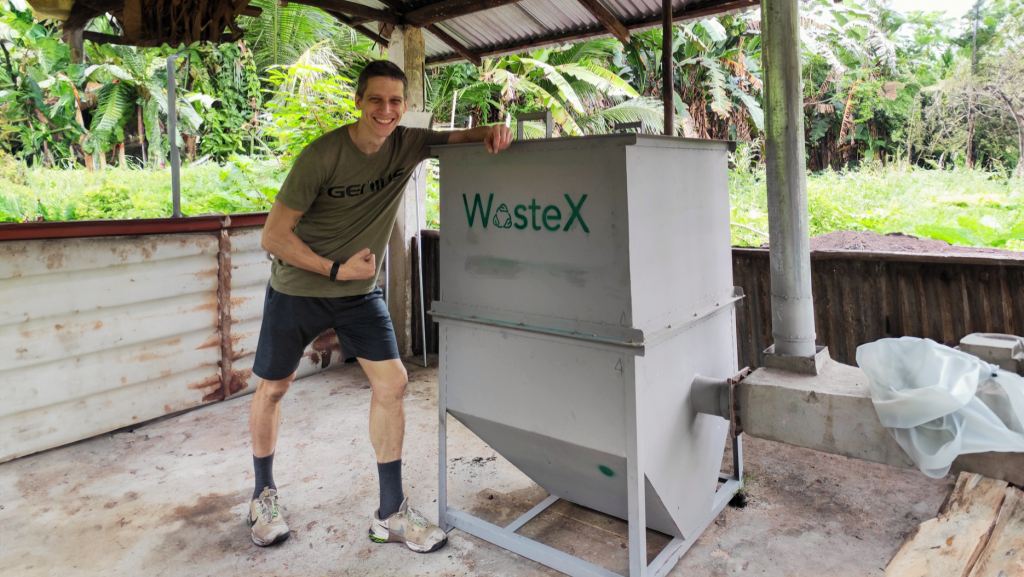 Wavemaker-backed WasteX raises $450k to expand biochar solution across Indonesia
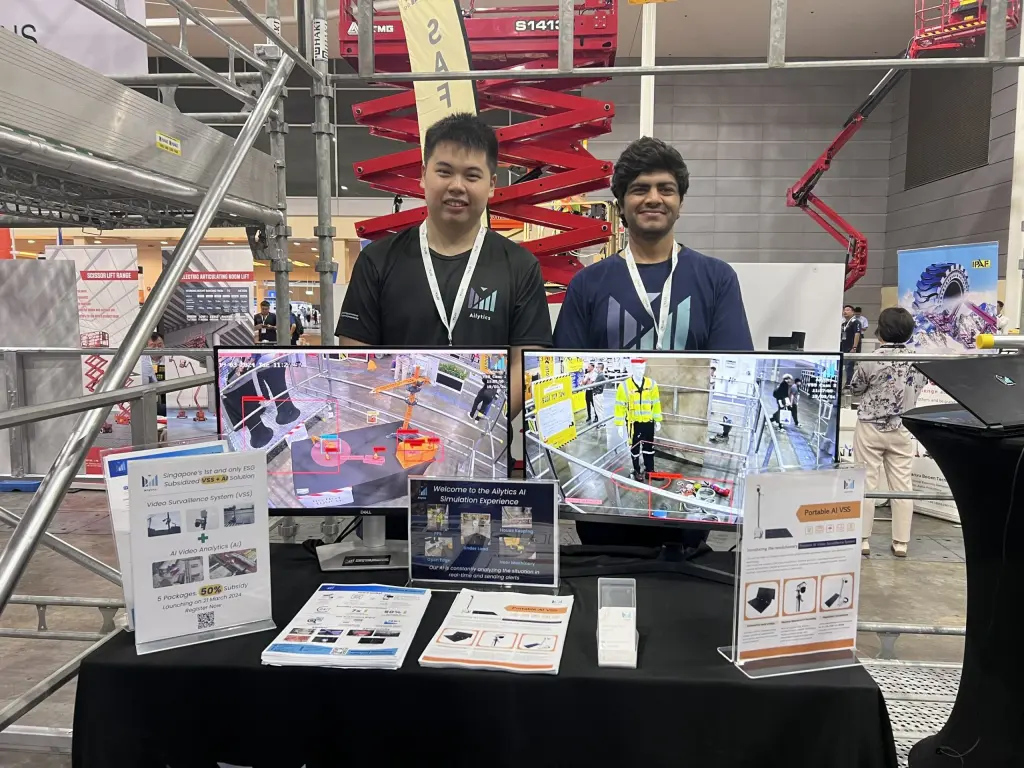 Tin Men Capital injects $2.7m in AI software startup’s pre-series A round
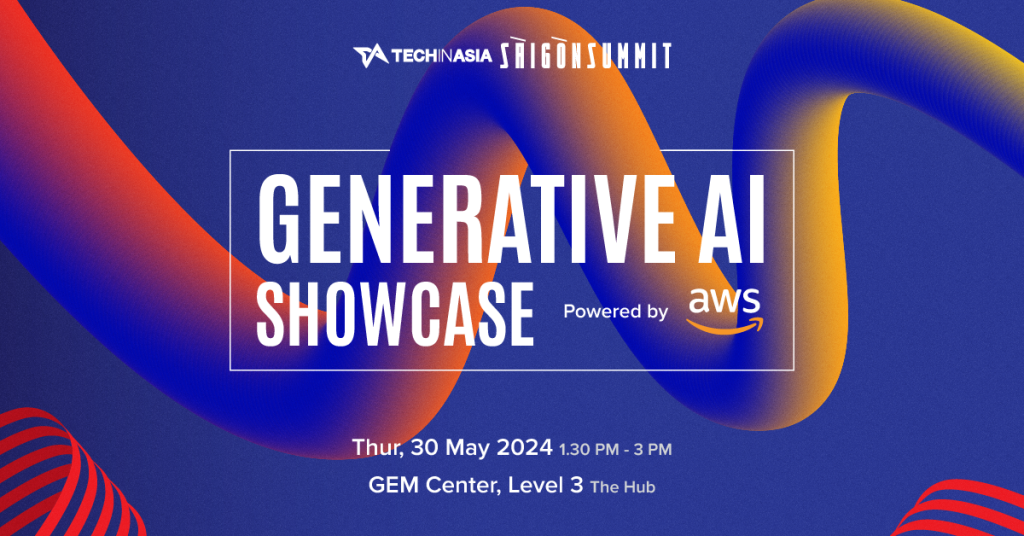 Decode the future: Experience the GenAI Showcase at Saigon Summit
 Singapore AI startup obtains $5m in Square Peg-led seed round
 Singapore-based ‘Web3 development stack’ secures $6m
 Peak XV’s Surge leads $2.75m seed round of Indian log analytics firm
 Living Lab Ventures to help global startups enter Indonesia with new launchpad
 DailySocial.id pivots to AI-powered research, consultancy with DiscoveryShift
 These are Asia’s most active investors in AI
 SG healthtech firm bags $7m from Aldevron co-founder, 22Health Ventures





Editing by Winston Zhang, Nathaniel Fetalvero, and Eileen C. Ang
(And yes, we’re serious about ethics and transparency. More information here.)




📅 Upcoming Events
22 October 2026
Payoneer x CSPN Summit 2026