Josh Horwitz · · 7 min read
Meet the company stamping bloatware on millions of emerging market smartphones
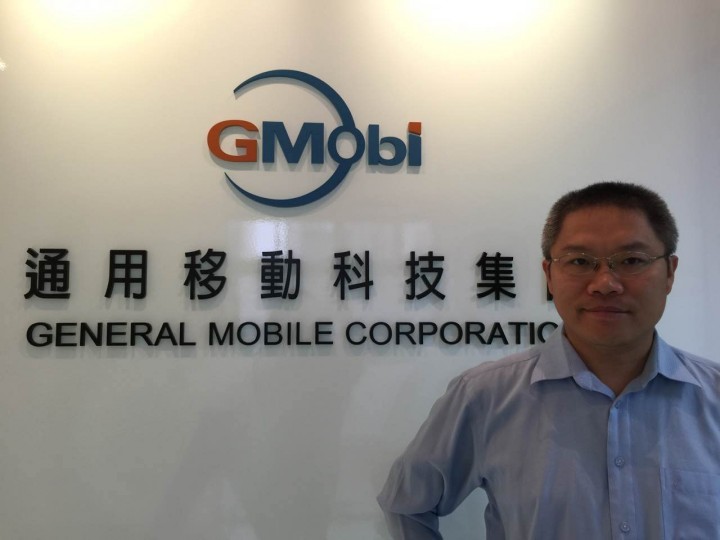
Paul Wu, CEO of GMobi
Most phones come packed with a lot of junk. Activate any newly bought Android phone, and you’ll be greeted with a handful of games you’ll never play and utility apps you’ll never use. But it’s important to remember that behind every piece of bloatware is a hard-won handshake. By mutually agreeing to invade your smartphone, app publishers get reach, and smartphone brands get cash.
GMobi is a Taiwan-based startup that earns money by facilitating these handshakes. For four years, the company has brokered pre-installs, built white-label app stores, and driven firmware updates for dozens of smartphone brands. While not world-famous, these brands make up a sizeable chunk of the long-tail for mobile devices. Hypothetically, if a Russian activates a newly-purchased Fly smartphone, it’s possible that GMobi put Opera Mini on the homescreen. And if a Karbonn owner in India spends 50 cents on a Candy Crush power-up, GMobi might take a cut.
The company offers several different services for its clients. On “almost-smart” feature phones, GMobi manages white-label app stores. It takes a cut of each app-related purchase, and also also monetizes through app store promotions.
On Android smartphones, the company provides firmware updates (FOTA) for phone brands, and sells ad space on this on-screen real estate. It also lets publishers and phone brands send out push notifications to end users promoting apps or new products. These too serve as a form of advertisements.
Finally, across all device types, the company leverages its network of app publishers and phone makers to broker pre-install deals. The company provides analytics so brands and publishers track the performance of all apps and ads.
Collectively, all of these services fit under an umbrella the company calls Go2Reach.
Non-disclosure agreements prevent us from showing pictures of real analytics pages for Go2Reach’s publishers, or homescreens of smartphone brands that use GMobi to book pre-installs. But the company’s promo video broadly explains how these services fit together.
According to CMO Richard Wang, GMobi doesn’t charge a base fare for access to its services, and earns money almost solely through revenue sharing agreements with advertisers (which could include both app publishers or phone brands). But these revenue sharing agreements vary from party to party. Its overall business model resembles that of a mobile ad network, but one that must consider the needs of OEMs.
“Let’s say I have a mobile game advertiser that wants to promote in Vietnam. They’ll come to us and tell us they’ll be willing to pay, for example, 50 cents per registered user,” explains Wang. “Then we’ll go to the OEM, and they might say they want to charge 20 cents per installation across their 2 million devices. So we enter this negotiation process and find a middle.”
From a bird’s eye view, GMobi is an important company if only for one thing – it’s set to ride a smartphone explosion in Asia and Latin America. According to IDC, device shipments in “developed markets” experienced single-digit growth for the first time in Q3 2014, but collective growth among “emerging markets” clocked in at over 30 percent. Gartner expects that by 2018, 78 percent of global smartphone sales will come from developing economies.
For publishers and manufacturers that work in relative isolation, GMobi acts as a connecting force. It helps helps software firms that know nothing about India leverage Indian smartphone brands to reach Indian consumers. On the flip side, it helps local device vendors earn money from global publishers with deep pockets.
“We are in the segment that is generally hard to reach by traditional ad networks. In our database, we discovered that many of our users don’t even have a Google account,” says Wang. “[For manufacturers], our position is that we try to [help] customers who don’t have the economies of scale to build out an in-house mobile services team.”





Stay updated on the go with our mobile app.
Get latest insights with smoother, more personalized experience through TIA mobile app.