J.T. Quigley · · 6 min read
Ecomott melts snow, lowers noise pollution, and gives the power of IoT to anyone
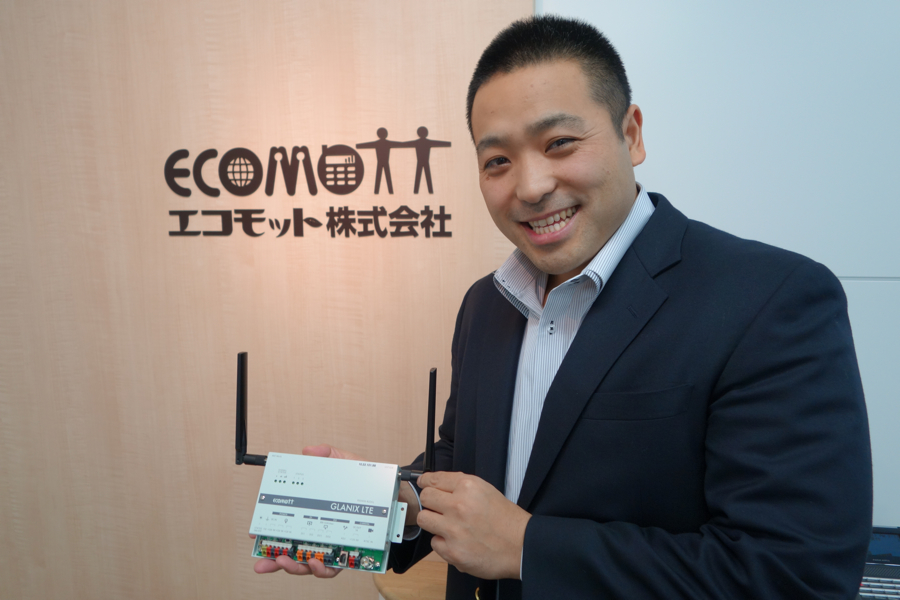
Before the dawn of the smartphone, Takuya Irisawa was working at what would arguably become his home city of Sapporo’s most famous tech company. From 2002 to 2007, Irisawa was the manager of Crypton Future Media’s ringtone division. Back when flip phones were king, his team was raking in the yen.
“We were selling a lot of ringtones and generating a substantial amount of monthly revenue,” he tells Tech in Asia. “It was a very successful business, but I never actually saw my customers using the product. It gave me kind of an empty feeling. I wanted to do something good for society and make a more social business, one that uses mobile technology to solve environmental or social problems.”
Irisawa left Crypton and founded his startup, Ecomott, in Feburary, 2007. The move came just months before Crypton gave birth to Hatsune Miku, the most popular virtual idol that Japan – and the world – has ever seen. With no regrets, and despite his many connections in the local tech scene, Irisawa opted to bootstrap, embarking on his entrepreneurial path with just “JPY 100,000 (US$850) and a computer.”
Snowed in
Keeping true to his roots, Irisawa opted to build his business locally in Sapporo, the prefectural capital of Hokkaido, Japan’s northernmost island. The city is home to nearly two million residents, making it the fourth-largest in Japan by population. With annual cumulative snowfall of about six meters, it is also one of the snowiest major cities on the planet.

What a Sapporo street usually looks like by the end of November.
The snow falls so heavily and so often that shoveling – be it by hand or by plow truck – becomes too time consuming, expensive, and potentially dangerous. For this reason, some parking lots opt for under-the-pavement heating systems to melt the snow before it accumulates. This is achieved by a system of hot water pipes beneath the lot that are heated by large boilers.
“These boilers use a lot of oil to power them,” explains Irisawa. “There’s a snow sensor that causes the boilers to turn on when it starts snowing, but they’re not so sophisticated. They often turn on even when there’s no fresh snow.”
Because of the sensors’ unreliability, staff members often have to drive out to the parking lot to turn them off and on manually – wasting even more fossil fuel in the process.
“I knew this problem needed a remote solution,” Irisawa says, “so I designed our first product, Yurimott, to solve it.”
Yurimott is a remote monitoring system, connected to domestic telco KDDI’s 3G wireless network, that employs a 24-hour camera, a more sophisticated sensor array, and physical staff to keep tabs on a client’s property. If snow begins to accumulate on a lot, an alert is sent to monitoring staff, who can decide whether or not to switch the boilers on. When the snow stops, they switch it off. It’s an incredibly simple solution with a major cost benefit – the startup’s more than 1,000 clients across north and northeastern Japan have, on average, decreased their oil usage by 40 percent annually.
Don’t fail, pivot
While Yurimott was an early success for Irisawa, he realized that his business needed to offer more than one service.
“We were busy in the fall and winter, but obviously not in spring and summer,” he says. “To keep the business strong, we needed to operate year round.”
An IoT revelation
Hokkaido pride





Stay updated on the go with our mobile app.
Get latest insights with smoother, more personalized experience through TIA mobile app.