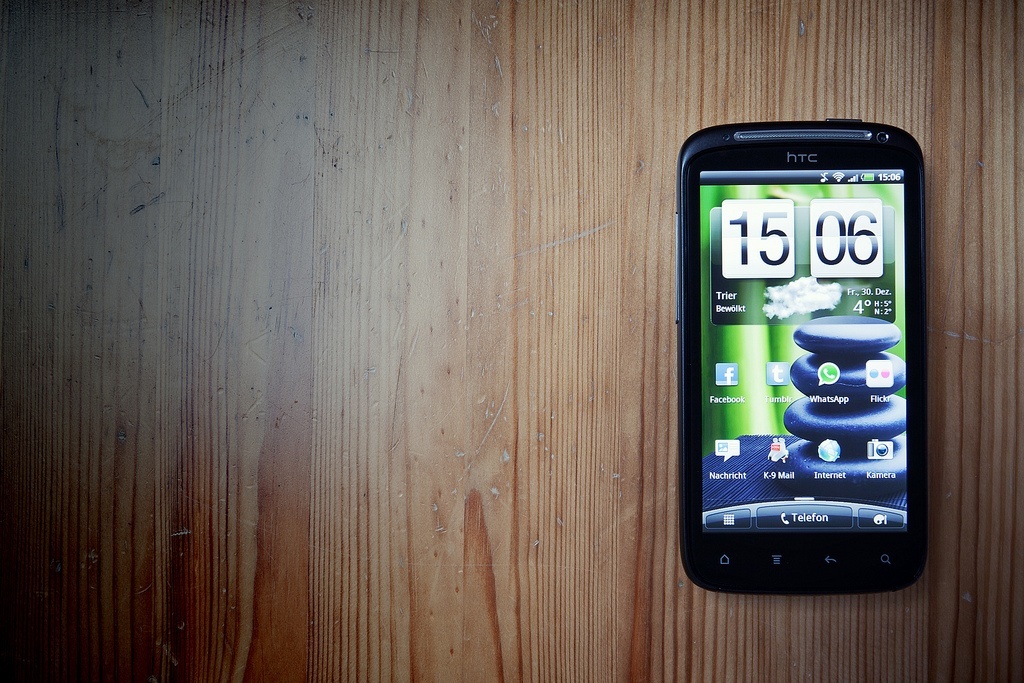
HTC Sensation from 2011. That was the year HTC’s success, spurred by its focus on Android, started to unravel (Photo by 55Laney69)
It took hundreds of millions of years for dinosaurs to evolve, but it takes only a few years for a hot smartphone brand to turn into a dinosaur. That’s what happened to HTC.
You probably heard of HTC for the first time in 2008 when the plucky Taiwanese firm launched the first Android phone in conjunction with Google. You very likely owned a HTC Desire in 2010. And then you probably upgraded to something else. It’s not that the phones were bad – indeed, HTC was and still is known for great design and a focus on quality. But smartphones are a tricky business, and rival brands soon caught up and overwhelmed HTC. Those competitors whipped HTC from all angles – with lower prices, with stronger specs, with catchier designs, and with insanely massive marketing budgets.
Now that smartphones are ubiquitous with more than 1.3 billion shipments in 2014, HTC is relegated to a minor player, beaten down by Apple, Samsung, Xiaomi, and a host of other brands. HTC’s share price is now so low that it’s on the verge of no longer being a billion-dollar company. So much for first-mover advantage. Indeed, HTC peaked too early. The smartphone market grow modestly from 2007 to 2010, and it was only in 2011 that a period of hyper growth started. 2011 was the year Samsung got ahead of HTC in terms of sales.
Here’s our infographic showing some of the key moments in the rise and fall of the brand – as well as five fundamental reasons why it failed.

Hat-tip to data and analysis from The Overspill, Asymco, and IDC stats from 2008 to the present day.
Infographic and illustrations by Andre Gunawan; editing by Osman Husain and Terence Lee
(And yes, we’re serious about ethics and transparency. More information here.)





Stay updated on the go with our mobile app.
Get latest insights with smoother, more personalized experience through TIA mobile app.