Will Chin · · 6 min read
Dental tech startup bites into 20% of the clear braces market in Singapore
A trip to the dentist can be a harrowing experience, even for adults. There’s something about the sharp whir of the polisher, the scraping of the scalers, and the mix of spit, blood, and mouthwash at the end of a cleaning session that continues to induce abject terror. Now imagine that you’re a 13-year-old kid going to what you thought was a routine checkup, only to be told that you need to wear braces for the next four years.
This isn’t a made-up scenario – it happened to me. I remember every tooth extraction, every mouth ulcer, and every time a classmate called me Jaws. No, I don’t mean the infamous cinematic shark; I’m referring to the James Bond villain with a deadlier version of this dental adornment from The Spy Who Loved Me.
In an interview with Tech in Asia, Julian Artopé, founder and CEO of cosmetic dentistry startup Zenyum, recalled how his childhood was defined by the braces he wore. That’s partly what fueled his mission to help patients straighten their teeth with clear aligners, but at a much lower cost.

Zenyum’s aligner / Photo credit: Zenyum
Tech in Asia first spoke to Artopé in November 2018, when Zenyum had only been around for a few months. Despite being the new kid on the block, the company had already attracted several customers and partner clinics in Singapore. While Artopé declined to reveal the actual number of clients, he noted that fledgling business has been growing at 50% on a month-by-month basis in terms of revenue, with a compounded growth rate of 98%.
Zenyum’s growth is spurred by its relatively affordable prices and its use of telemedicine. So how does its service work? It begins with clients answering a questionnaire and sending in a picture of their teeth, which will help the company evaluate if they can be treated in the first place. If they’re qualified, Zenyum will endorse them to the nearest partner clinic to have a proper assessment done, which includes X-rays, a 3D intra-oral scan, and a doctor consultation.
Based on the 3D scan, Zenyum’s in-house orthodontists will then come up with a treatment plan, while its partner laboratory will create special aligners using computer-assisted design (CAD) and 3D-printing techniques.
Once the process is complete, Zenyum clients will receive the entire set of aligners they need – “All in a beautiful box!” as Artopé puts it – from the first week to the last. Treatment typically lasts anywhere between three to nine months, he says, and the price for the aligners are fixed at SG$2,200 (US$1,620) no matter the length of the treatment – a far cry from existing alternatives. In Singapore, where Zenyum is based, metal braces can cost anywhere between S$3,200 to S$6,000. Invisalign, which depends on technology similar to Zenyum’s, cost between S$4,500 and S$11,000.
While these price tags are certainly high even by Singapore’s standards, they’re not exactly prohibitive for consumers in the city-state. But the same cannot be said about the rest of Southeast Asia. That’s partly what drove Zenyum to set up shop in four other locations: Hong Kong, Malaysia, Thailand, and Indonesia. And while Artopé is hesitant to divulge the exact size of the market for cosmetic dentistry in the region, he estimates it to be in the neighborhood of “double-digit billions.”
In these new markets, Zenyum’s clients generally go in for “their first or second [dental] jobs, and most of them don’t come from wealthy circumstances,” Artopé explains. “However, they want to invest in themselves, and having a nice smile helps.”
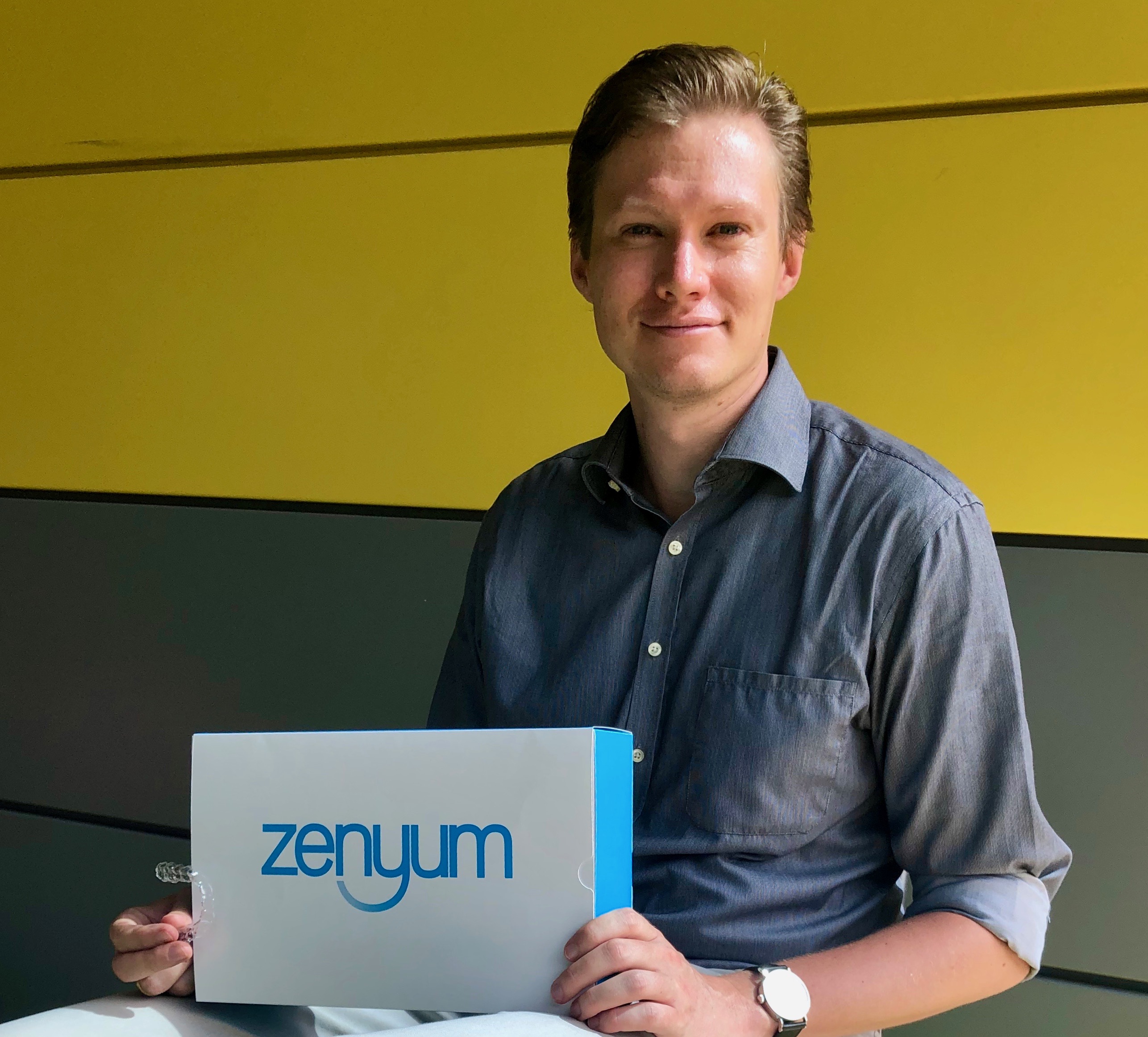
Zenyum’s founder Julian Artrope / Photo credit: Zenyum
Surging demand isn’t the only reason why it’s a good time for Zenyum to join the fray. The rise of digital dentistry is also driving growth, as 3D intra-oral scans become more common and developments in treatment technology make the overall process easier, according to Artopé.
Another factor is how 3D printing has changed. “Back in the day, 3D printers had to do everything, and they were slow and not scalable. You now have companies that do specific dental-related 3D printers, which allows us to operate at scale and speed,” he adds.
Lesson learned





Stay updated on the go with our mobile app.
Get latest insights with smoother, more personalized experience through TIA mobile app.