- Premium Content It takes our newsroom weeks - if not months - to investigate and produce stories for our premium content. You can’t find them anywhere else.
 Jo-Ann Huang · · 4 min read
Singapore startup straightens your teeth at much lower fees than conventional peers

Zenyum’s aligner / Photo credit: Zenyum
Julian Artopé, founder and CEO of cosmetic dentistry startup Zenyum, wants to give your smile a makeover for less. The months-old firm is ready to roll out across Southeast Asia after a successful round of investment from local funds and medtech angels.
Zenyum serves mainly female professionals in their mid-20s and 30s. It focuses on cosmetic alignment, but many of its clients also book cleaning and filling treatments with Zenyum’s partner dental practices. These practices also get to benefit from the extra revenue brought in by Zenyum, says Artopé.
Zenyum’s in-house orthodontists then come up with a treatment plan for each qualified customer, while its partner lab creates special aligners using tried-and-tested computer-assisted design (CAD) and 3D-printing techniques.
Tech in Asia interviewed Artopé to find out more about his company, which is part of a wave of dental-focused startups in Singapore.
What is the inspiration behind Zenyum? Is it similar to Smile Direct Club, a startup that makes dental aligners in the US?
I’ve been building tech companies for over a decade across various business models. While I was studying for my MBA at INSEAD in Singapore, I became keen on healthcare. I view it as an upcoming sector whose fate will be shaped by technology in the years to come.
Tech has created a lot of consumer benefits in sectors such as finance, commerce, and media. But healthcare is still largely untouched. This is about to change rapidly, though, if you look at what Amazon and Google are doing in this space in the US right now.
Orthodontics – which is aimed at treating misaligned teeth and jaws – is transforming the fastest within dentistry, from a very manual craft to more something that’s assisted by CAD. This helps reduce treatment time and cost for patients, which is both exciting and worrying to dentists.
Unlike Smile Direct Club, whose alignment procedure is virtually DIY and only available in the US, Zenyum does not want to disrupt the existing businesses of orthodontists and dentists. Instead, we want to enhance them.
We are delivering a constant stream of paying patients to our partner practices, driven by our digital marketing. Often times, there are additional services like cleanings or wisdom teeth extractions, which may be necessary before a patient qualifies for Zenyum. The revenue from these services goes directly to our partner practices.
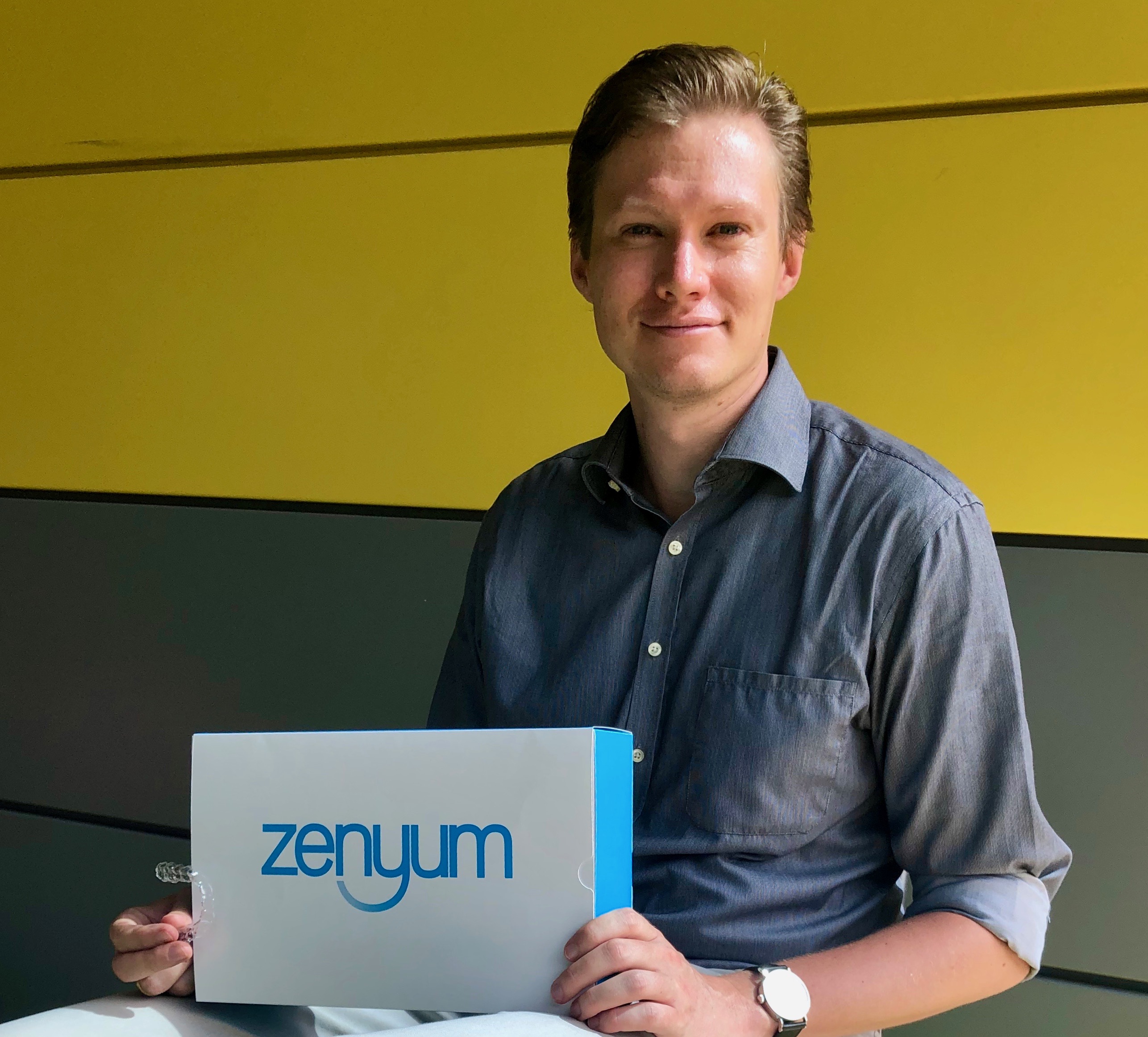
Zenyum’s founder Julian Artope / Photo credit: Zenyum
While dentistry is indeed digitizing, we believe that changing the structure of your teeth is a medically relevant procedure that should be supervised by a licensed doctor.
Stay ahead in Asia’s tech landscape
This is premium content. Subscribe to read the full story.
Zenyum wants to make over your smile for less.
We know this is not ideal. ⌛ Sign up in 20 seconds. Cancel anytime.
Our subscriber community includes professionals from these companies:





Stay updated on the go with our mobile app.
Get latest insights with smoother, more personalized experience through TIA mobile app.








📅 Upcoming Events
22 October 2026
Payoneer x CSPN Summit 2026