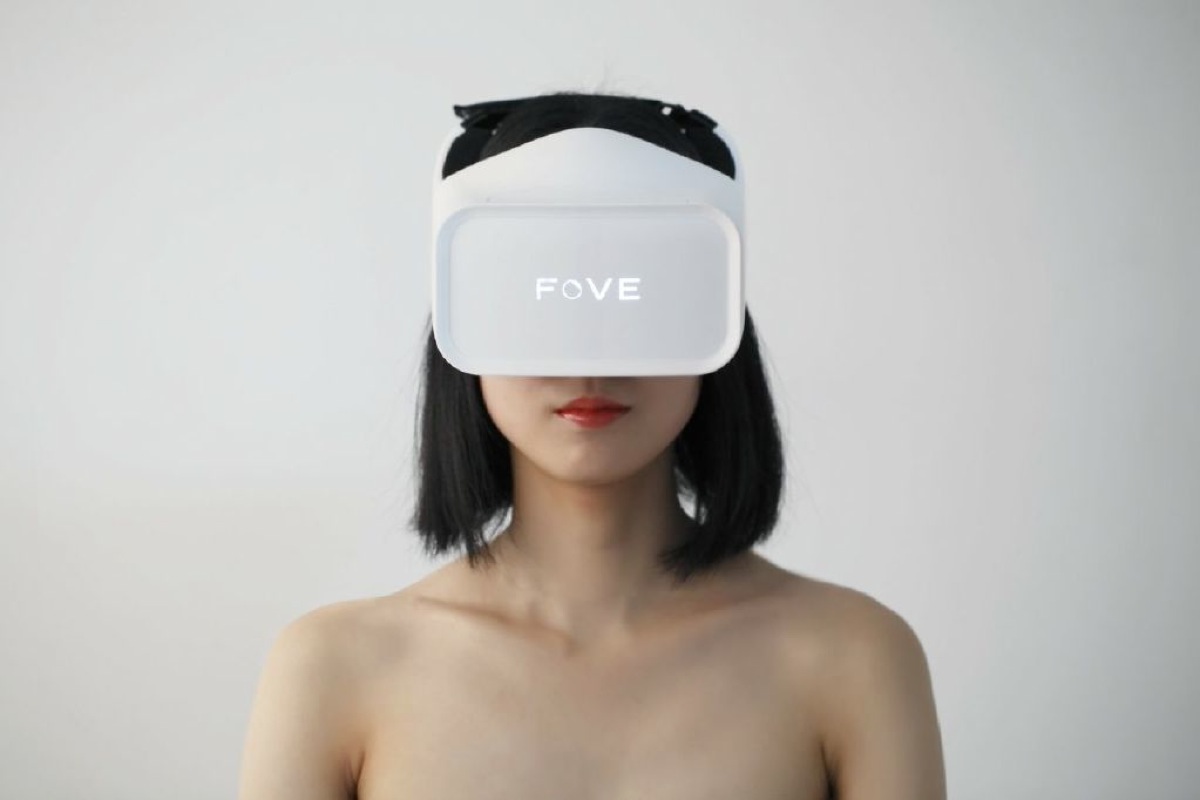
Photo credit: Fove.
“[…] You’ll be able to experience immersive virtual environments that create the feeling of ‘presence’ – like you’re actually there.” – Mark Zuckerberg, founder and CEO of Facebook.
The evolution of storytelling is inseparable from technology. From plays to radio to feature length films, technological advancements have helped storytellers close the gap between imagination and reality, luring audience members into a setting they’ve never been before.
Virtual reality seems like the natural next step. In VR, the audience is dropped right into the scene, as if they were part of the story. That’s what “presence” is – an Inception-like experience where the line between what’s real and imaginary is blurred. Presence is what makes virtual reality unique. However, it’s also the reason why VR is a terrible medium for telling stories.
The Swayze Effect
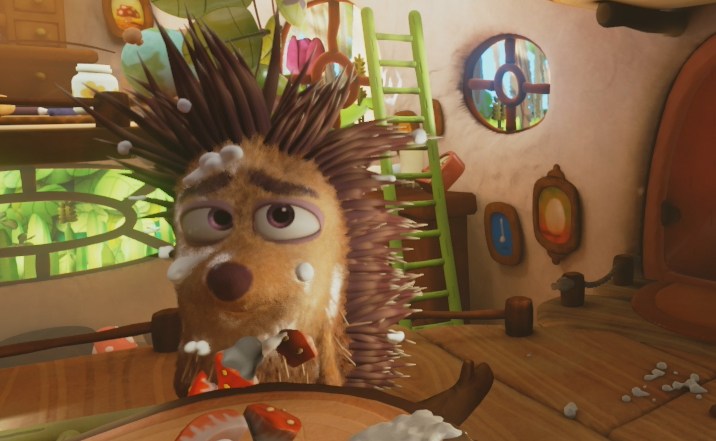
Henry, a short VR film by Oculus. Photo credit: Oculus Story Studio.
One of the core issues of VR storytelling is that it’s immersive but not interactive. If presence is about making the audience feel like they’re there, then audience participation is imperative. At the same time, the experience has to follow a storyline regardless of what the audience does. It’s a paradox that breaks presence and reduces audience members to spinning heads that have no influence over their environment, the characters, or the flow of the story.
Matt Burdette, the lead environment artist at Oculus Story Studio, calls this the “Swayze Effect”:
“The Swayze Effect […] describes the sensation of having no tangible relationship with your surroundings despite feeling present in the world. Much like the experiences and struggles of Sam Wheat, the protagonist in Ghost, the 1990 hit crime-romance film starring Patrick Swayze. Basically, it’s the feeling of yelling ‘I’m here! I’m here!’ when no one or nothing else around seems to acknowledge it,” he writes.
In Henry, a short VR film by Oculus Story Studio, for example, the audience watches Henry the hedgehog celebrate his birthday. Once in awhile, Henry makes eye contact with you and acknowledges your presence. But it feels weird because you’re mute. You can’t strike up a conversation with Henry and when the balloon animals flee out of his house, you can’t chase after them and see where they’ve gone. That would derail the story.
Though VR films leverage new technology, the audience’s role stays the same: stay passive and watch the story unfold. But if that’s the case, what’s the point in using virtual reality?
An experience, not a story
“You can never determine where your viewer is looking, so you have to create a 360-degree environment. You can use audio to beckon your viewer’s attention toward certain things. But again, your viewer has autonomy. You have to just let go of your subjective view, and think more about, What environment can I place them in that will engage them?” – Jenna Pirog, virtual reality editor at The New York Times.
Interactive storytelling exists – it’s called gaming





Stay updated on the go with our mobile app.
Get latest insights with smoother, more personalized experience through TIA mobile app.












📅 Upcoming Events
22 October 2026
Payoneer x CSPN Summit 2026