 Jonathan Chew · · 5 min read
QuickBytes: What PingCAP’s hackathon promises for app developers everywhere

There’s nothing quite like being down in the trenches and grinding things out yourself, regardless of whatever challenge gets thrown your way.
Having a bad personal experience with existing solutions is a common reason for startup founders to want to disrupt the way things are done. You’ll often hear them give feedback like, “It was so bad and I knew there had to be a better way of doing it” or “As someone who had used this extensively, I knew how to make it better.”
The founders of PingCAP, which offers database management solutions, were among these people. In 2015, three infrastructure engineers – Ed Huang, Max Liu, and Dylan Cui – decided that enough was enough when it came to how poorly existing database infrastructure worked.
“MySQL is a common database management system but when confronted with large volumes of data or data-intensive demands, it typically requires substantial effort to optimize correctly,” says Wink Yao, head of global community and developer ecosystem at PingCAP.

Wink Yao, head of global community and developer ecosystem at PingCAP / Photo credit: PingCAP
The co-founders decided to create something better on their own, and thus the database management solution TiDB was born. Now, the company has launched a hackathon to share TiDB’s capabilities with the rest of the world.
We spoke with Yao to find out more about the event.
The following interview has been edited for clarity.
Tell us more about what this hackathon is all about.
Generally speaking, the cutting-edge technologies in application development include AI and machine learning, internet of things, Web3, cross-platform development, progressive web apps, and serverless solutions. Through the TiDB Future App Hackathon, we want to encourage participants to unleash their imagination in these fields and use serverless tech to accelerate their own app development.
Hackathons give participants the opportunity to learn about and experience emerging technologies. Additionally, these events often involve forming teams with highly skilled engineers from around the world, enabling participants to exchange insights.
Our competition will run from June 6 to July 28, and the final results will be announced on August 15. The total prize pool for this event is US$36,000.
Who’s the target audience you have in mind and why is it important for them to attend this event?
Our target audience is application developers, especially full-stack developers, front-end engineers, or web engineers who have experience using MySQL.

Photo credit: hiyusukejp / 123RF
There are several reasons why they should attend this hackathon:
Skill development: Hackathons offer the opportunity to experiment with new technologies, frameworks, and tools. This helps participants improve their programming skills, learn new concepts, and keep up with the latest trends. In this hackathon, the participants will realize that using TiDB is not really different from their previous experience with MySQL.
CV building: Creating a successful project for the hackathon can help participants demonstrate their technical skills and problem-solving abilities.
Testing yourselves: Hackathons can be a lot of fun. It fosters a high-energy, competitive environment, making it an engaging and enjoyable experience.
What are the key learning points that you hope to impart to participants?
Due to the emergence of cloud computing and serverless tech, participants know that maintaining a distributed database is no longer as complicated as it used to be. We hope that they realize that using TiDB does not require any changes to their development process – it is as simple as using a single MySQL server.
Additionally, by using a distributed database like TiDB, developers won’t need to do any migration if they wish to move their hackathon project from a testing environment to production in the future.
Who are the judges for this event and why did you pick them?
We will have seven judges who are all experts in serverless technology and application development.
To maintain diversity in perspectives, we’ve invited database kernel engineers and ecosystem product managers from PingCAP, including our CTO, Ed Huang; Sunny Bains, the former leader of the MySQL InnoDB team; Ahmad Ghazal, our senior principal engineer; and Sam Dillard and Arun Vijayraghavan, our product managers.
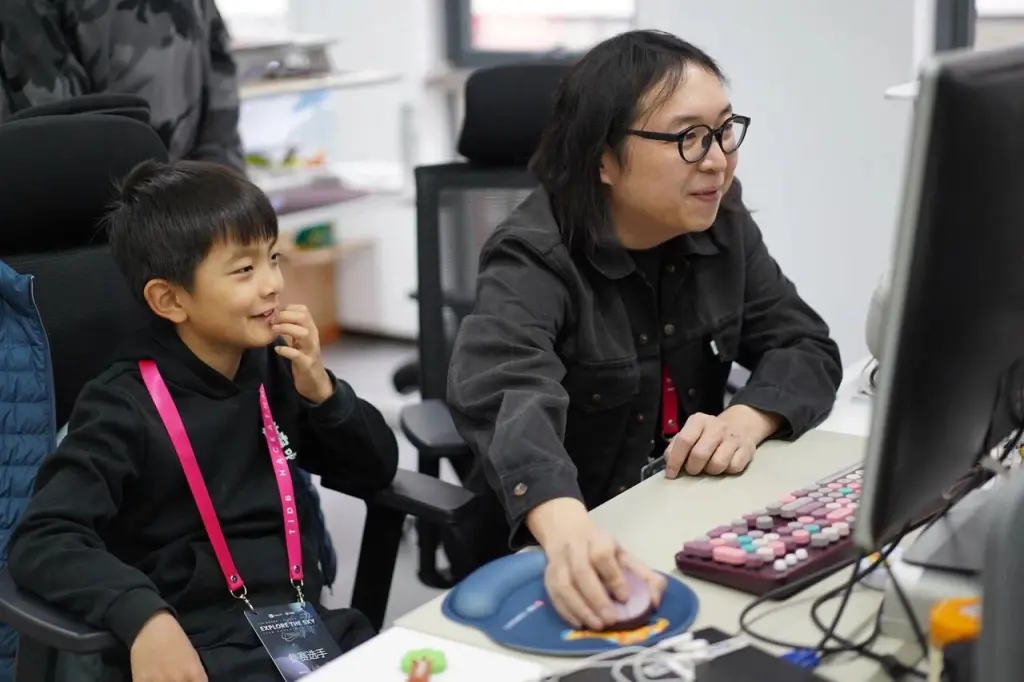
Edward Huang (right), co-founder and CTO of PingCAP / Photo credit: PingCAP
Two judges are also our customers and partners: Khawaja Shams, the CEO of database management firm Momento, and Lee Robinson, the vice president of developer experience at Vercel, which provides front-end solutions for developers.
Are there any particular conditions for participants that you would like to highlight?
Our main requirement is that participants should use TiDB during the competition and build their applications with TiDB Serverless.
TiDB Serverless is specifically designed for scalable transactions, real-time analytics, mixed workloads, and applications that experience sudden spikes in traffic. It also automatically scales up and down to meet real-time demands – it’s meant to be simple for developers to deploy and configure a fully functional TiDB Serverless database.
The software is highly compatible with MySQL so developers can continue using the same MySQL development frameworks and tools that they’re already familiar with.

To ensure fairness, participants are required to provide a link with access to their source code. Whether the code is open source is up to the participants, but judges must be able to access the code to verify that it was completed within the duration of the event.
To better understand how to build applications on TiDB Serverless, we have prepared some sample code and applications for reference. You can find the link on our devpost homepage.
Lastly, participants should also join our Discord server, where hackathon-related activities and content will be released. Since this hackathon requires a team of four, participants can also find teammates on the server and discuss their ideas.
Do you have any advice for prospective participants?
Join the hackathon as early as possible. It’s okay if you don’t have any ideas yet – as long as you have enough confidence in your technical and learning abilities, we have prepared a comprehensive list of ideas and some sample applications and code for everyone. All you need to do is find teammates and apply the ideas to your application.
The TiDB Future App Hackathon is taking place from now until July 28. Participants will have to form teams of four, and the winners will be announced on August 15. If you’ve got what it takes to build something special, sign up to join the hackathon here.
This content was produced by Tech in Asia Studios, which connects brands with Asia’s tech community. Learn more about partnering with Tech in Asia Studios.
Stay updated on the go with our mobile app.
Get latest insights with smoother, more personalized experience through TIA mobile app.
Recommended reads
 Flipkart’s costly late push into quick commerce and food delivery
 Inside Singapore’s government team that kills its own products
 Once an IPO hopeful, SCI Ecommerce nears collapse
 Who’s betting big on ChatGPT ads? Not Asian brands
 VC tracker: Granite Asia launches US$50 million fund
 GCash trims IPO ambitions to meet market realities
 Igloo CEO eyes global M&A: ‘We have an appetite to grow more’
 Why SBI paid a premium for Ajaib amid a tough market
 OpenAI warns building for today will cause technical debt





Editing by Winston Zhang and Lorenzo Kyle Subido
(And yes, we’re serious about ethics and transparency. More information here.)



📅 Upcoming Events
22 October 2026
Payoneer x CSPN Summit 2026