Welcome to Tech in Asia’s Sunday newsletter, your weekend brief on the biggest moves in Asia’s tech and startup world. Not on the mailing list? Register here. Got a story tip? Send it to editors@techinasia.com.
In focus
- Peter Cowan on why every loophole in business closes and who wins when they do.
- The Philippines’ digital banking backdoor is closing.
- India takes the nuclear option for AI power.
Hello reader,
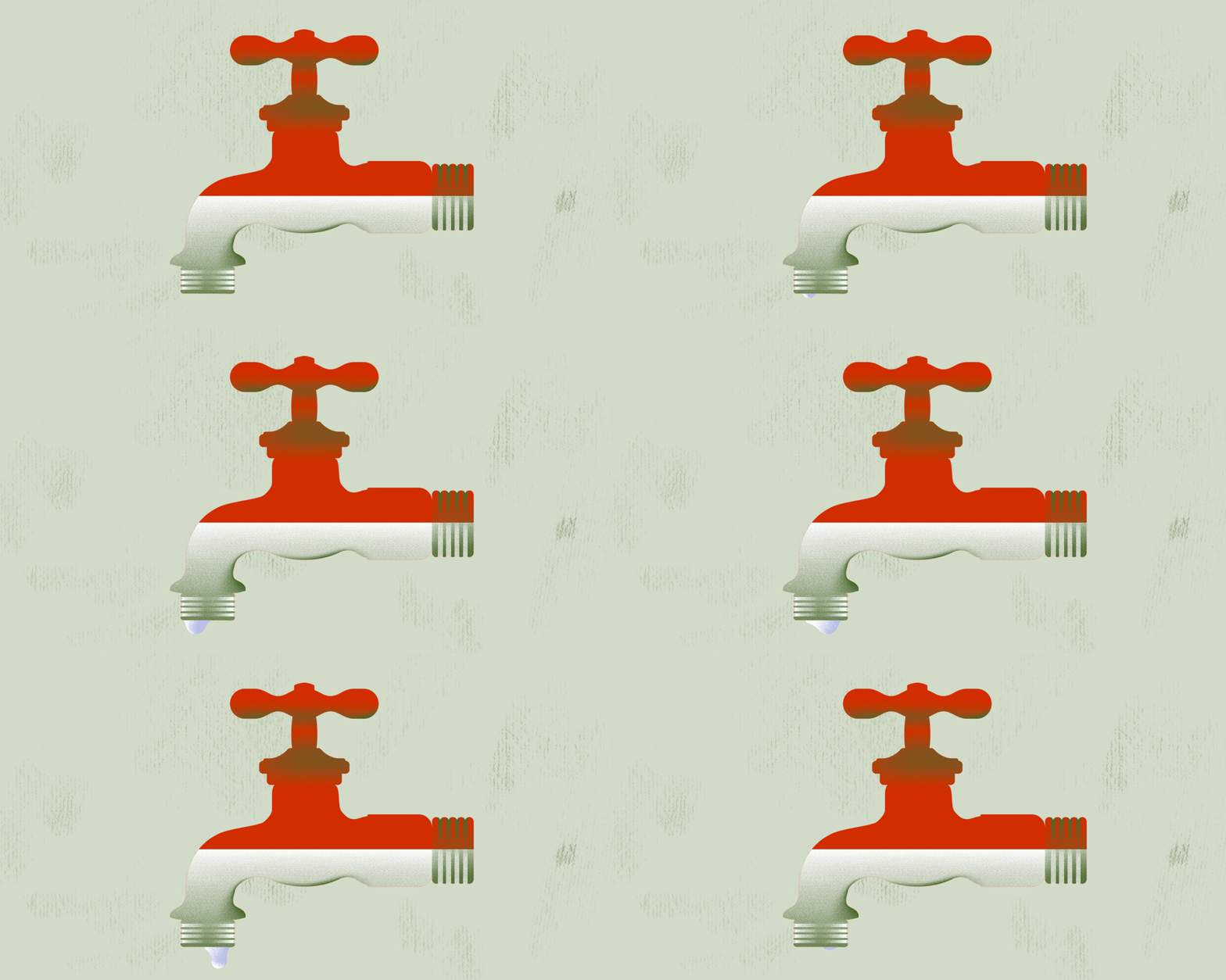
Sooner or later, all loopholes close. While relying on those loopholes isn’t a defensible business strategy, figuring out how to adapt to their closures is.
Look at the end of the “Double Irish” taxation loophole as a classic tech example. For decades, US tech giants routed profits through Irish shell structures to pay almost nothing in tax.

Image credit: Made by Miguel Cordon/Tech in Asia with the help of AI
By the time it had shut in 2020, the smart money didn’t flinch, as Big Tech had successfully lobbied Ireland to set up new incentives to keep patents and royalties onshore, and the effective tax burden barely moved. The loophole closed, yes, but the winners were those who started playing a new game.
Two of our top stories from this week deal with loopholes and how different businesses will have to navigate their closures.
My colleague Elyssa’s story focuses on how the lack of new digital banking license issuances in the Philippines pushed hopefuls to find another opening. Foreign fintech firms, backed by deep-pocketed investors, figured out that acquiring a rural bank was cheaper, faster, and came with a ready-made license to fuel their digibank ambitions.
The central bank is now making moves to curb this workaround by proposing capital requirements that would level the playing field between digital-centric rural banks and digital banking licensees. The well-capitalized will likely be able to adapt, but for smaller rural banks trying to go digital, it may already be too late.
We also looked at ultra-fast fashion giant Shein, which tried to use an identity loophole to fuel its growth for years. While its roots and supply chain are in China, its headquarters are in Singapore, allowing Shein to position itself as a global company. The effort was a bid to access Western capital markets without the political baggage of being a Chinese firm.
Shifting geopolitics shut that loophole – if it was ever really open – and Shein now finds itself forced to embrace Beijing if it ever wants to go public.
The winners won’t be the ones who found the gaps, but the ones who saw them closing first.
Peter Cowan, engagement editor
Editor’s picks
Short cuts
One visual story you shouldn’t miss
Weekend deep dive





Stay updated on the go with our mobile app.
Get latest insights with smoother, more personalized experience through TIA mobile app.










📅 Upcoming Events
22 October 2026
Payoneer x CSPN Summit 2026