 Nathaniel Fetalvero · · 5 min read
Go for Go: The programming language that could improve your job prospects

Ride-hailing platforms, food delivery apps, and search engines all have something in common: They serve vast amounts of users and perform multiple transactions simultaneously.
Because of that, the code that builds these platforms needs to be designed for scalability. Otherwise, these apps risk losing dissatisfied users.
“Today, if you need more than three to five seconds to open an app, people might shut down the app because they find it too slow,” says Yi Ming Ng, managing partner of deep tech innovation platform Tribe Group.
One programming language that allows developers to increase the speed of their apps and platforms is Go.
Designed for the internet age
Go – also known as Golang – was designed by Google developers in 2007. It’s syntactically similar to the programming language C, but it comes with additional features that enable more efficient coding, such as garbage collection and memory safety.
“Go was designed to handle the sort of workloads and operational characteristics that Google has,” says Qing Ze Hum, a product manager at Tribe. He adds that the language is key to allowing Google’s search engine function – which is estimated to execute 70,000 searches per second – to run smoothly.
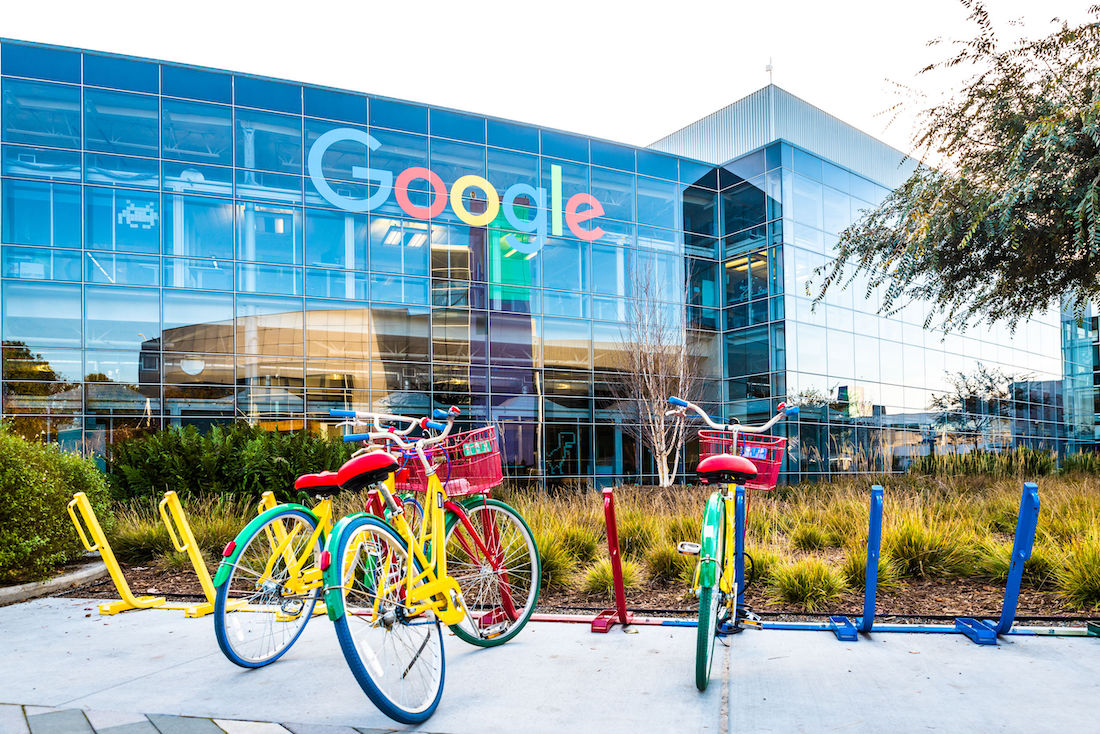
Photo credit: 123RF
Ng contrasts this to other programming languages like C, C++, and Python, which were built in the ‘70s and ‘80s.
“They were built before the huge internet wave that came about in the 2000s, while Go was designed for the current economy, which is increasingly reliant on large-scale cloud computing services for many users,” he says.
This makes Go the ideal backend programming language for applications and platforms that regularly handle high traffic. Some examples of systems that are built on it include ride-hailing super app Grab, food delivery app Foodpanda, fashion e-retailer Zalora, and online platform Shopee. According to Ng, these companies “need hundreds of developers” who can code with Go.
“All these super apps and all these startups that process so much data every second – they need to use this language,” he says.
The language for the mid-career developer
Go is especially useful for mid-career tech professionals, who are at the stage where they’re put in charge of the process of creating code and managing development pipelines. As more apps and platforms adopt the use of Go to build their backend, it will be all the more crucial to be familiar with the programming language.
“It’s not so much about just writing code anymore – you’ll be in charge of the process itself. You’ll be the one that does the final push, where you put it live or you handle production. You’ll write that in Go,” Hum explains.
Entry-level developers can also pick up the programming language, but he says it’s unlikely that they’ll use it at that stage of their careers. This is because Go was designed for concurrency: It’s used to execute different codes within a program simultaneously as opposed to simply building a singular part of a program – this allows applications built with Go to handle large amounts of users. The topic isn’t conventionally taught at the beginner level, says Hum, because at that stage, programmers just need to focus on getting their code to work.
Hum further explains this by comparing the capabilities and applications of other coding languages.
“People use R because it’s a great language for generating quick statistical insights. But it can never survive in production environments because it’s too slow. That’s why in the end people use Python for data science. Each language has its own benefits and uses. Similarly, for Go, you need to understand not just how to code in it, but what to actually use it for.”
Bridging the talent supply-demand gap
Go has steadily climbed the ranks in recent years to become the most in-demand programming language for employers. But despite its prevalence in the tech world, Ng says there’s a lack of developers who are proficient in it.
“It’s hard to find Go developers,” he explains. “A lot of them were self-taught: They were existing software engineers, they learned it themselves, and they picked up the skills. But there isn’t a sufficient supply of them,” he explains.
This gap in the supply and demand for Go programmers, Ng says, will only grow wider if it isn’t addressed as soon as possible.
“More and more companies are needing fast and huge computational power systems, and if we don’t start today to train this pipeline of developers, this will be an even bigger problem.”

Photo credit: GoSchool
This issue inspired the launch of GoSchool, the first programming school in Singapore to teach the use of Go, in a joint venture by blockchain ecosystem platform OpenNodes, Ngee Ann Polytechnic, and skills validation platform Indorse, in collaboration with Sea. Partnering with the government-backed SkillsFuture program, the digital programming school aims to bridge the talent supply and demand gap by offering a number of courses on Go. It recently launched one for Singaporeans and Singapore permanent residents, which costs S$666.67 after the SkillsFuture subsidy and grants students a training allowance of S$1,500 each month over a period of eight months.
GoSchool also offers participants a guaranteed apprenticeship at Sea – the parent company of Shopee, gaming platform Garena, and digital finance service SeaMoney – which Ng says makes the institution one of “few programs” where Sea guarantees an apprenticeship.
“We want to support the leading tech companies across the region,” says Ng. “From a lot of the top leading corporates’ perspective, they have the money, but they just can’t find the right candidate. We want to solve that.”
GoSchool is a joint venture by OpenNodes, Ngee Ann Polytechnic, and Indorse, which aims to bridge the talent supply and demand gap in the technology ecosystem.
Participants in its Go programming language course are guaranteed an apprenticeship at Sea, where they can work with and learn from leading developers.
Register for GoSchool’s Go programming language course on its website.
This content was produced by Tech in Asia Studios, which connects brands with Asia’s tech community. Learn more about partnering with Tech in Asia Studios.
Stay updated on the go with our mobile app.
Get latest insights with smoother, more personalized experience through TIA mobile app.
Recommended reads
 AI hiring heats up in Singapore
 The business ideas in your head are getting easier to build
 Oracle offers free AI training to 10,000 Singapore students, professionals
 Reka AI launches multimodal language model to rival Google’s Gemini
 DailySocial.id pivots to AI-powered research, consultancy with DiscoveryShift
 Ex-AWS exec launches startup to power enterprise systems with AI
 VCs, now you can have your say on Glasswall
 Singapore AI startup obtains $5m in Square Peg-led seed round
 Binance founder unveils new project amid legal woes
 The 2026 Prediction Bingo update: half right, fully accountable





Editing by September Grace Mahino and Jaclyn Teng
(And yes, we’re serious about ethics and transparency. More information here.)




