Paloma Ganguly · · 5 min read
Don’t throw away your toothpaste tubes or shoeboxes. This startup will pay for it.
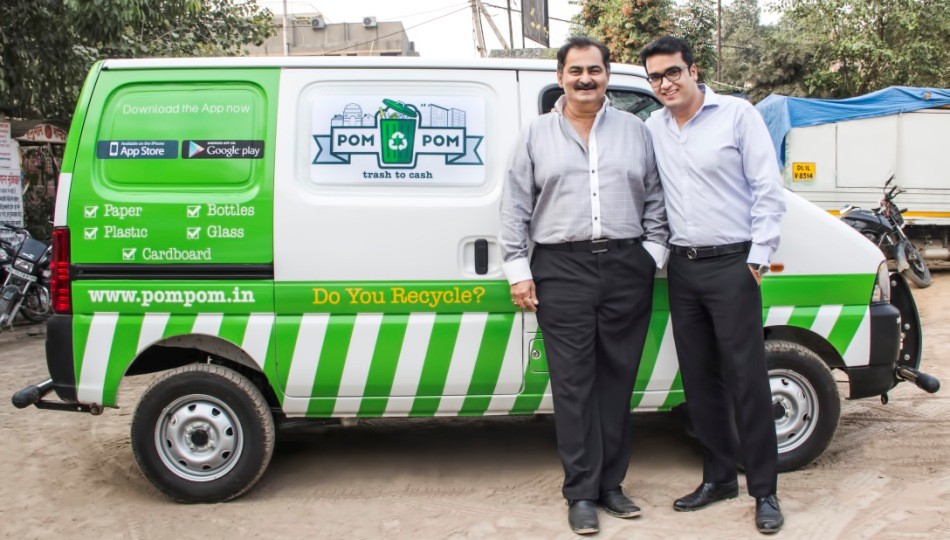
The Pom Pom founders.
Every weekend, in many Delhi neighborhoods, a man breezes in on a cycle and announces his arrival by shouting at the top of his lungs. “Kabadiwala…” His voice carries through the lanes as he moves slow and easy, a big jute sack and weighing scales bobbing up and down at the back of the cycle.
Many homes are ready for him. He is their scrap dealer (the Hindi equivalent is kabadiwala), the traditional go-to man for selling old newspapers, used glass bottles, metal knickknacks, iron rods – just about anything that can be recycled or resold.
For years, that is the informal system through which recyclable scrap has been collected from millions of Indian homes. But try selling him your toothpaste tubes, cereal box packs, or detergent bottles! Junk like that typically makes its way into the garbage.
Now think of the numbers you are looking at. Urban India, with 377 million people, generates 62 million tons of municipal solid waste (MSW) every year – and only 25 percent of this gets treated. The rest ends up at dump sites, called landfills. Delhi alone is said to disgorge 9,000 tons of garbage every day.
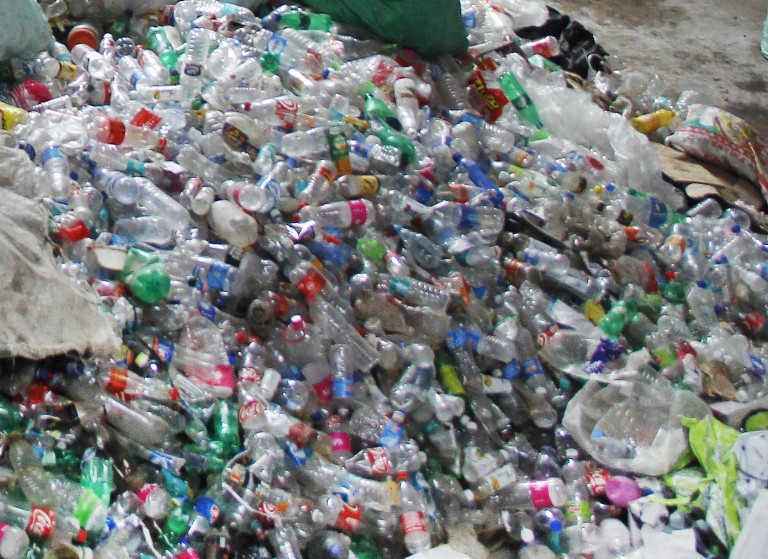
This humongous problem prompted entrepreneur Deepak Sethi to launch on-call waste recycling startup Pom Pom in November last year.
“Our goal is to provide a one-stop solution for dry recyclables,” Deepak tells Tech in Asia.
He and co-founder K.K. Thakur had been running a waste management company for several years and had experienced the difficulty of dealing with unsegregated solid waste first-hand. Going online to make people sort out and then sell all recyclables (even the less obvious ones) would be a good way to tackle it at the source, they thought.
Pom Pom has so far collected 1.5 million kilos of recyclables and handled 10,000 orders – from households in south Delhi as well as corporates in the industrial town of Noida.
Junk online
Once a household contacts them – through the app, call center or website – Pom Pom sends its team as per the convenience of the customer. Like the kabadiwala, they too pay cash for your trash.
An Indian scrap dealer usually buys things by weight – be it newspapers or metal. Glass bottles are bought per piece. You can bargain a little and make a few extra bucks.
“Our rates are competitive with the informal system,” says Deepak. (That’s quite true because they pay US$0.15 a kilo for iron, and my kabadiwala pays US$0.19.)
A little matter of habit
Blowing the horn
The magic of recycling





Stay updated on the go with our mobile app.
Get latest insights with smoother, more personalized experience through TIA mobile app.