Erik Crouch · · 4 min read
If Mark Zuckerberg loves China so much he should marry it
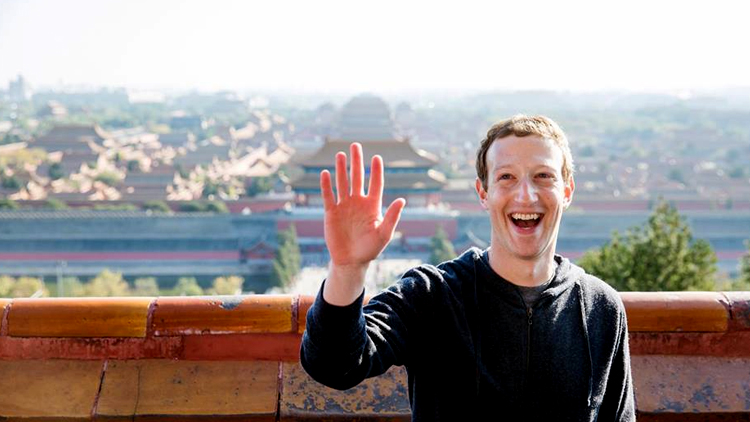
Zuck in Beijing. Image credit: Zuckerberg’s Facebook.
What connection through yonder firewall breaks?
It is the East, and China is a gigantic untapped market.
Mark Zuckerberg has been on a China charm offensive for several years now. It recently hit a new climax with the Facebook CEO visiting the country and meeting up with, among others, Liu Yunshan, the leader of the Chinese Communist Party’s Propaganda and Ideology Leading Group – the head of the nation’s propaganda and censorship apparatus.
One the one hand, there is definitely something to admire in Zuckerberg’s courting of China. He has decided to take China on its own terms, treating it with a level of nuance and respect that he hasn’t shown to other places (looking at you, highly controversial “Free Basics” in India).
There’s also, of course, the language, which Zuckerberg has been learning since 2010. The Tech in Asia staff includes a number of non-native Chinese speakers who have learned the language in adulthood, and we can testify that it is not a simple process – and we weren’t running multi-billion dollar companies while we were doing it.
But on the other hand, there is a certain impulse to grab Facebook’s CEO by his collars and sincerely ask, “Mark, what the hell is your game plan?”
Politics matter
Presumably, Zuckerberg sees a day when Facebook is accessible in mainland China, where it has been blocked by the Great Firewall since 2009.
And from all the signs so far – the meetings with Chinese leaders, the comments about Xi Jinping that could have just as easily come from state mouthpiece, the People’s Daily – he plans for Facebook to work hand-in-hand with the nation’s government.
This seems to underestimate the seriousness of China’s politics.
This seems to underestimate the seriousness of China’s politics. Facebook wasn’t blocked because of a simple misunderstanding. It was blocked because Xinjiang independence activists were using it to organize. Google didn’t leave China because Eric Schmidt’s Mandarin sucked; it left because the Gmail accounts of human rights activists kept getting hacked.
The Chinese government is outwardly hostile to foreign internet companies, especially those that won’t A) Censor information and communications and B) Turn over information about political dissidents without due process.
In the Western press, the strength of ideology among China’s leadership is often downplayed. The Party is cast as simply a bunch of stability-loving capitalists who still call themselves a “Communist Party” out of force of habit. But this is a country whose leadership refers to the internet as “the primary battlefield for ideological struggle” and sees the nation’s media as a tool to “protect the party’s authority and unity.” In other words, politics matters to these people – and they’re not going to drop everything because a foreign CEO can get his Mandarin tones pretty much right.
Balancing politics with business





Stay updated on the go with our mobile app.
Get latest insights with smoother, more personalized experience through TIA mobile app.