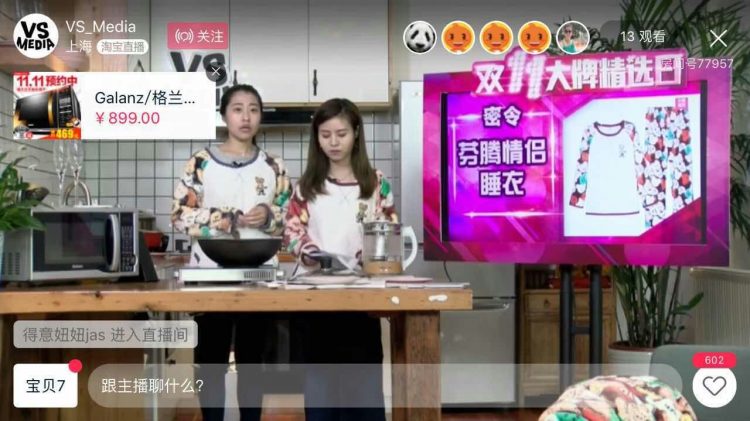
Live TV or live streaming? Photo credit: VS Media.
The woman on camera has something special for us. She holds up a tall, pink bottle of body wash that looks like it was made by Barbie.
“Isn’t it pretty?” she coos. “I think it’s beautiful.”
It’s a Monday afternoon and there are roughly 20,000 people online, watching as the live streaming host showcases the body wash, waxing poetic about its health benefits and how, as women, we need to treat our bodies well. Orange text covers the screen as users add it to their shopping cart. After a brief product Q&A, the woman puts away the bottle and prepares for the next product in the queue: a red rice cooker.
Live streaming isn’t new in China, but it’s certainly early-stage. Earlier this year, live streaming grabbed headlines as scantily clad women pranced and bantered in front of their smartphone cameras, raking in hundreds of thousands of RMB per month in virtual gifts from China’s zhainan or geeks. In May, the Chinese government cracked down on five major live streaming sites, resulting in a flurry of ad hoc rules, such as registering your Chinese ID number in order to create an account, or bizarre point systems to punish plunging V-necks and short shorts. And with over 100 live streaming apps in the country, this new web industry is still fragmented and chaotic.
Still, live streaming content is starting to mature and diversify. There’s gaming, of course, which has been around for years, as well as the ‘showroom’ genre, where aspiring music stars sing along karaoke-style to soundtracks or play their own songs. Now it’s all about shopping.
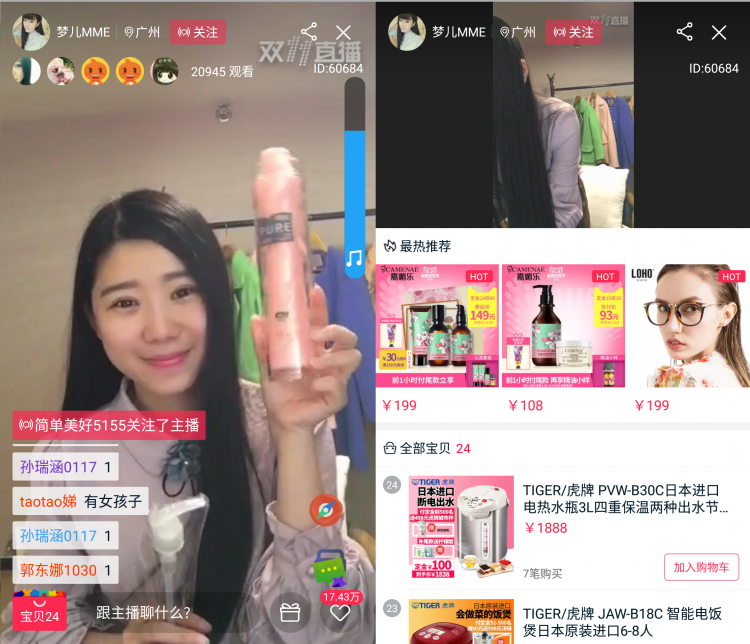
Clicking the hot pink shopping bag at the bottom shows the live streaming host’s queue of products.
“You can add me on WeChat if you want something,” says ‘Una’, a host on Inke. After demonstrating how to use a face injection mask, she orders her assistant to post her WeChat username into the chat.
According to her WeChat profile, Una is based in Melbourne, Australia and a self-identifying daigou agent, a word that describes China’s gray cross-border ecommerce industry that’s resulted in things like Hong Kong’s baby formula shortage. Her live streams primarily consist of product demos for brand-name cosmetics and beauty products, like face masks and lipstick.
Anything you want, I can get it for you.
Daigou agents and other freelance hustlers aren’t the only ones taking advantage of live streaming to promote their goods. Given that, according to a report released in June, roughly 46 percent of China’s internet population has used a live streaming app, it’s no surprise that the country’s largest ecommerce platforms, such as Alibaba’s Taobao and arch-rival JD, have jumped on the live streaming craze with their own platforms as well – Taobao Live and JD Live.
Shop owners and brands can produce their own web broadcasts, prompting audience members with notifications that lead straight to the purchasing page. These real-time testimonials and interactive product reviews make for persuasive advertisements. According to Alibaba, the conversion rate of content on Taobao Live is 32 percent – 320,000 items added to cart per one million views.
Live advertising





Stay updated on the go with our mobile app.
Get latest insights with smoother, more personalized experience through TIA mobile app.