- Insights This article was written by a TIA community member. Insights pieces undergo the same rigorous editorial process that newsroom-produced articles have.
 Hans Tung · · 6 min read
What makes China a tough yet exciting market for SaaS
This article is from an episode on GGV Capital’s 996, a podcast about tech and entrepreneurship in China hosted by Hans Tung and Zara Zhang. This is heavily revised from the original show transcript. For the full interview, go here. You can listen to the 996 Podcast by searching “996” in any podcast app.
Disclosure: Moka is a GGV Capital portfolio company.
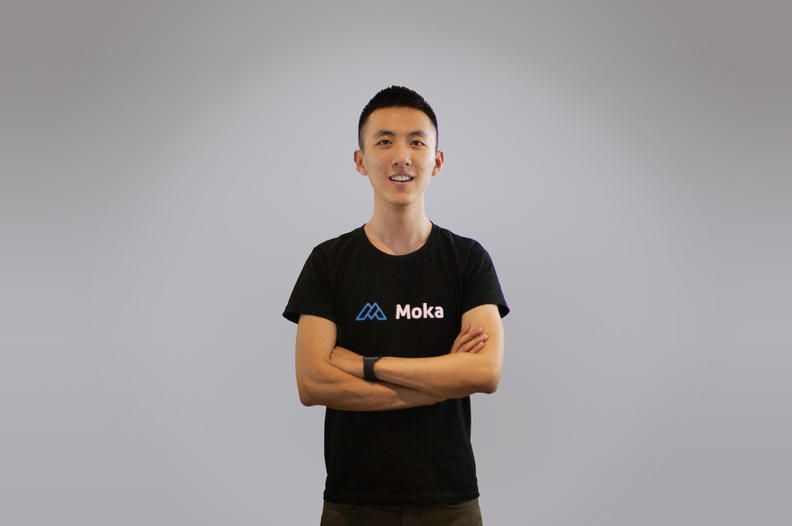
Orion Zhao, CEO and co-founder of Moka / Photo credit: Moka
Orion Zhao is the co-founder and CEO of Moka, a software-as-a-service (SaaS) startup offering human resources solutions in China. He is originally from China and graduated from University of California, Berkeley in 2013. He spent close to two years working as a software engineer at peer-to-peer car-sharing firm Turo before returning to China in 2015 to start Moka with his co-founder Li Guoxing, who is also a Chinese overseas returnee from Stanford University.
In this interview, Zhao discussed what challenges he faced as a “sea turtle” entrepreneur and how he recruits and manages talent as well as the state of China’s SaaS market.
Tell us about Moka and why you decided to start it.
When I first came back to China, I actually had no idea what I was going to do. I was thinking about maybe joining a company or starting one. I was looking for opportunities.
Back at Turo, we were doing a lot of anti-fraud stuff. So I looked at Ant Financial, which does a lot of credit analysis and stuff. Then I realized that they don’t put a lot of emphasis on the recruiting side. It caught my attention because in the US companies all have fancy career sites.
I went to talk with a bunch of HR people in China and realized that they have some real pain points, such as collaboration between the HR department, their hiring managers, and the interviewees. They also had problems with collecting all the talent banks and analyzing their recruiting data.
I looked at the market, saw that there were no good solutions out there, and decided to build one myself.
Has it always been your plan to return to China or did it happen organically?
It wasn’t planned, although I was thinking about coming back to China as a long-term plan. But it happened when I felt like I learned a bit in the US already, and I wanted to come back and see what’s going on in China.
I was anxious in the US. I saw the big run of financing happening in China, so I knew the market was really hot. But I didn’t know what was going on there and I had the fear of missing out. So I decided to take a leap of faith – without knowing anything – and came back then looked for problems to solve.
I originally gave myself six months to discover what to do, but it only took me two months to find the idea for Moka.





Stay updated on the go with our mobile app.
Get latest insights with smoother, more personalized experience through TIA mobile app.