- Insights This article was written by a TIA community member. Insights pieces undergo the same rigorous editorial process that newsroom-produced articles have.
 Tushar Aggarwal · · 5 min read
They’re bringing crypto into physical form with bitcoin ‘banknotes’
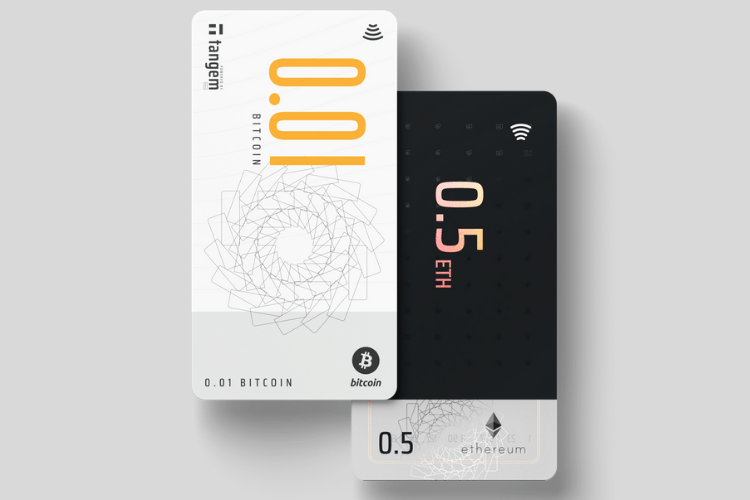
Photo credit: Tangem
This article is part of Tech in Asia’s partnership with Decrypt Asia where we publish the revised transcripts from the show’s podcast interviews related to blockchain. This is heavily revised from the original transcript. For the full interview, go here or here.
Andrew Pantyukhin is a co-founder of Tangem. The two-year-old company is aiming to make cryptocurrencies more accessible to everyday individuals by allowing people to store them in smart and secure cards or “smart banknotes.” These banknotes can then be used to purchase items or make transactions.
Pantyukhin tells how it works.
Tell us about your background and how you got started with crypto.
I have come from a background in systems engineering and was very fortunate to be involved with some open source projects early in my career. Then, I took on a role as a CTO in a fast-growing company, and later went into venture capital for a few years before dropping everything for Project Tangem.
I’ve always been interested in blockchain and its potential. As I’m a geek by nature, it popped on my radar back in 2009 or 2010. When it started getting on everyone’s radar a few years later, I instinctively distanced myself from it because most of the projects were capitalizing on the speculative aspect of crypto and only very few projects were really groundbreaking.
When we started thinking about Tangem, it became immediately obvious to our team that we could truly make a difference in the space.
How does Tangem work?
Tangem is a hardware microelectronics technology that is currently based on the latest generation of secure enclave chips. At the moment, we’re using one from Samsung.
These microchips simultaneously possess two very important properties. One, they are extremely secure. This is the type you’d find in every iPhone (as it’s responsible for Apple Pay, which contains very important credit card data), some recent passports, and high-end access cards.
The second property is having enough computing power to do complex elliptic curve cryptography within the chip in just a fraction of a second on a smart card without any battery (only the NFC antenna as a source of energy).
Based on this technology, we produced special plastic cards, which are slightly thinner and smaller than your usual credit card. With a copper coil antenna inside, these cards can communicate with any NFC-enabled smartphone (iPhone or Android).
We also developed our own smart card from the ground up—a firmware specific to blockchain applications. The chip creates a private key using its own cryptographically secure random number generator. The key is completely secure and can never be copied.
The physical smart card gives you access to the value inside of it. If you lose it, you’ll lose access to the value. If you give it to another person, you’ll essentially transfer the entire value to that person.
We call these smart cards “banknotes” because they can basically be used as such. One thing that the crypto space still lacks is we are yet to freely and physically exchange cryptocurrencies. So by using this new hardware, we are turning cryptocurrency into something physical.
Could you walk us through the customer journey?
How do you guys make money?
What does your roadmap look like in the next 12 months?





Stay updated on the go with our mobile app.
Get latest insights with smoother, more personalized experience through TIA mobile app.