 Miguel Cordon · · 2 min read
NUS engineers develop greener concrete by repurposing waste clay
Engineers from the National University of Singapore (NUS) have developed a method of using waste clay from construction sites to replace sand in making concrete.
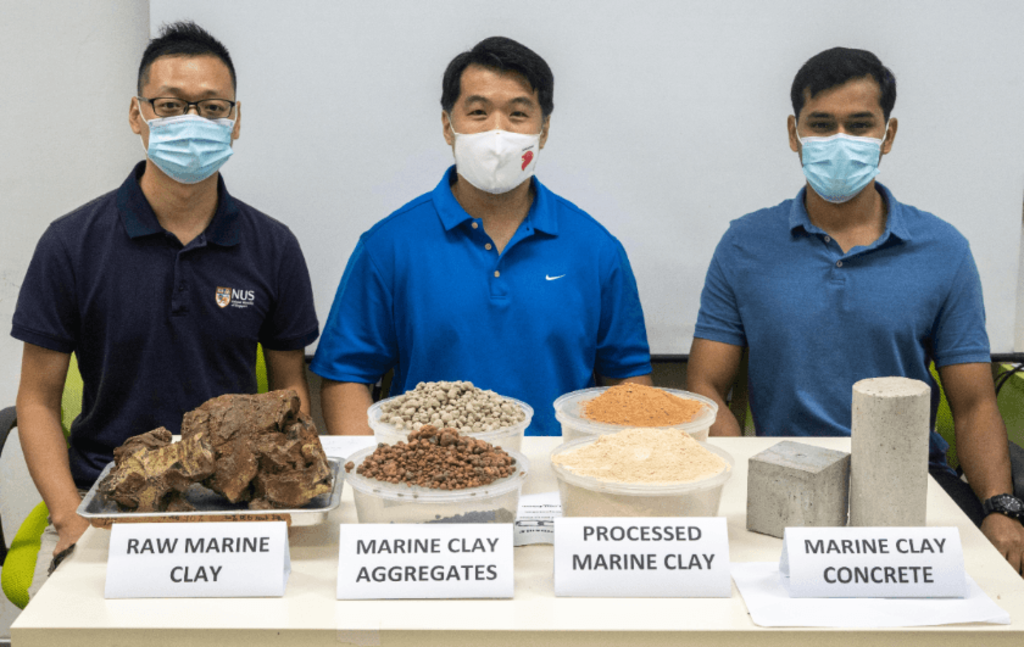
NUS associate professor Pang Sze Dai (center) and his team used excavated clay to make concrete. / Photo credit: NUS
According to a statement from NUS, the development can help Singapore’s rapid urban development, which has created a high demand for sand and water – scarce resources in the city-state.
Led by associate professor Pang Sze Dai, a group of NUS engineers have found a way to replace sand and use waste clay instead, heating it up to enhance its bonding ability in concrete. The activated clay is used as a substitute for up to half the fine sand typically needed for concrete.
The NUS team was able to produce an incredibly strong material called ultra-high performance concrete. Now, the engineers are aiming to use waste clay for more concrete applications and looking into other waste materials to replace the filler in concrete.
Concrete is made up of water, cement, and a filler such as sand. According to NUS, the cement industry is responsible for about 8% of the world’s carbon dioxide emissions, and the production of concrete consumes 10% of the world’s industrial water.
“Globally, low-grade clay is abundant. Its multifaceted utilization in concrete as fillers can not only help curtail the carbon footprint of concrete, but [it can] also reduce the cost of concrete production,” said Dai.
Editing by Collin Furtado and Eileen C. Ang
(And yes, we’re serious about ethics and transparency. More information here.)





Stay updated on the go with our mobile app.
Get latest insights with smoother, more personalized experience through TIA mobile app.











📅 Upcoming Events
22 October 2026
Payoneer x CSPN Summit 2026