
Since the mid-2010s, society has lionized the myth of the startup founder, a creative genius who can single-handedly change the world with their passion, grit, and a tech solution.
Today, that myth is changing. The trailblazing examples set by Steve Jobs and Bill Gates are giving way to a next generation with new priorities and values.
According to Shirley Wong, entrepreneur-in-residence at Singapore Management University’s Institute of Innovation and Entrepreneurship (SMU IIE), qualities like open-mindedness are essential to new founders.
“Especially for early-stage startups, it’s important for an entrepreneur to be willing to learn and listen to other views and opinions,” she says. “Though some of these characteristics are innate, a lot of it can be nurtured.”
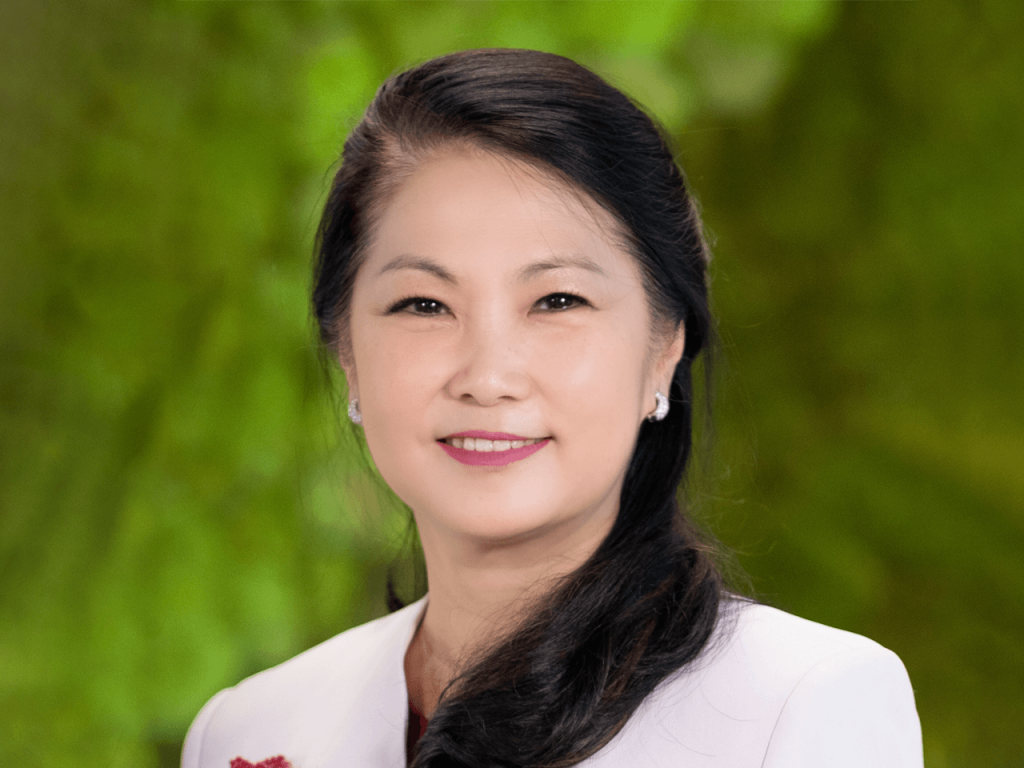
Shirley Wong, entrepreneur-in-residence at SMU IIE / Photo credit: SMU IIE
The development of these entrepreneurial qualities is the driving force behind IIE’s Business Innovations Generator (BIG) incubator program. Launched in 2009, the “founder-centric” incubator coaches entrepreneurs from a variety of industries such as sustainability, biotech, fintech, and agritech, helping them gain access to the networks and resources they need to grow.
Energizing startup success
The startup founder life is a lonely one, and studies have shown a direct connection between entrepreneurship and feelings of isolation.
However, Wong says founders don’t have to suffer in silence as most of them endure similar “battles,” allowing them to find common cause with each other.
Fostering community is one of the guiding principles of IIE’s BIG program. By nestling the program and its founders within the SMU ecosystem, the incubator connects startups to a wide network of entrepreneurs, mentors, and innovators that can help them scale sustainably.
“We see our role as an energizer of a campus-wide innovation movement,” Wong says.
She adds that the program also helps tackle the persistent talent mismatch she sees among startups.
“When I’ve spoken to other incubators, the same problem crops up: finding co-founders with complementary skills,” she explains. “Our SMU community is more business-oriented so tech talent is an issue – other technology-centric universities struggle with finding business development skills.”
Networking talent mismatches
Community and network building go a long way toward solving the talent mismatch issue, and the BIG program emphasizes giving early-stage startup founders access to the “right resources” through its extensive connections to business and tech communities.
Each participant is paired with an incubation manager who closely works with founders, helping them figure out what resources and connections they need. Wong explains that the program hosts different events to enable those connections, such as by providing office hours for founders to seek perspectives from venture capitalists and industry experts.
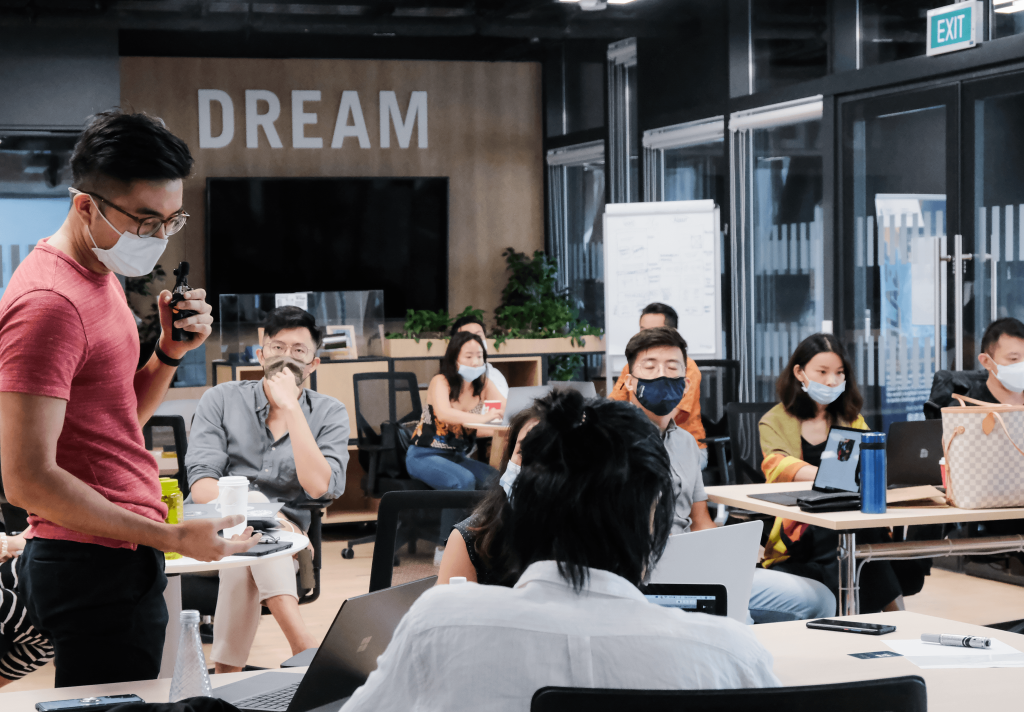
Photo credit: SMU IIE
This was something FlyORO, a startup building sustainable fuel supply chains for airports, was able to benefit from.
“For B2B startups, networking with large corporations is paramount,” says Genevieve Toh, the startup’s head of marketing and public relations. “In a sector where regulatory compliance and corporate relationships are vital, we needed a strong platform to communicate with industry-specific stakeholders and government offices.
During her time as an SMU student, Toh witnessed how SMU IIE helped B2B startups go from ideation to market success by starting from a close-knit community. “We were blessed to be under the wing of an incubation manager who helped us with her personal network in aviation,” she adds.
The connective tissues of the BIG ecosystem aren’t just outward-facing. Peer-to-peer events allow founders to brainstorm solutions to shared problems.
“We emphasize community building and encourage founders to help each other,” says Wong, sharing that she has witnessed founders connecting each other to relatives or friends with the resources they need. “It’s important that the network extends into the SMU community, beyond just the founders and mentors.”
Mentoring the future
The BIG program has proactively worked to build up its stable of mentors, who Wong says are key to helping founders open up their minds and expand their networks.
The need for mentorship also gets to the heart of the biggest challenge facing founders: the lack of validation and strategic thinking in the product development stage.
“What I see frequently is that founders aren’t doing enough well-designed validation to see if their idea is worth pursuing,” Wong shares. “There’s also not enough strategic thinking – founders build a product only to realize later that there’s no product-market fit.”
She pinpoints this as a problem that plagues younger founders who lack real-world experience. Experienced mentors help by sharing perspectives to ensure startups are able to scale effectively.
For Bryan Koh, co-founder of last-mile logistics startup Load and Go, mentor guidance was essential to help him turn his passion for operations and logistics into a viable business model.
Prior to Load and Go, Koh was working on a watch ecommerce brand, which came with the challenge of managing a multinational supply chain from sourcing to delivery. This experience helped him identify and validate the problem of inconsistent deliveries, which he would eventually choose to tackle with his current B2B initiative.
“We’ve been fortunate enough to have connected with great mentors who have helped shorten our learning curve,” Koh says.
“A natural magnet”
The BIG program also organizes a clutch of other platforms and initiatives to support founders’ growth. Through instructional masterclasses, founders can learn about key aspects of startup life like fundraising, investor relations, and structuring pitch decks. Sharing sessions with industry experts, which include the former CEO of Binance, give them insight into developments within the wider tech space, such as cryptocurrencies and the metaverse.
Wong says these sessions are made possible because of SMU’s strong branding and reputation as an innovation center, which acts as “a natural magnet for attracting people who are willing to give their time and share their network and knowledge with our community.”
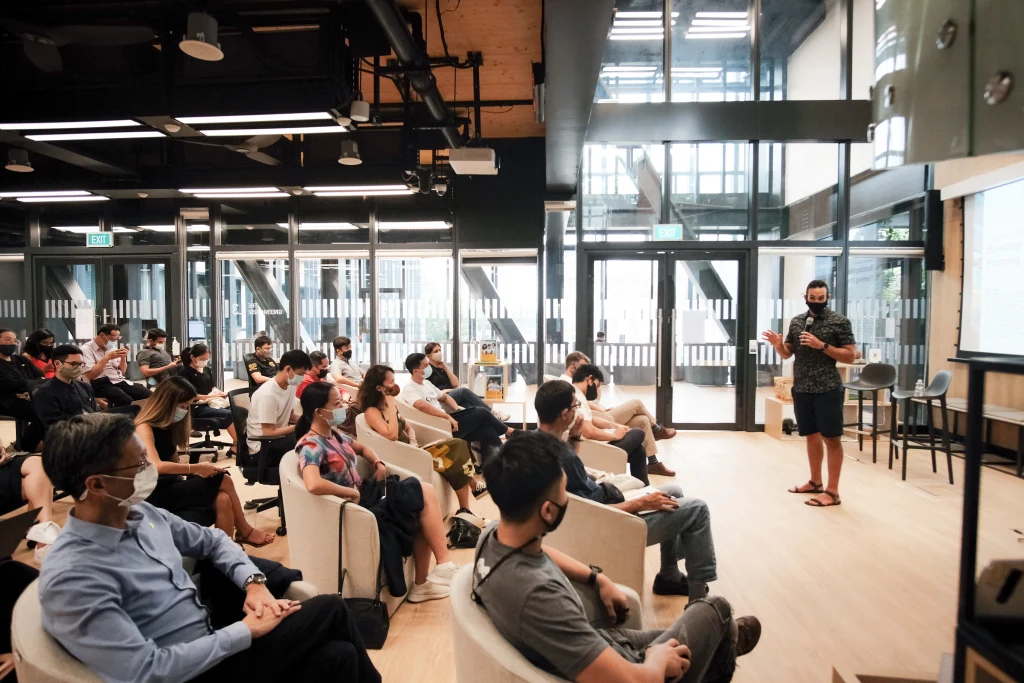
Photo credit: SMU IIE
For some founders, the BIG program fulfills more tangible needs. For Evan Chow, the CEO of gig-work platform Quest, one of the biggest benefits of participating in the program has been the provision of free co-working spaces and grant eligibility from entities like Enterprise Singapore.
“These resources came at a crucial time when we had no time and money, so not having to think about rent was a huge weight off our shoulders,” he shares. “The grant helped us bring onboard our first team of interns, who have shaped what Quest is today.”
Seeding stronger entrepreneurs
Wong predicts that the talent gap will persist over the next five years, and she hopes that the groundwork laid by the BIG program will eventually yield intangible benefits for the wider Singaporean tech ecosystem.
“Because of the support we have provided our founders, they will hopefully become stronger individuals who can contribute back into the ecosystem and fill the talent gap over time,” she adds.
The BIG program, as she sees it, is one pillar of the greater nation building project, weaving strong entrepreneurial characteristics and skills into the local ecosystem’s DNA.
“When we train and develop stronger entrepreneurs – their mindset, thinking skills, tenacity and resilience; all that really contributes to the overall ecosystem,” Wong says.
Singapore Management University’s Institute of Innovation and Entrepreneurship is dedicated to cultivating entrepreneurial talent, mindset, and skills for the future of Singapore’s thriving tech industry. The Business Innovation Generator (BIG) is a founder-centric incubator that connects early-stage founders to a network of mentors and experts, as well as to resources and a knowledge base, to help them scale sustainably.
To find out more about BIG, please visit its website.
This content was produced by Tech in Asia Studios, which connects brands with Asia’s tech community. Learn more about partnering with Tech in Asia Studios.
Stay updated on the go with our mobile app.
Get latest insights with smoother, more personalized experience through TIA mobile app.
Recommended reads
 Fintech fundraising in Japan vs. Singapore
 3 ways having a mentor can set founders up for success
 I shut down my Web3 startup. Here’s what I learned (part 2)
 India’s Bluelearn raises $3.5m to bolster social learning
 Founders of Kenangan, AyoConnect, others unveil new angel network in Indonesia
 Entrepreneur First to halt programs in SG
 Sequoia’s new Spark cohort spotlights 12 female founders
 Alibaba Cloud honors 100 players in SEA’s tech and startup ecosystem in its new campaign
 A closer look at how East Ventures is driving ESG impact in Southeast Asia
 Indonesia-based Ajaib lays off 8% of workforce





Editing by Winston Zhang, Nathaniel Fetalvero, and Lorenzo Kyle Subido
(And yes, we’re serious about ethics and transparency. More information here.)





📅 Upcoming Events
22 October 2026
Payoneer x CSPN Summit 2026