Disclosure: UVify is part of a Korean government startup support program (operated by Born2Global) and the author of this article works at G3 Partners, who were engaged to provide PR support for teams in the program.
When I say the word “drone”, what’s the first thought that pops into your head?
I realized today just how far my idea of a “drone” had come since I first heard the word in relation to UAV bombings in Afghanistan. Back in the mid-2000s when someone said “drone,” the MQ-1 Predator was probably the first image to pop up in my mind. While there’s nothing cool about war, that drone definitely caught my eye as something straight out of Akira. However, since the advent of commercial drones, I’ve long stopped thinking about the word as a devastating weapon and more as an entertaining toy.
So when I came across UVify’s racing drones, I was intrigued.
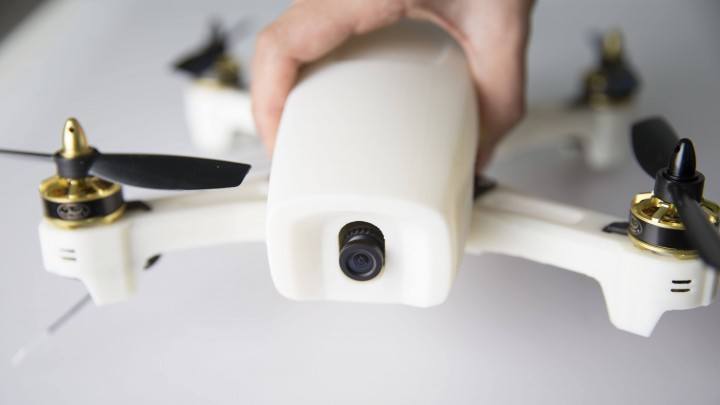
While I was familiar with drones used by hobbyists, aerial photography, or Amazon Prime, I had never thought about drones racing. I mean they looked so pathetically slow whenever I saw one with its (mostly) four propellers hovering about and generally being annoying. I would’ve never guessed that people were spending thousands of dollars tinkering with their drones to make little speed demons race in the sky.
When UVify’s CEO Hyon Lim told me that his drones were designed to race at competitive speeds, I had to hear more. To clarify, I am not a NASCAR fanatic, nor do I follow world sprinting records obsessively. But something about racing in the air with a first person view (FPV as it’s known in the drone racing community) captivated my interest in a heartbeat.
Pioneers of the drone industry, Hyon and his team have been making the flying bots since long before they were commercially sold as cute (maybe creepy) little photography devices.
“I remember having to order parts from all over the world and assembling them from scratch as part of my Ph.D research [in aerospace engineering]” Hyon recalls.
While most of us watched and were entertained as drones for commercial use came into popularity, the team at UVify were building on years of learning to find a way to disrupt the fledgling consumer drone market.
“I saw commercial drones used for racing and thought they were highly volatile for the amount of time, money, and enjoyment you get from them,” he said. “I wanted to create a drone that could be raced competitively. I wanted to deliver a product that wouldn’t induce bank-breaking repair bills or months waiting for spare parts to be delivered.”
Drone racers know well that if your drone hasn’t crashed many times, “you aren’t flying fast enough.” And what happens when you crash? You’re going to need time, expertise, and money – lots and lots of money, to get your toy back into the air.
UVify’s drones are built using a modular approach to the body, thus simplifying repairs. Using standard connectors, their drones can withstand crashes with the vitals intact. With a carbon fibre body and impact resistant ABS plastic, UVify’s drones boast improved protection and reduced effort for repairs when they crash.
They’ve also done away with all of the outer wiring that plagues conventional racing drones. Instead, everything is kept under wraps with the vitals being hidden compactly beneath the wings and in the propellers.





Stay updated on the go with our mobile app.
Get latest insights with smoother, more personalized experience through TIA mobile app.