 Aaron Tay · · 4 min read
How Singapore can tap data analytics, according to experts

Anyone who’s had to manually make sense of mountains of data knows that it’s a nightmare of a task. And large companies know it, too.
This is why corporations invest in systems and experts who can maximize data science methods like data analytics and machine learning. However, small- and medium-sized enterprises tend to have difficulties with the high costs of adopting such solutions.
Is data science worth it? Tech in Asia spoke with data analytics professionals in Singapore to understand its importance to businesses.
Data analytics can supercharge the way we work
David Low, co-founder and chief data scientist at chatbot developer Pand.ai, believes that data analytics and machine learning can have a tremendous impact on businesses, including “better efficiency through automation, improved decision-making with a data-driven approach, and optimized workflow.”

Photo credit: Pixabay
He cites United Airlines as an example. By leveraging big data gathered from its customers’ profiles and purchase histories, the airline is able to customize special offers and increase its year-on-year revenue by more than 15%.
In the financial services industry, machine learning and AI have been deployed across different business units to facilitate automated loan approval, insurance claim assessment, and even customer service. OCBC’s chatbot named Emma is credited with helping the bank double its average monthly leads from digital channels.
Patience is key
Data analytics’ impact on businesses may not always be apparent at first. Early on, processes may be heavily tilted towards data collection and analysis.
Dat Le, director of data at Foodpanda, cautions that this first implementation phase is about experimenting and exploring rather than full-on adoption of automation and machine learning.
Typically, the more data a machine learning model can draw from, the higher its tolerance for error, just like how self-driving cars need to learn from copious amounts of training data to ensure safety.
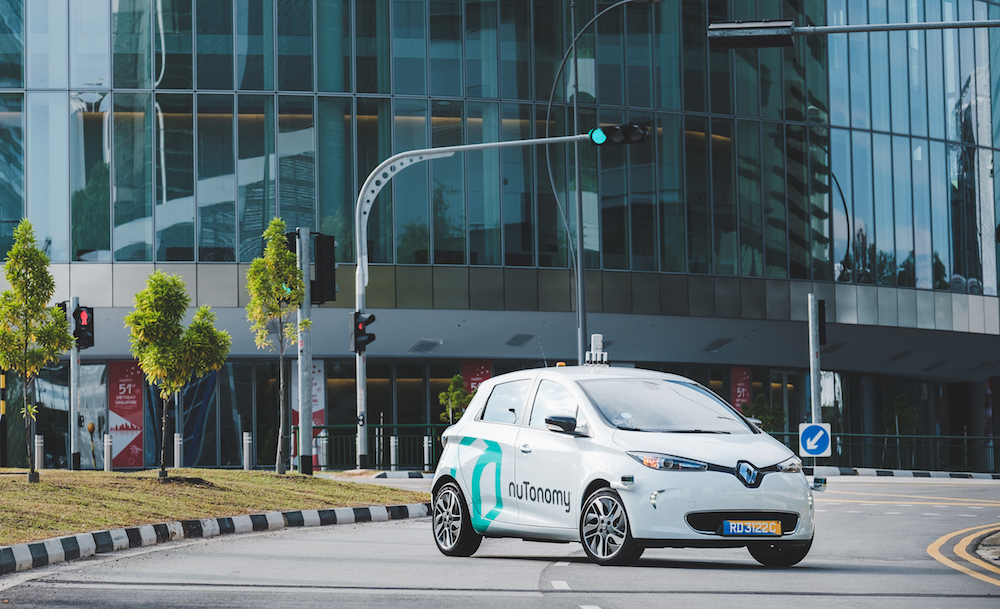
Photo credit: NuTonomy
Companies then move forward to the advanced stage – applying machine learning engineering and systems integration – once they have gathered the substantial amount of data that their model requires.
“This is where interesting results and huge breakthroughs would start to happen, as manual processes that cost time and effort are replaced by faster and better machines,” elaborates Le.
In the context of autonomous cars, recent breakthroughs in deep learning enabled Wayve to build a self-driving car that can learn to drive within a lane in 20 minutes, requiring much less time than competing machine learning systems.
Take the right steps
Before companies invest heavily in data analytics or machine learning, they need to place more emphasis on establishing good data collection and data pipeline engineering.
Jumping too quickly into machine learning can be risky. Low says that when building machine learning models, companies need to understand more about the system first and experiment along the way.
The whole process must also be rooted in sound business assumptions, identifying the correct business problems to solve. Otherwise, companies could end up wasting time, effort, and money in building machine learning models that do not help their business.
If relevant data gathered targets the right business challenges, data analytics may benefit a wide range of industries by raising profits and operational efficiency. Le feels that as long as things need to be done on a large scale, skills in data analysis can be applied to all industries and should be just as ubiquitous as communications and management skills.
However, Low stresses that such skills might not be enough if companies try to solve problems they don’t fully understand. Hence, “domain knowledge and expertise in the relevant field is crucial.”
For example, a retailer may want to boost its sales numbers through data analytics, but smaller problems may also need to be tackled first. Perhaps its social media campaigns are ineffective. Maybe logistics challenges are hampering its sales. Only through a deeper understanding of the field can this retailer identify the bottlenecks and collect relevant data.
Homegrown talent is the key to success
In recent years, countries like Canada have invested heavily in attracting both AI researchers, experts, and startups. Since then, it has become a hotspot for AI, and Low feels that Singapore is already acting to address its own shortage of homegrown talent.
“It seems that the Singaporean government has already started emulating Canada’s strategy by setting up AI SG [a national program to develop local AI talent], and encouraging partnership with established AI companies such as Element AI,” he elaborates.
Apart from attracting foreign experts, Low also highlights that local edtech companies like Smartcademy have started rolling out data analytics programs and incorporated analytical training in their curricula to cater to future demand. With a steady supply of talent, Low foresees that Singapore could lead the region in data analytics.
However, Le feels that the focus should be on data engineers instead of data scientists, “especially those who have experienced dealing with large-scale data and practical applied machine learning in production.” While data scientists focus on the statistical analysis of data, data engineers are the ones responsible for building the necessary architecture to generate that data.
Le explains: “There are going to be a lot more applications of data analytics for sure, especially for industries that are harder to implement data analytics, yet have a huge impact in terms of scale and costs. Currently, we are just scratching the surface.”
Smartcademy offers courses that teach data analytics to beginners and professionals alike. Eligible Singaporeans and Singapore permanent residents can apply for funding support of up to 90% of course fees.
To learn more about Smartcademy’s courses, visit its website
This content was produced by Tech in Asia Studios, which connects brands with Asia’s tech community. Learn more about partnering with Tech in Asia Studios.
Stay updated on the go with our mobile app.
Get latest insights with smoother, more personalized experience through TIA mobile app.
Recommended reads
 Will cars drive the future of AI? This Chinese company thinks so
 Why AI is hiring problem, not just a technology one
 TiDB is engineering the infrastructure for AI’s agentic future
 Why SaaS is dying and service as software is rising
 Freeze headcount until AI becomes the true production line
 How OpenAI is betting on one powerful “brain” over many tools
 Ex-Alibaba team builds Asia’s answer to Databricks
 Mark Cuban on AI scale: why Apple wins while data centers bleed
 How AI is breaking SaaS where trust matters most
 A solo founder’s fix for unreliable generative AI models





Editing by Nathaniel Fetalvero, Dante Gagelonia, and Charmaine de Lazo
(And yes, we’re serious about ethics and transparency. More information here.)





📅 Upcoming Events
22 October 2026
Payoneer x CSPN Summit 2026