- Premium Content It takes our newsroom weeks - if not months - to investigate and produce stories for our premium content. You can’t find them anywhere else.
 Daniel Tay · · 5 min read
After bringing Lamborghini to Southeast Asia, they’re now building electric motorcycles
Smog is choking up the air in urban areas, where vehicles and factories aggravate the pollution at a terrifying rate. More than 80 percent of people living in cities are exposed to air quality levels that exceed the World Health Organization’s prescribed limits.
For this reason, green companies like Tesla, whose mission statement is to “accelerate the world’s transition to sustainable energy,” are seeing soaring valuations.
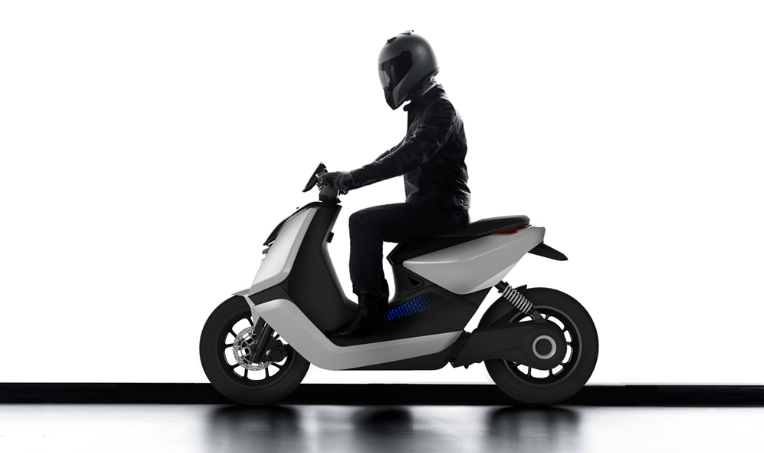
The EST-x prototype. Can its maker become the Tesla of motorcycles? / Photo credit: EuroSports Technologies
This is also why the team at EuroSports Technologies believe that their product, which they call the “Tesla of motorcycles,” will make it big in Southeast Asia and beyond. A wholly owned subsidiary of EuroSports Global and the distributor of Lamborghini vehicles in Singapore, the young startup is developing a fully electric motorcycle code-named EST-x.
“We envision a world without traffic congestion and pollution,” says Joel Chang, the newly appointed chief operating officer at EuroSports Technologies. According to him, the market for motor vehicles in Southeast Asia is massive, with around 15 million units sold every year.
Physically and environmentally friendly
So why motorcycles and not cars? “Coming from the automotive industry, we started thinking, ‘What’s the most sustainable form of public transport?’” recalls Chang.
The first thing that came to mind was, of course, the electric car.
“But it isn’t that efficient because of its size, which contributes to traffic congestion,” he explains. In addition, cars are often underused and hardly filled up to the maximum capacity. Manufacturing and powering a car is also carbon-intensive.
The team then considered bicycles. “However, while they are extremely efficient, bicycles cannot carry additional passengers or luggage when necessary,” Chang says.
As such, electric motorcycles seemed to be the logical choice. If you visit any country in Southeast Asia, chances are you’ll come across hordes of motorcycles on the road – some carrying far more passengers than they’re supposed to.
Most people in Southeast Asia “can’t afford cars, and they don’t have a good, efficient public transportation system like Singapore’s,” Chang says. “They literally carry their family and their entire life on the back of motorcycles!”
Electric motorbikes can dramatically cut down carbon emissions in the region, the startup believes. According to Chang, 90 percent of motorcycles used across Southeast Asia are “dirty” because most of them run on Euro 2 or 3 emission standards. These standards were introduced in the early 1990s to control the amount of carbon monoxide (CO) emissions produced by vehicles.
“In fact, Euro 2 motorcycles are dirtier than the dirtiest trucks in Singapore,” claims Chang. “Only vehicles that comply with the Euro 6 emission standard are allowed on the roads of Singapore.”
In addition, Chang believes that the conversion of cars from gasoline to electric power will “take longer and come later.” He believes the first wave of conversion to electric vehicles for Southeast Asia will be driven by two-wheelers.
Better to be David than Goliath
Making it affordable
War chest required
Stay ahead in Asia’s tech landscape
This is premium content. Subscribe to read the full story.
In Southeast Asia, selling electric motorbikes could potentially be more lucrative than electric cars.
We know this is not ideal. ⌛ Sign up in 20 seconds. Cancel anytime.
Our subscriber community includes professionals from these companies:





Stay updated on the go with our mobile app.
Get latest insights with smoother, more personalized experience through TIA mobile app.











📅 Upcoming Events
22 October 2026
Payoneer x CSPN Summit 2026