Eva Xiao · · 7 min read
Fully unmanned drones are coming to China’s farmlands
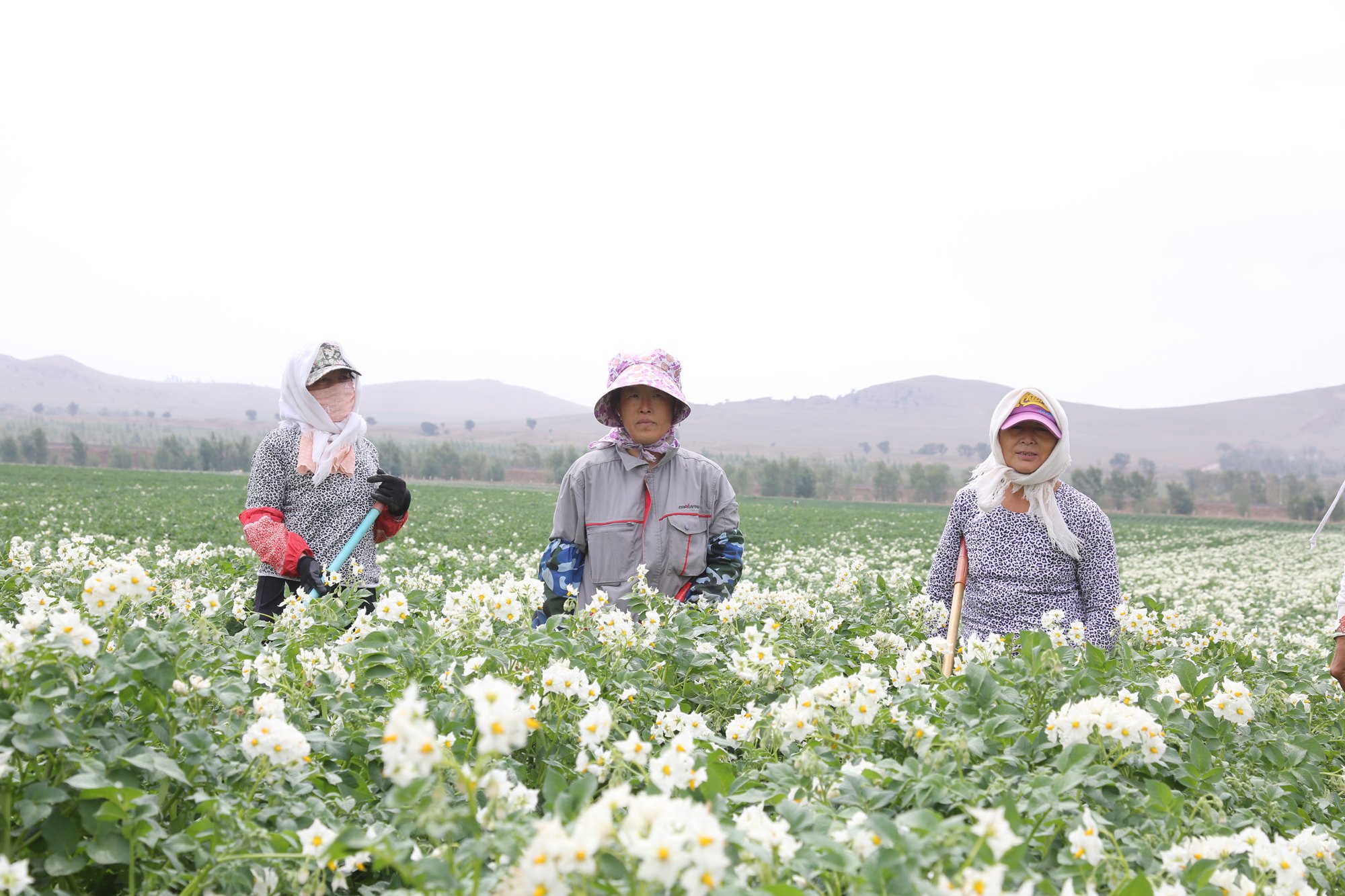
Potato farmers in Inner Mongolia. Photo credit: Hive.
When it comes to drones, China leads the world. Shenzhen-based DJI, for instance, commands about 70 percent of the world’s consumer drone market. However, as the consumer market saturates, Chinese drone startups are increasingly turning to their home market for growth, especially through commercial applications in farming.
“In China, if you want to do things at a large scale, you can’t be too sophisticated,” Lucky Wu, CEO of drone startup Hive, tells Tech in Asia. “You have to make something fundamental, something with more demand.”
“That’s why we chose agriculture,” he adds.
Though China only has 7 percent of the world’s farmland, it feeds 20 percent of the human population.
Hive is one of several Chinese drone startups targeting the country’s agriculture industry, which is in dire need of disruption. Though China only has 7 percent of the world’s farmland, it feeds a staggering 20 percent of the human population. Increasing desertification is a pressing concern, as is China’s changing demographic in the countryside. Massive urban migration and declining population growth have lead to the aging of rural labor and lower agricultural output.
Given that drones have the potential to boost efficiency through soil and field analysis, as well as crop dusting (spraying of chemicals), it’s no surprise that local governments in China are keen to encourage their use in agriculture. For example, in November 2016, Jiangxi’s provincial government started subsidizing agriculture drones with a 50 percent discount, with a maximum reimbursement of around US$29,000.
See: He grew up around oil palm plantations. Now he’s using drones to make them more efficient
“Drones can help farmers lower their costs, as well as increase their profits,” says Lucky. “Our goal is to have one of our drones in every village.”
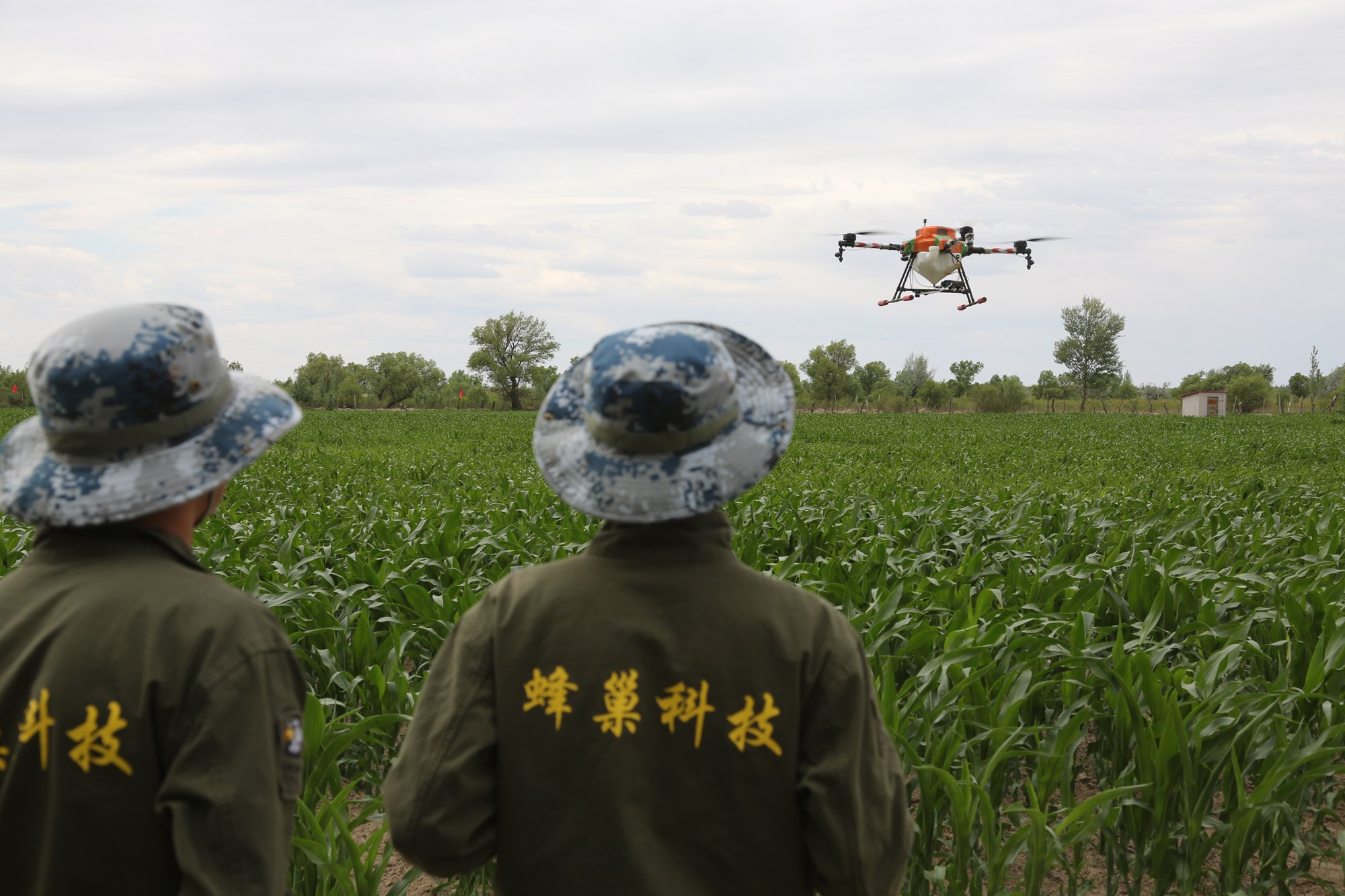
Farmers fly one of Hive’s drones over corn fields in Inner Mongolia. Photo credit: Hive.
Based on the outskirts of Beijing, Hive develops its own crop dusting drones that spray pesticide. Comparable to other products on the market, such as DJI’s Agras MG-1, Hive’s drones can carry up to 10 kilograms of liquid at a time and spray about 50 acres of crops per day. Each device costs about US$5,000.
For farmers that don’t want to buy and maintain a Hive drone, the startup also offers a crop protection service, where they charge about US$1.50 for every 0.16 acres of land sprayed, not counting the pesticide. Including chemicals, it’s US$2.90.
Hive says it’s currently partnering with over 400 farming cooperatives in China, and has clients in Hubei, Henan, Shandong, Inner Mongolia, Heilongjiang, and Hainan province.
Drone beacons





Stay updated on the go with our mobile app.
Get latest insights with smoother, more personalized experience through TIA mobile app.