Kylee McIntyre · · 5 min read
‘As simple as calling an Uber’: meet the startup combating heart disease in India
India is the coronary heart disease capital of the world, and a projected 40 percent of all deaths in India will be due to heart disease by 2020. It’s a huge problem involving millions of people, but two startup founders in Bangalore are working on a way to fix it, one ECG at a time.
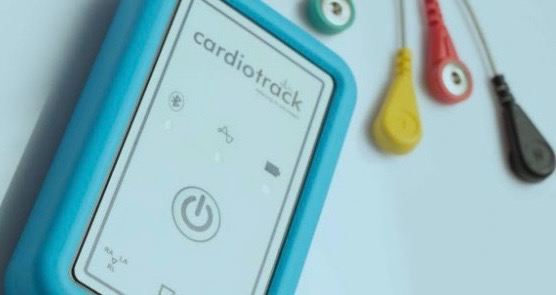
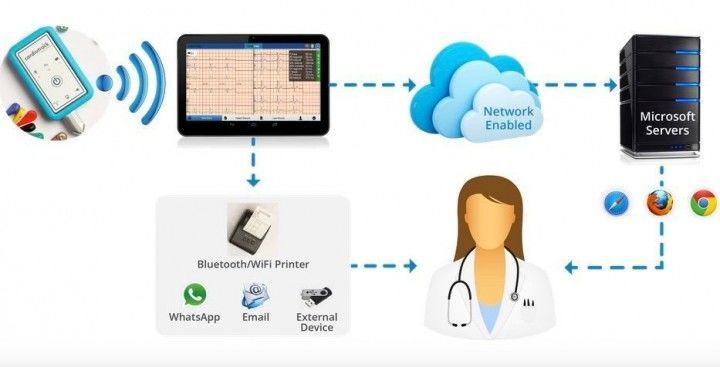
The team has come up with Cardiotrack, the first in a line of healthcare diagnostic products from Uber Diagnostics. It’s a small device for doctors that can take a 12-point electrocardiogram (ECG) from a patient, transfer it onto a smartphone or tablet via Bluetooth, and from there it can be uploaded to the cloud, allowing the results to be sent to a physician for evaluation. The gizmo can also sound an alarm if an irregularity is detected.
An ECG, also known as an EKG, measures the electrical patterns of the heart non-invasively, and it can be one of the simplest indicators of a heart problem – including an impending heart attack. However, staff need to be specially trained on where to put the electrodes in order to obtain an accurate reading. Cardiotrack boasts that it’s so simple to use that training for the device takes 20 minutes or less.
ECG machines tend to be so expensive that only large urban hospitals or cardiac centers in India have them, which means a rural patient visiting a local physician will end up getting referred into the city. A lot of times, that travel is out of a patient’s price range and means losing a day of work, so they don’t go.
“In our case, 100 percent of the general practitioners we have met – and we have met more than 200 to 300 general practitioners – do not carry an ECG monitor,” says Uber Diagnostics co-founder Ashim Roy.
If a patient has a heart problem that goes undetected in the meantime, it may end up killing the patient. If the problem is treated only at the point it becomes life-threatening, the patient’s family may end up going into lifelong debt to pay for the recovery.
“If [they] make it to the hospital, the process of intervention in that point in time is most likely an invasive procedure” – like bypass surgery, Ashim explains. “These things cost upwards of US$3,000 to US$5,000 in India, which is quite expensive.” He adds that insurance doesn’t really help lower the cost.
When it comes to financial problems like these, Ashim says the cure “is not to make the invasive procedure cheaper – it’s to try to diagnose the problem earlier.”
Cardiotrack costs about US$500, as opposed to portable off-brand ECG machines that may cost two to four times as much, not including the cost of the tablet or phone needed to transmit the results. In addition, doctors may use Uber Diagnostics’ cloud service on a prepaid model, paying about US$30 to US$50 to access the service, which can also securely store patients’ data in addition to sending their information to other physicians.
By charging patients a small fee for their ECGs, Ashim says that doctors can make up the cost of the service in eight to 10 days.
Heart of the matter
The idea of Uber Diagnostics came to Ashim in 2007 when he was traveling in the rural areas in Karnataka and realized that he could help solve a part of the healthcare problem in India’s countryside – namely, that affordable preventative care for heart illnesses was unavailable. Co-founded by Ashim and Avin Agarwal, Uber Diagnostics got its start in 2012, working with St. John’s Research Institute. The center is affiliated with a medical school and hospital.
Spreading the love





Stay updated on the go with our mobile app.
Get latest insights with smoother, more personalized experience through TIA mobile app.