Putra Muskita · · 2 min read
Moosa Genetics aims to transform Indonesian cattle breeding industry
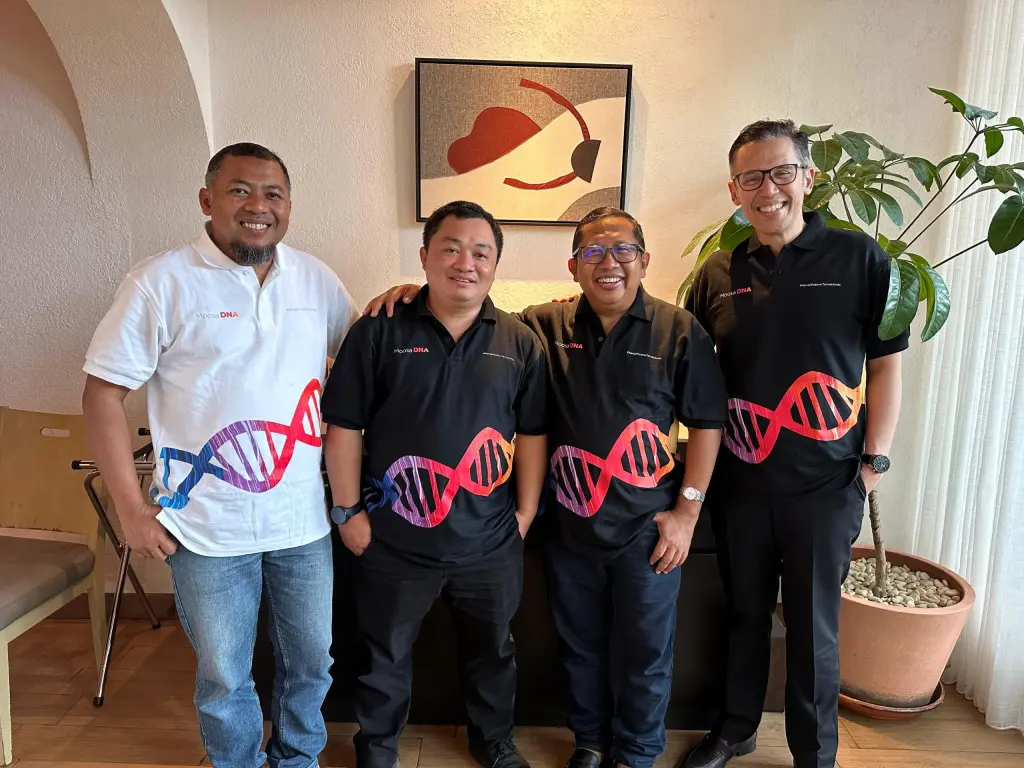
Moosa Genetics’ co-founders (from left to right): co-CEO Deddy Kurniawan, chief geneticist officer Ir. Sigit Prastowo, chief scientific officer Arief Boediono, and chairman Ivan Sini/ Photo credit: Moosac Genetics
Founded in 2016, Moosa Genetics has been harboring a mission to revolutionize Indonesia’s cattle industry through embryo transfer technology and gene selection.
The biotech startup believes that by doing so, it will make the country less dependent on foreign products, improving meat yield and quality for local farmers and consumers.
“Not only important as a source of food, the milk produced from dairy cattle also becomes one of the main sources of nutrients to uphold Indonesian health,” says co-founder Ivan Sini in an interview with Tech in Asia.
The startup has recently closed a pre-seed round led by East Ventures following years of bootstrapping.
Sini pointed out that beef in particular represents an important source of protein in the Indonesian diet. However, imports – primarily from Australia – made up 36% of Indonesia’s total beef supply in 2021.
Moosa Genetics’ business model comprises three components: DNA screening tests for cattle farmers, breeding of local cross-breed Wagyu, and the creation of a local cattle breed called Sapi Merah Putih.
Launched several months ago, the DNA screening tests help farmers identify attributes that can determine each cattle’s economic value, such as its resilience to diseases.
The company’s other commercial product is a local cross-bred Wagyu cow, created by artificial insemination and embryo transfer of Wagyu beef from Japan into local Indonesian cattle. For this part of the business, Moosa Genetics has contracts with clients such as agri-food conglomerate Japfa to supply Wagyu.
The startup also aims to create Sapi Merah Putih, a “local cattle breed that holds the most suitable attributes and factors to grow in Indonesian soil.”
Moosa Genetics targets generating US$86 million in revenue by 2028. Sini did not provide an exact breakdown but believes in the potential of expanding genetic selections in Indonesia’s cattle farming.
“We are targeting the majority of the livestock population in Indonesia to use the Moosa DNA test to increase efficiency and precision in raising livestock,” he adds. “Sapi Merah Putih is going to be a competitive alternative supply to imported cattle.”
Editing by Thu Huong Le and Lorenzo Kyle Subido





Stay updated on the go with our mobile app.
Get latest insights with smoother, more personalized experience through TIA mobile app.