 Elaine Ramirez · · 9 min read
This video startup is battling the odds by expanding into Korea
Video-making startup Wideo, a 500 Startups company with roots in Argentina and the US, was born to be global. With a team spanning Buenos Aires and San Francisco and services in Spanish and English, it has amassed one million users worldwide with its easy user interface.
Bristling with confidence, it’s taking the next step and expanding to Asia. And why not? Almost half of the world’s internet users are on the continent. One in four Chinese people shop online, and the Philippines is showing the world’s largest internet penetration growth.
Wideo has chosen its jumpoff port into the continent of opportunity: South Korea. After three months of preparation, it launched its Korean platform last month despite having hardly any traction – just 1,500 mostly nonpaying users in the market. From there, it hopes to expand into Japan or Singapore, and eventually the big kahuna, China.
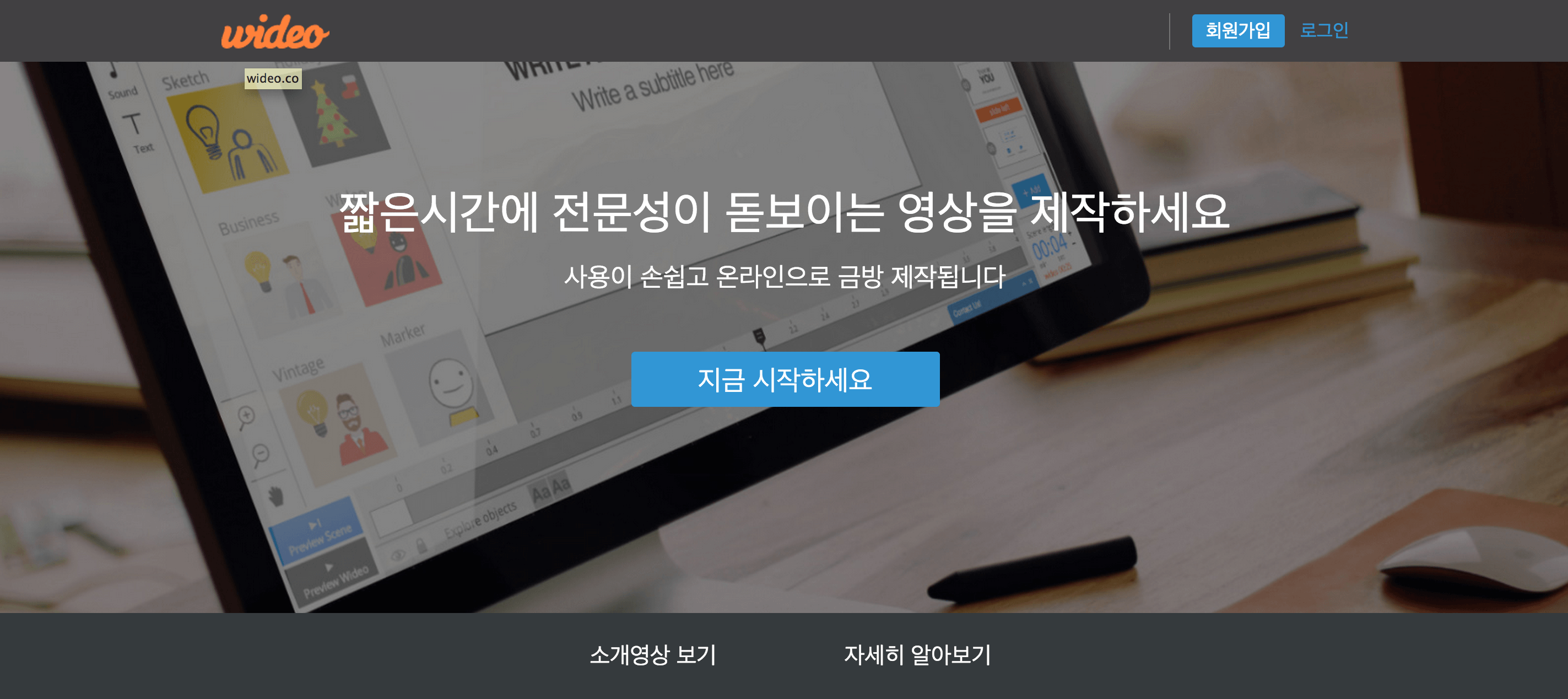
Wideo’s all-new Korean platform invites users to make quick and easy videos.
Battling the odds
When I first learned of Wideo’s strategy, I couldn’t help but raise an eyebrow. South Korea, on the surface, is the internet addict’s wet dream: a country of 50 million people, 4 out of 5 of whom own a smartphone, with internet speeds routinely among the world’s fastest, and users who spend more time on their smartphones than on eating. Half of them even clutch their phones as they use the bathroom. It would be forgivable to believe this place is a haven for all kinds of global tech.
Except it isn’t. Sure, game companies like Supercell (Clash of Clans) and Rovio Entertainment (Angry Birds, anyone?) have secured millions of mobile addicts. But Wideo can only name a handful of foreign startups whose consumer software has gained traction in Korea.
There’s Prezi and Evernote for the niches, and Facebook and Twitter for the masses. But in Korea, home of the Samsung empire, users opt for the home team. The market has a been a hard nut to crack for global tech companies for decades, including Yahoo and even Google.
While Dropbox has a Korean-language interface and is integrated into a number of Samsung devices, the average Seoulite would struggle to tell you what the service is. Rumors of Amazon’s possible entrance into Korea came and went, and the anti-Uber brigade has spawned a thriving new taxi hailing app run by local mobile messenger Kakao.
So with the bloodied remnants of foreign startups trampled before it, shouldn’t Wideo be worried?
CEO Agu De Marco is not fazed by skepticism.
“It’s something that lots of people ask me,” the San Francisco-based Argentinean tells Tech in Asia. But he’s used to those kinds of questions now and it doesn’t derail him. “When I started Wideo two years ago, people told me there must be a reason why there’s no software for people to do it. […] So all my life people have been telling me I cannot do stuff, and then I end up doing it.”
So he won’t take no for an answer, and he and his team are going all out to tackle Korea. Here’s how they are doing it.
Method to the madness
Wideo’s decision was not a shot in the dark. It was based on lots and lots of research — 137 pages of it, to be exact, courtesy of a group of MBA students at Nanyang Technological University in Singapore. For their thesis last year, they sized up five Asian markets (Korea, Singapore, Japan, Taiwan, and Hong Kong) specifically to determine Wideo’s next step. Agu writes about it here.
What they concluded is that Asia’s markets are so diverse that Wideo will have to make a highly localized product no matter where it chooses to start. With Singapore too small, Japan too insular, and Hong Kong too dependent on face-to-face business, Korea outranked Taiwan on market size and IT savviness.
Money, money, everywhere?
Culture shock
Naver nation
Launch, test, test again





Stay updated on the go with our mobile app.
Get latest insights with smoother, more personalized experience through TIA mobile app.











📅 Upcoming Events
22 October 2026
Payoneer x CSPN Summit 2026