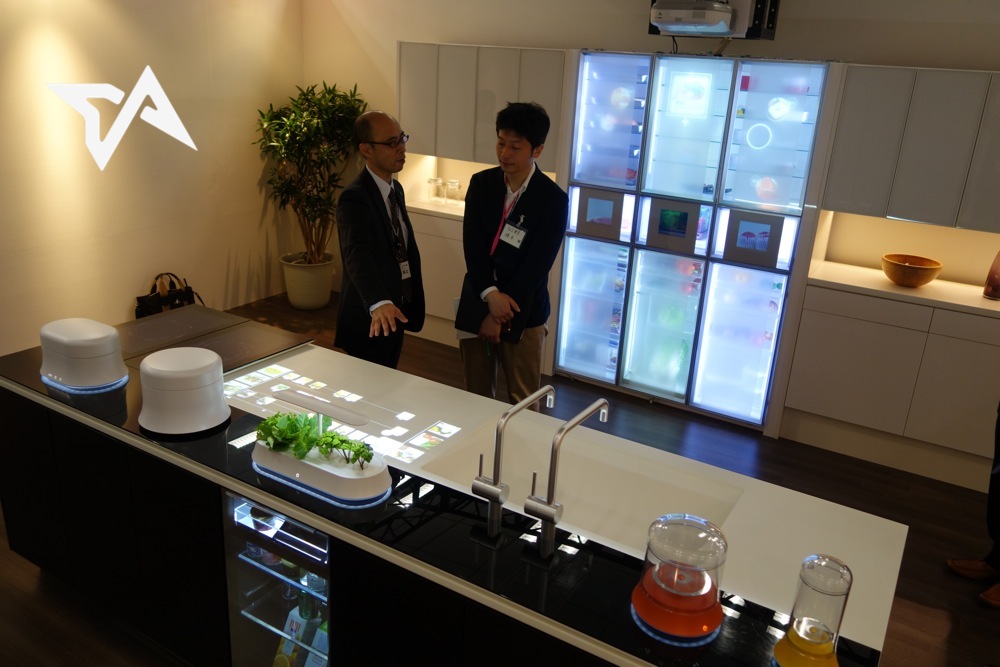
Earlier this week, I took a tour of Mitsubishi Electric’s “Smart Home” in Tokyo. Cooked up by the Japanese firm’s R&D and design departments, the concept residence shows the potential of high-tech homes supercharged by the internet of things (IoT). It focuses on two main elements: the front door/entryway and the kitchen.
Mitsubishi Electric’s smart home greets inhabitants with a sleek brushed steel door that’s completely flat. What appears to be a peephole is actually a biometric camera that can be configured to recognize the faces of family members as they come home. It works as soon as they approach the door, without an awkward pause or the need to press any buttons. Once a match is made, the door handle pops out with a blue LED glow. Not only does it look like something out of a sci-fi movie, but the lack of a doorknob and a visible lock adds an extra layer of security.
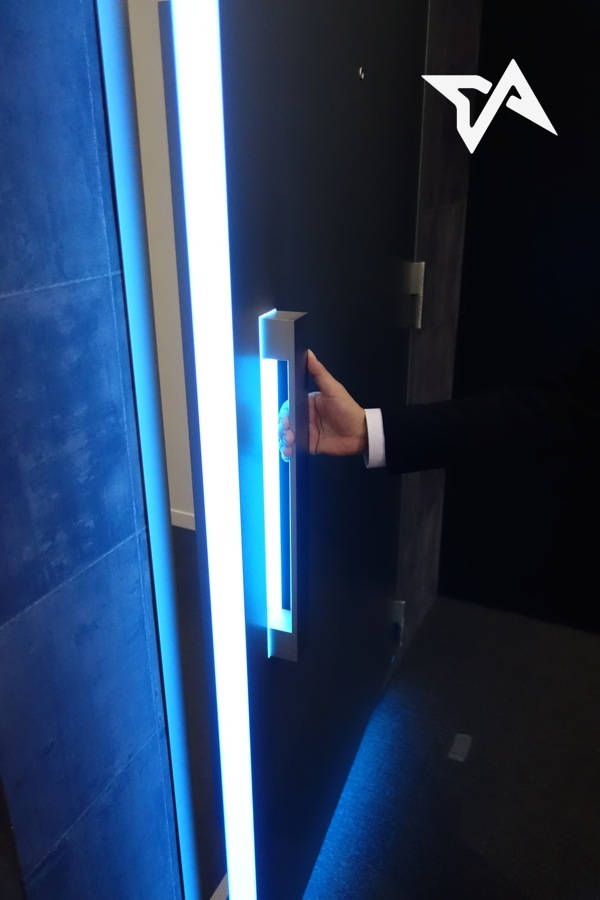
When the door handle is gripped, embedded sensors check for “biological information” – such as body temperature and heart rate – in order to assess the person’s physical condition. Upon entering, an interactive display is projected on the wall that shows each family member’s daily schedule and health-related data. A Mitsubishi Electric spokesperson tells Tech in Asia that, down the road, wearable devices (and perhaps smartphones themselves) will collect this data from each family member remotely.
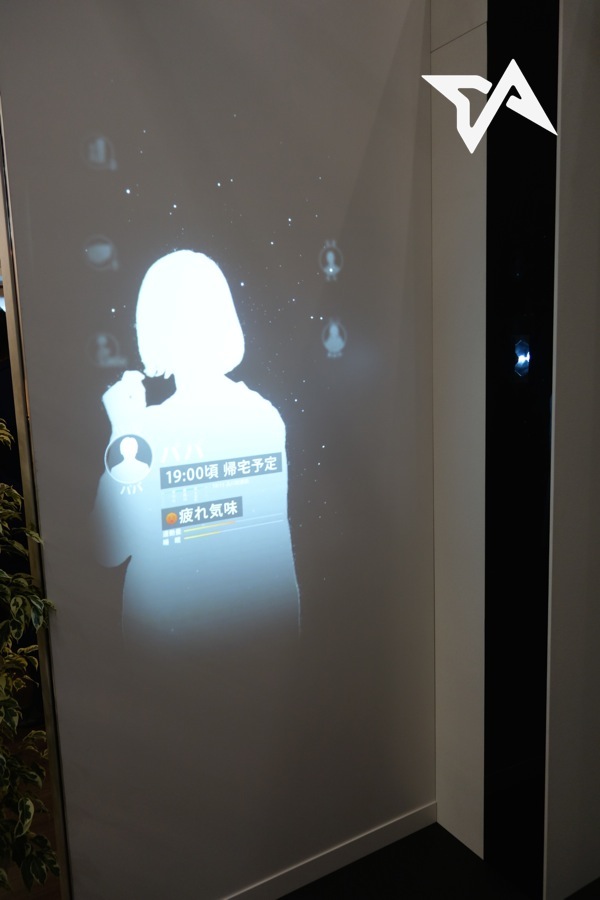
A demonstration of the projection shows the silhouette of a woman returning home with the display indicating that a package had arrived and that her son was already home. It also shows her heart rate and the estimated times of her husband and daughter’s return (based on their synced schedules). She gestures for the bubble representing her husband and swipes it into the center of the display, revealing that he’s expected home at 7:00 pm and feeling tired. With all this data sharing, it might be hard for papa to sneak off to the bar with co-workers, but you get the idea.
What’s cooking?
After checking in with Mitsubishi’s virtual family, the tour moved to the kitchen. The refrigerator makes use of the biological data collected by the door handle and the other family members’ connected devices, displaying dining recommendations based on what food it identifies inside.
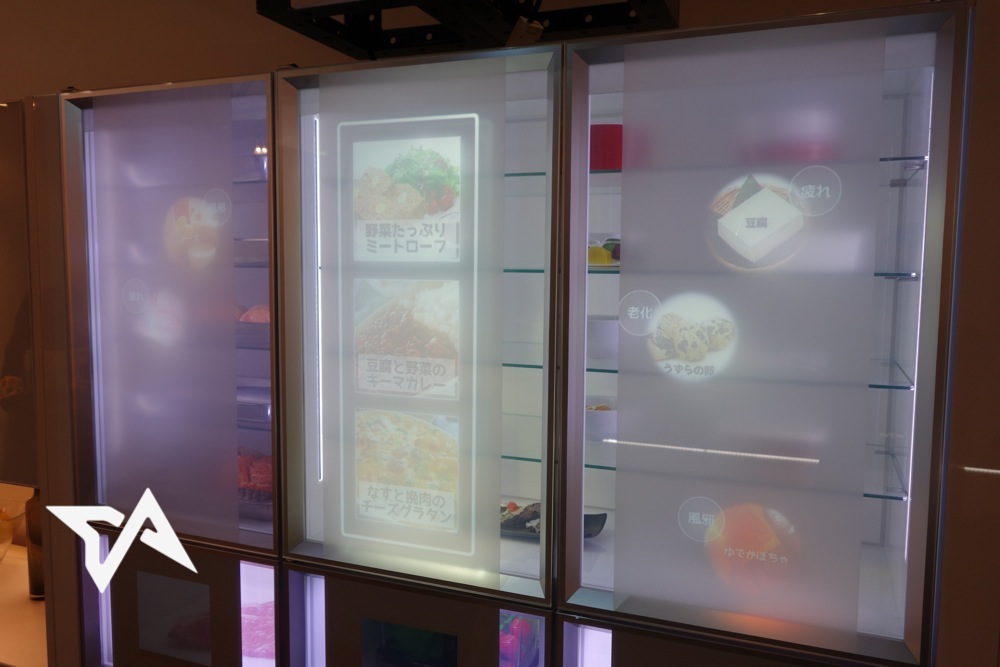
After selecting a meal, step-by-step cooking instructions and estimated preparation times are projected onto the kitchen countertop. It also features ultra-thin induction heaters that can slide the entire length of the countertop. For example, you could slide one heater to the edge of the sink when boiling pasta, to make it easier to empty out the water.





Stay updated on the go with our mobile app.
Get latest insights with smoother, more personalized experience through TIA mobile app.