
Welcome to The Offset! Delivered once a month via email and through the Tech in Asia website, this free newsletter breaks down the biggest stories and trends in greentech. If you’re not a subscriber, get access by registering here.
Hi readers,
Nuclear fusion is gaining steam as countries scramble to find renewable energy sources and ditch fossil fuels. Energy-hungry countries like the US are betting hundreds of millions of dollars on the technology to power the future.
Some say it’s a risky bet, given that the technology is still many years away from commercialization. Despite that, nuclear fusion has caught the eye of tech billionaires like Bill Gates and Elon Musk.
Talking about a cleaner future, if you’re thinking about getting on board with environmental disclosures, you can get started by filling out this survey. The survey is part of a joint initiative by CDP and Tech in Asia.
Enjoy reading!
— Nicole
DEEP READS
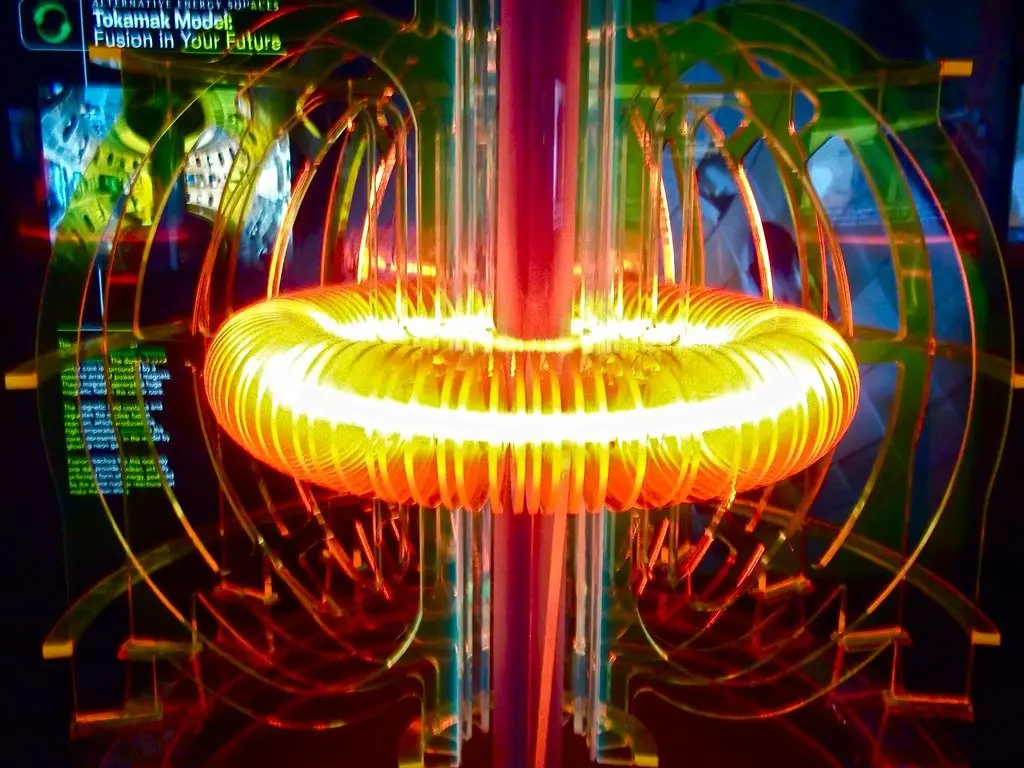
Nuclear fusion display at the Weiss Energy Hall / Photo credit: Katherine Fellows
Elon Musk among tech billionaires rallying around nuclear as energy crisis looms
For half a century, nuclear fusion was a dream for scientists.
The process, in which two or more atomic nuclei are forced together to create new and heavier ones, releases an enormous amount of energy – the same process that powers the sun and the stars. The fusion process doesn’t emit carbon dioxide, and it only needs hydrogen and lithium, which are widely available.
The technology, while still nascent and yet to reach commercialization, is being considered as a potential solution to the energy crisis as countries scramble to come up with plans to meet the increasing demand for renewables in order to ditch fossil fuels.
The Russia-Ukraine war galvanized the nuclear fusion startup space, where billionaires like Bill Gates and Jeff Bezos have bet money on a handful of promising companies. The momentum has been building for some time. Last year, venture funding for nuclear startups soared to a record US$3.4 billion, according to Bloomberg.
With funding pouring into the sector, innovation and small breakthroughs are coming in from around the world. Last year, a Chinese nuclear project set a world record for sustaining a nuclear fusion reaction for more than 17 minutes.
The excitement goes beyond Silicon Valley; countries are betting serious money on advancing the technology. The US, for example, is investing hundreds of millions into its fusion energy program. “We have to act on climate change so our country can win the 21st-century economy, and that’s what fusion helps to present us with – tremendous opportunities as well as challenges we know,” said US climate adviser Gina McCarthy during a recent summit on fusion.
Singapore is abuzz with excitement around fusion too. A new report commissioned by the Energy Market Authority concluded that, as the technology becomes more advanced, nuclear energy could help meet around 10% of the city-state’s energy needs by 2050.
TRENDING NEWS
You can also check out Tech in Asia’s coverage of Asia’s greentech scene here.
1️⃣ China to boost renewable power by 2025, maintaining balance with oil and gas
China is planning to ramp up its renewable energy production, according to its latest five-year plan for the energy sector. Specifically, Beijing plans on raising the country’s hydropower and nuclear power capacity while phasing out part of its coal-fired power generation. It also plans to encourage the development of ethanol, biodiesel, and bio jet fuel. To ensure energy security, the country plans to keep its current crude oil output steady and ramp up annual natural gas production over the next five years.
Why it matters:
China, the world’s biggest emitter of greenhouse gases, has set an ambitious goal to achieve carbon neutrality by 2060. The big challenge is to create a cleaner future by building up its renewable energy capacity while at the same time prioritizing energy security.
2️⃣ Tesla’s sustainable alternative to gas turbines debuts in Alaska
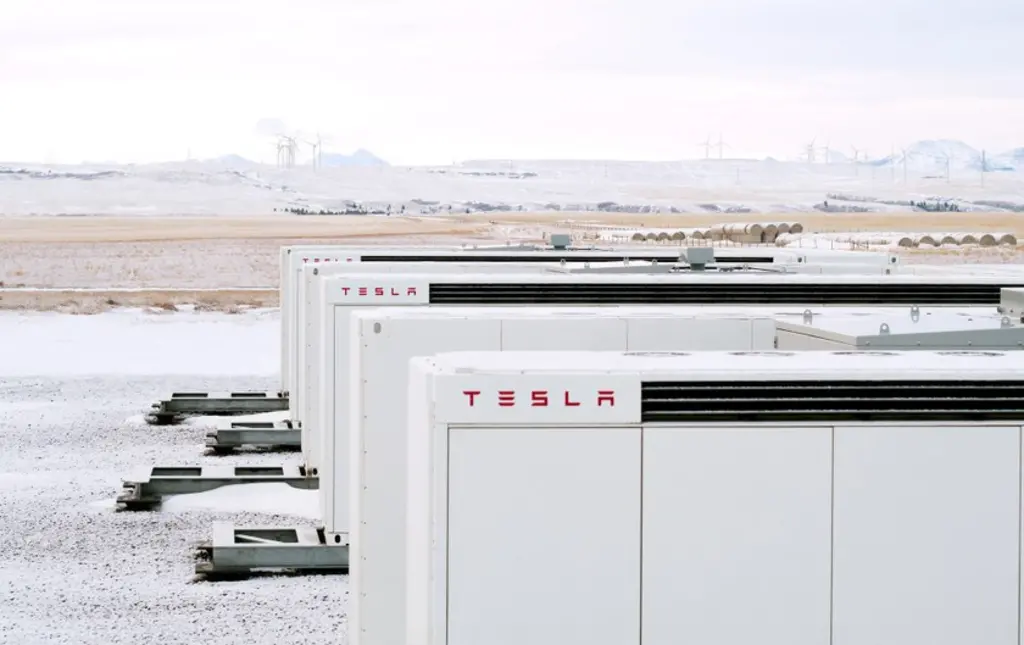
Image credit: Tesla
Tesla has deployed 37 Megapacks, its latest large-scale rechargeable lithium-ion battery energy storage system, in Alaska’s Kenai Peninsula. The energy storage system is touted to be a more sustainable alternative to the gas turbines that power the region four months out of a year, according to Homer Electric, the utilities firm working with Tesla on the installment of the Megapacks.
Why it matters:
The region historically relied on gas turbines, which are powered by fossil fuels, to distribute power. The new storage system could provide grid stability and reduce reliance on gas turbines.
Similar Megapacks projects have been deployed across the US, including in California and Hawaii. This month, Tesla secured another big contract to install Megapacks in New South Wales, Australia.
3️⃣ Chevron raises clean energy bet with $3 billion Renewable Energy Group deal
Chevron Corp is acquiring biodiesel and renewable diesel producer Renewable Energy Group for US$3.15 billion – the American oil and gas producer’s biggest bet yet on alternative fuels.
Why it matters:
Oil giants in the US are facing mounting pressure to transition to greener alternatives to fuel. Chevron aims to reduce operational emissions to net zero by 2050 and pledged to commit US$10 billion to its carbon emission reduction efforts, with about $3 billion earmarked for renewable fuels.
4️⃣ Huawei pivots to renewable energy as smartphones slump
Photo credit: Wikimedia Commons
Huawei Technologies is turning to clean energy storage as the future of its smartphone business remains uncertain under US sanctions. The global chip supply crunch has added to Huawei’s quandary. At the MWC Barcelona mobile tech expo, Guo Ping, Huawei’s deputy chairman, specifically highlighted the need to consider the “new dimension” of carbon reduction.
Why it matters:
Huawei has been transitioning to clean energy products. The company has large-scale projects underway in the Middle East. In March, the company and solar project developer Meinergy inked a deal to build a facility that is said to be one of Africa’s largest solar energy storage projects. In February, the Chinese telecom giant entered a partnership with Malaysia-based distributors to expand solar deployment in the country.
STARTUP WATCH
1️⃣ SG climate tech startup bags US$2.2 million in Thunes-led round
Handprint, a Singapore-based climate tech startup, has raised US$2.2 million in a seed round led by cross-border payments operator Thunes, with participation from other undisclosed investors. Handprint offers software that allows businesses to track the environmental impact of its payments processes and ecommerce tools.
2️⃣ Wavemaker Partners closes fourth fund at US$136 million
Southeast Asian VC firm Wavemaker Partners has closed its fourth fund at US$136 million, exceeding its target of US$120 million. The firm said the new fund is the largest of its kind that targets early-stage deeptech, enterprise, and sustainability startups in Southeast Asia. Returning limited partners such as Pavilion Capital, Temasek Holdings, the International Finance Corporation, and Vulcan Capital are anchoring the fund. In total, the VC firm currently has US$300 million in assets under management.
3️⃣ Renewable energy startup Span raises $90 million in funding
Span, a San Francisco-based renewable energy startup, has raised US$90 million in a series B round led by Fifth Wall Climate Tech and Wellington Management. Founded in 2018, the company produces smart electrical panels, among other products, that allow homeowners to manage and optimize energy use.
4️⃣ Kimmeridge Energy commits US$200 million to carbon-offset startup Chestnut
Private equity firm Kimmeridge Energy Management, which recently launched a new carbon offset platform called Chestnut Carbon, has pledged to back the new initiative with up to US$200 million in seed money. The New York-based Chestnut is focused on generating carbon offset credits from forests.
5️⃣ Carbon capture startup using dirt-cheap material raises US$53 million
Heirloom Carbon Technologies, a California-based startup, has raised US$53 million from investors, including Bill Gates’s Breakthrough Energy Ventures, and the Microsoft Climate Innovation Fund. Heirloom is said to have found a cheaper way to remove carbon dioxide from air using limestones, a widely available material.
That’s it for this edition – we hope you liked it! Do subscribe to continue receiving The Offset.
Not your cup of tea? You can unsubscribe from this newsletter by going to your “edit profile” page and choosing that option in our preference center.
See you next month!
The Offset is made possible thanks to Taiwan Mobile.
It earned the best telco title in Global Views CSR Awards.
Taiwan Mobile is on a mission to transit to 100% green energy by 2040.
Stay updated on the go with our mobile app.
Get latest insights with smoother, more personalized experience through TIA mobile app.
Recommended reads
 SEA financials tracker: Moladin’s revenue rises 6% in 2025
 Flipkart’s costly late push into quick commerce and food delivery
 Inside Singapore’s government team that kills its own products
 Once an IPO hopeful, SCI Ecommerce nears collapse
 Who’s betting big on ChatGPT ads? Not Asian brands
 VC tracker: Granite Asia launches US$50 million fund
 GCash trims IPO ambitions to meet market realities
 Igloo CEO eyes global M&A: ‘We have an appetite to grow more’
 Why SBI paid a premium for Ajaib amid a tough market
 OpenAI warns building for today will cause technical debt





Editing by Arpit Nayak and Shravanth Vijayakumar
(And yes, we’re serious about ethics and transparency. More information here.)




📅 Upcoming Events
22 October 2026
Payoneer x CSPN Summit 2026