- Premium Content It takes our newsroom weeks - if not months - to investigate and produce stories for our premium content. You can’t find them anywhere else.
 Melissa Goh · · 7 min read
When will mega sales events outlive their usefulness?
Staking out ecommerce sites ahead of a blockbuster sales event could soon be a thing of the past if you live in India.
These sales are typically held by online marketplaces that have the financial might to slash prices. However, the Indian government fears that these platforms will drive small retailers out of business.

Photo credit: 123rf
As such, India is considering a ban on flash sales – a move that is likely to have a profound effect on the country’s online retail market, which is expected to be worth US$200 billion by 2026.
For shoppers in Asia, who have been wired over the past few years to expect deeply discounted prices from ecommerce retail players, this proposal is almost calling for the unthinkable.
Just slightly over a decade ago, the biggest sales events known to most people were Black Friday, Christmas, and perhaps the Great Singapore Sale, if you lived in the city-state. But then thanks to Chinese internet titan Alibaba, the shopping bonanza that is Singles Day or 11.11 came along in 2009 and changed it all, becoming the first and largest online pan-Asia mega sales event.
Sales from the 24-hour event alone exceeds that of Black Friday and Cyber Monday in the US combined. On platforms like Alibaba and JD.com, Singles Day has also morphed into an 11-day extravaganza.
Its success has spurred smaller-scale events from “double-digit festivals” like 5.5, 6.6, and so on have come to dot the retail calendar, with at least one occurring seemingly every month.
But beyond the obvious – generating hype, attracting eyeballs, and driving sales – is there a different role that mega sale events play? Will they ever outlive their usefulness?
The lure of shopping festivals
Perhaps the biggest function of online sales events is to acquire new customers. In a region like Southeast Asia where ecommerce is still underpenetrated, aggressive discounts lower the barrier to trying something new. There’s little to lose if shipping is free and the hair dryer you’re eyeing is on 40% off, right?
These festivals have been highly successful in that regard: 43% of shoppers on mega-sale days were not just new to the platform but also to online shopping itself, according to a joint survey conducted in June by Facebook and consultancy firm Bain & Company that involved close to 4,000 people.
Once onboard, customers are enticed to try new categories of products and brands via discounts. About 90% of people who consistently shop during these events told us that they have purchased [from] a brand that they’ve never bought before,” Praneeth Yendamuri, partner at Bain & Company and a co-author of the study, tells Tech in Asia.
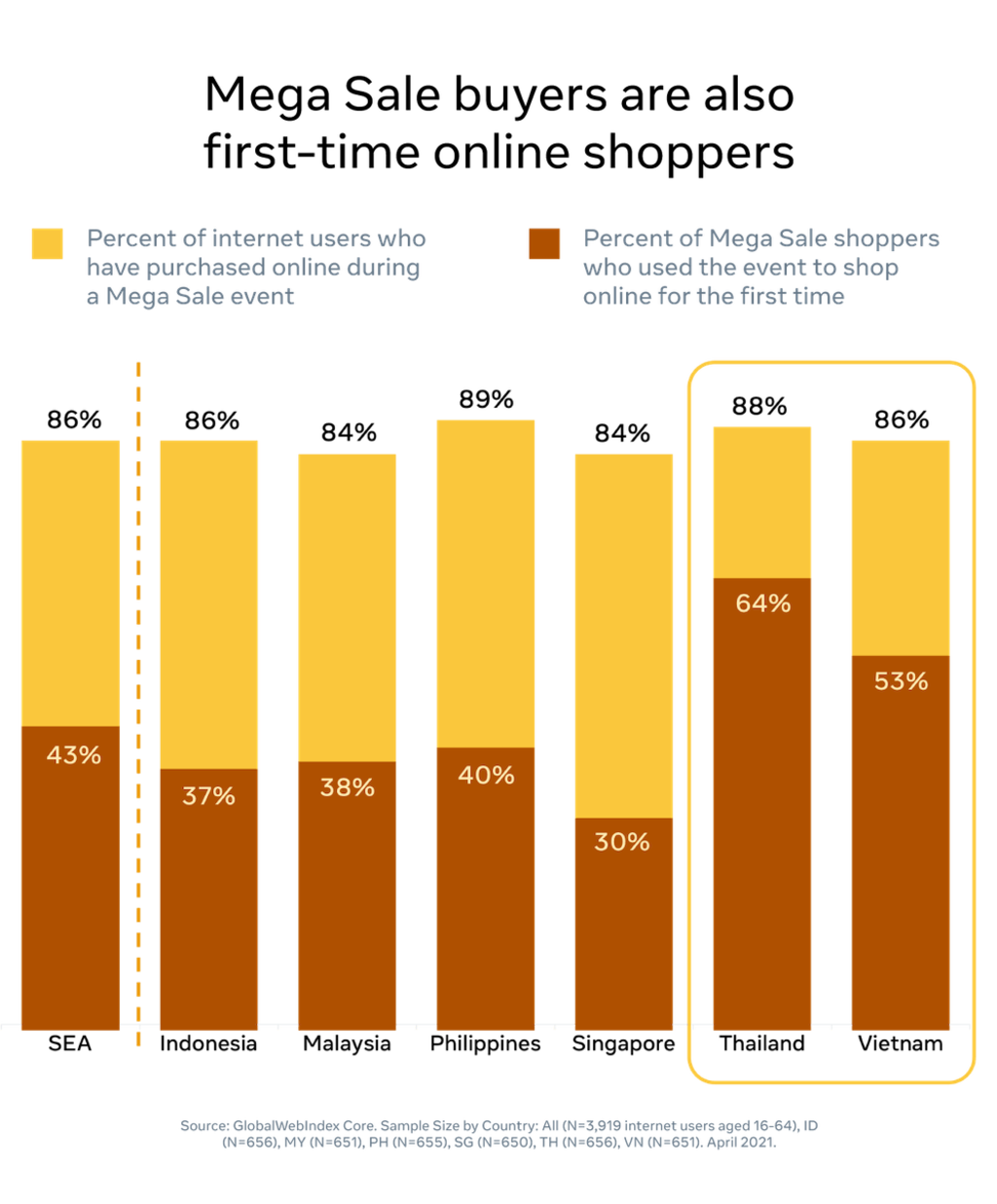
Photo credit: Facebook and Bain & Company’s “Discover The New Wave of Mega Sale Shoppers” report
Keeping up with the Joneses
Government clampdown
More burden on merchants
Stay ahead in Asia’s tech landscape
This is premium content. Subscribe to read the full story.
Flash sales have been drawing in savvy shoppers to online marketplaces. But what would happen if ecommerce players dropped these events?
We know this is not ideal. ⌛ Sign up in 20 seconds. Cancel anytime.
Our subscriber community includes professionals from these companies:





Stay updated on the go with our mobile app.
Get latest insights with smoother, more personalized experience through TIA mobile app.