 Paloma Ganguly · · 5 min read
Meet the women whose motorcycle taxis are taking an Indian city by storm
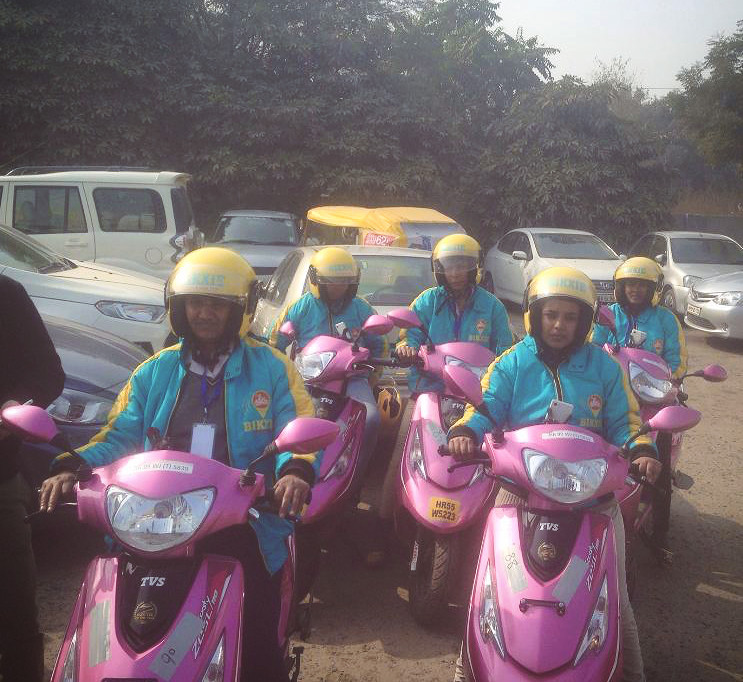
Divya Kalia loves to watch her fleet of six drivers zooming out on their pink two-wheelers. They are all women, and soon they’ll be picking up passengers. Again, all women.
India’s capital area is not exactly known to be woman-friendly.
Divya is the founder of Bikxie Pink, an app-based bike taxi service in Gurgaon that provides last mile connectivity to women. Just a month-and-a-half since it hit the road, its pilots have their hands full. Each bike – actually scooter – is doing 14 to 15 rides a day.
Why? Evidently, because of the promise of safety and convenience in an area – in India’s national capital region – that is not exactly known to be woman-friendly.
India has seen woman cab drivers and it is increasingly seeing bike taxis, with even biggies like Uber and Ola jumping in. But this one is a deadly combo – a bike taxi service by women, for women.
Women of all professions and ages are taking the service. “This came as a surprise as we had thought Bikxie Pink would be a bigger hit with a younger demographic, given that bikes and apps are perceived to have a more youthful appeal,” Divya tells Tech in Asia.
She points out that one of the first customers of the service, and a most regular one at that (she takes almost four rides a day), is a lady close to her retirement age. “And our first and most efficient female pilot is a lady with a teenage son,” she adds proudly.
Wind beneath the wings
Divya, a post graduate in economics, was born and brought up in Delhi. So she knew firsthand what a nightmare commuting in the city and its peripheries could be.

Bikxie founder Divya Kalia.
Bikxie’s own research shows that commuters in NCR undertake 23 million rides on personal and public transport every day. Then there are those who choose to walk owing to lack of efficient last mile options.
“That shows the size of our market,” Divya told Tech in Asia.
The daily commute is marred by traffic congestion, crowded public transport, safety issues, erratic service, and exorbitant rates charged by three-wheeler auto and cycle rickshaws – which is what most people rely on for last mile connectivity.
Women love pink
Steering the wheels
An entrepreneur’s journey





Stay updated on the go with our mobile app.
Get latest insights with smoother, more personalized experience through TIA mobile app.










📅 Upcoming Events
22 October 2026
Payoneer x CSPN Summit 2026