 Jonathan Chew · · 6 min read
Meet the open-source cloud platform bringing companies into the digital age

Before becoming the co-founder and CEO of open-source data platform Aiven, Oskari Saarenmaa was working at cybersecurity firm F-Secure in the early 2000s.
There, he noticed a common issue: Many IT companies – even tech-savvy ones – spend a lot of time trying to find the best infrastructure and maintain it instead of focusing on building business value for their own customer base.

Oskari Saarenmaa, co-founder and CEO of Aiven / Photo credit: Aiven
His colleagues, who would eventually become his co-founders at Aiven, noticed the same gap. While looking for solutions to this problem, they noticed a steady rise in the popularity of Amazon Web Services and other cloud infrastructure platforms.
“We thought that this cloud model really makes sense. [We believed that] it’s where all future applications will be built because it uses software solutions to solve all kinds of production problems,” Saarenmaa says.
That’s when he and his co-founders decided to put their years of experience in PostgreSQL and other open-source technologies to use. In 2015, they founded Aiven, a multi-cloud data platform that is available to anybody and easy to adapt.
“As developers, we wanted to build a data platform we would have loved to use ourselves.”
An early realization
Aiven was founded to provide managed open-source data technologies for enterprises, allowing developers to focus on creating applications and enabling customers to drive business results. Instead of building their own software infrastructures, businesses can subscribe to Aiven’s solutions to gain access to various capabilities – such as event-streaming or database management – through a single cloud platform.
According to Saarenmaa, the founding team decided to lean toward open-source data technologies over proprietary solutions, as they already had prior experience with them and personally enjoyed using these technologies.
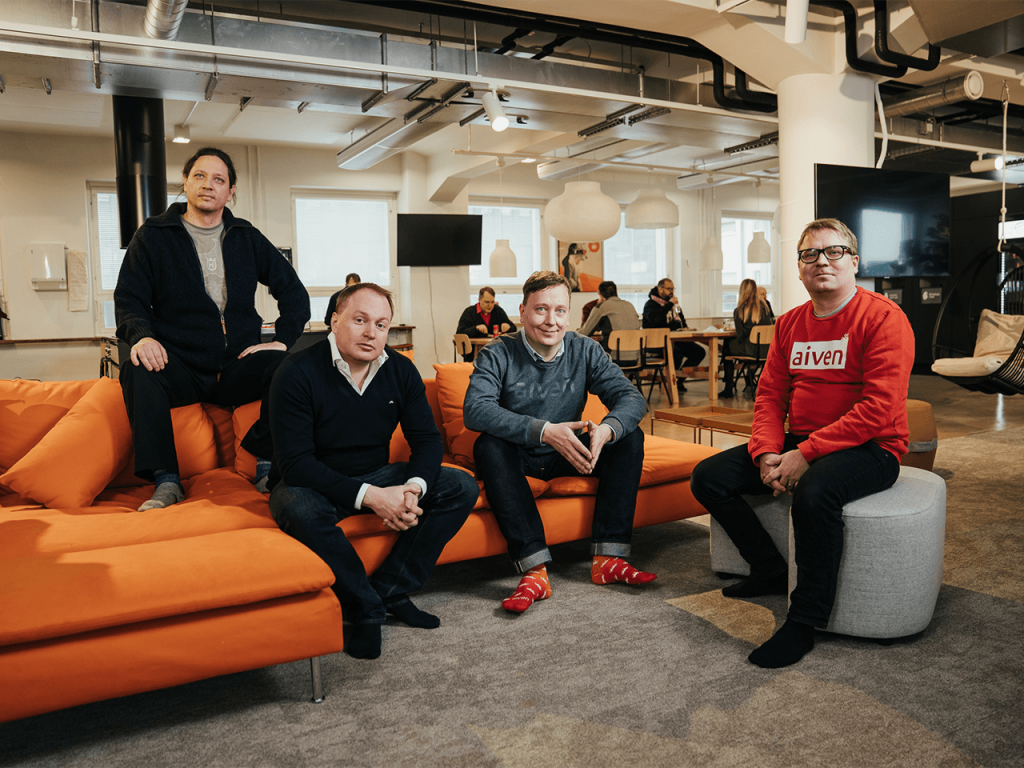
Aiven’s founding team. From left to right: Mika Eloranta, Hannu Valtonen, Oskari Saarenmaa, and Heikki Nousiainen / Photo credit: Aiven
Using open-source infrastructure also provides several key advantages depending on an individual customer’s wants and needs.
“Some customers want to benefit from the collaboration that happens between different companies so that the roadmap of a product is not driven entirely by how a single entity might want to monetize it,” Saarenmaa explains.
Using open-source tech as the platform’s foundation, the team set about building Aiven before officially launching the product in 2016.
However, things got off to an unexpected start.
Aiven originally looked to target software companies, as it believed a cloud software platform would suit their needs best. But none of the firms in Finland – where Aiven was based at the time – jumped in right away to use its solution. Instead, the company’s first customer was a Mexican trucking company.
While the firm’s first partnership came as a surprise, Saarenmaa notes that it also acted as an epiphany.
“We realized that all companies are becoming software companies, and everybody’s using it in their business processes,” he explains. “Companies without their own software solutions just wanted to build on top of them.”
According to Saarenmaa, Aiven quickly gained traction with not only digital native companies but also well-established firms in existing industries such as retail.
“A lot of them wanted to know how to reinvent themselves,” he points out. Retail companies, for instance, were already generating lots of consumer data but did not act on it. However, because of the rise of ecommerce, these retail companies realized they had to use this data to provide them with greater value and insights to compete effectively.
Database management solutions already provided by Aiven – such as PostgreSQL – fit the bill perfectly, giving companies the ability to capitalize on and draw insights from the data they had.
As Aiven’s market was much larger than its founders originally thought, the company began reaching out to more customers, which helped it scale and onboard enterprises from all over the world.
Finding funding
While the company’s early efforts at building a customer base got off to a good start, not everything was smooth sailing.
For one, Saarenmaa notes that building the firm was a challenge, as it didn’t have external investors at the time, which led to funding constraints.
“When we first started, we weren’t great at telling our story,” he shares. “A lot of investors looked at the space and felt they didn’t understand what Aiven was doing as it was technically difficult.”
As they had to bootstrap the firm, members of Aiven’s founding team had to be extremely frugal with how capital was used. This meant delays in bringing in subject matter experts for certain domains such as marketing, sales, and HR to expand the company.
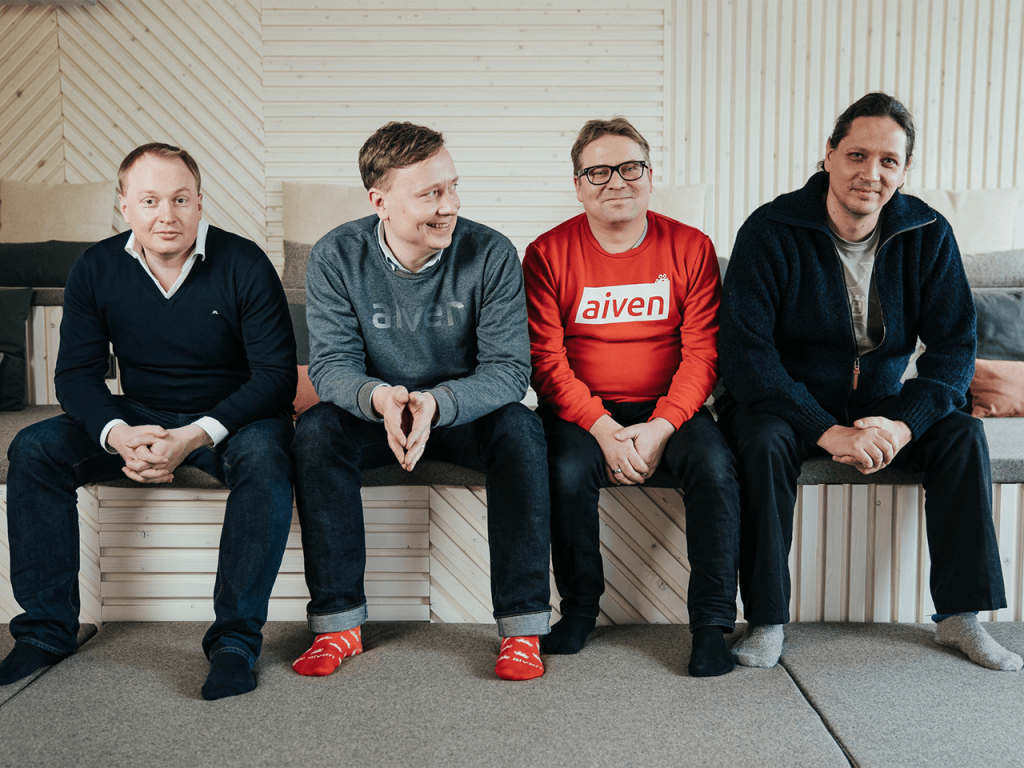
Photo credit: Aiven
“A lot of the time it was too late as we should already have had these experts. That’s one thing that we didn’t get right in the early days,” says the CEO.
To overcome this deficit, the company decided to focus its investor pitches on its competitive advantage: a steadily growing customer base. With several dozen clients on its roster, Aiven demonstrated that it had built a successful working product with customers willing to pay for it.
With this approach, the firm secured its first investment from Lifeline Ventures during its seed round in 2017, and there has been a virtuous cycle ever since – the firm has raised a total of US$210 million to date. Using its new capital injections, the company embarked on a rapid global expansion, growing from a team of four in 2015 to having over 400 employees worldwide today.
Enabling collaboration
As Aiven continued its progress, it made sure that it kept itself up to date with the latest needs of its customers by continually listening to them to understand their challenges and what they wanted to build next.
By iterating its software platform and improving it, Aiven has stayed at the forefront of the sector. For instance, it improved the integration capabilities of its solutions so that customers could use them better in conjunction with other softwares.
“It’s not always about having more features but also making sure it plays well with what they’re already doing,” Saarenmaa says.
The next few years, in particular, will see the company focus on adding more analytics and observability capabilities in its current solutions. While this covers additional use cases for the platform, it also allows customers to have more options when using Aiven alongside their own proprietary software.
Saarenmaa is confident that Aiven will remain on its journey to the top of the industry by providing even more tools for software developers.
“What’s happening is that more developers are being empowered to make decisions in how things are built and scaled, and Aiven is built around enabling them to do this by putting them front and center.”
Accreditation@SG Digital was launched in July 2014 to accelerate the growth of promising Singapore-based enterprise tech-product companies. It helps them to establish credentials, build business traction, grow, and compete in the global market, opening up more opportunities for their solutions to be showcased and adopted.
Aiven provides managed open source data technologies, like PostgreSQL, Kafka, and OpenSearch on all major clouds. Through Aiven, developers can create applications while its platform manages the cloud data infrastructure – enabling its customers to drive business results from open-source technologies that trigger true transformations far beyond their own backyard.
Interested in getting on board? Subscribe through its website.
This content was produced by Tech in Asia Studios, which connects brands with Asia’s tech community. Learn more about partnering with Tech in Asia Studios.
Stay updated on the go with our mobile app.
Get latest insights with smoother, more personalized experience through TIA mobile app.
Recommended reads
 Forrest Li on scaling Sea, building smarter bots, and founder grit
 SGX’s CEO says it doesn’t need a unicorn to win
 SMEs want AI too, but not the kind Big Tech is selling
 Oatside’s alt-milk rise hits a profitable gear
 Alibaba’s financial health in 12 charts
 Asia’s telcos bundle AI into mobile plans. Will it pay off?
 M-Daq chases bigger clients as revenue falls, losses grow
 VC tracker: Accel raises US$3.5b, including US$550m for India
 Graas buys Temasek-backed Trustana in agentic commerce push
 Doctor Anywhere posts healthier operations in 2025





Editing by Nathaniel Fetalvero, Stefanie Yeo, and Jaclyn Tiu
(And yes, we’re serious about ethics and transparency. More information here.)




