
Summary:
- Corenet X transforms Singapore’s building approval process from independent agency submissions into a coordinated digital workflow.
- For firms, the bigger change is not only fewer touchpoints but also clearer visibility, better data flow, and improved cross-agency coordination.
- As adoption grows, Corenet X could become more than a compliance platform: It could form the data layer for a smarter built environment sector.
- Don’t get left behind. Be part of Corenet X today.
The year is 2026.
Singapore’s built environment sector is gearing up for another busy stretch. Demand is forecast to reach between US$36.7 billion and US$41.4 billion, driven by projects such as Changi Airport Terminal 5, New Tengah General and Community Hospital, and the Marina Bay Sands expansion.
Meanwhile, a building project is racing toward completion.
In an office, an architect is checking the latest design revision. Across the island, an engineer is updating structural drawings. Somewhere in the project chain, a consultant is trying to keep the latest version of the project aligned.
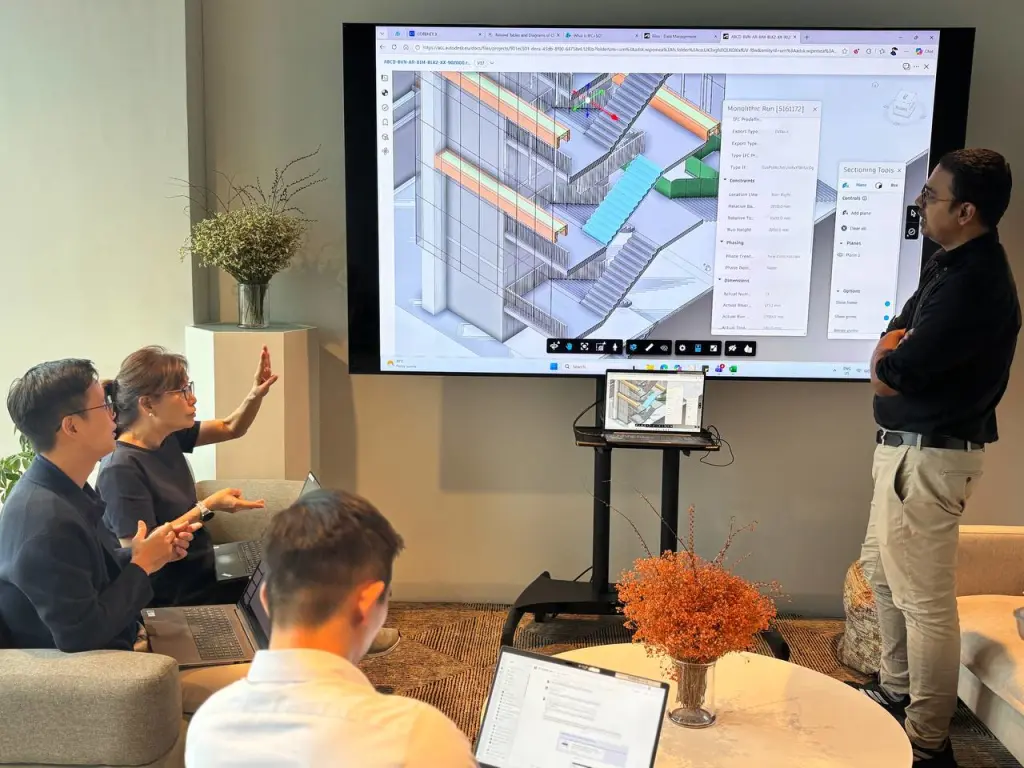
A project team is working on a building submission / Photo credit: RSP
One change may look small enough: a driveway alignment or a drainage interface. But “an unanticipated comment from one agency could hold up the entire project, affecting downstream activities such as tendering and construction,” says Kang Jianhan, director at KCL Consultants Pte Ltd (KCL), an engineering consultancy firm based in Singapore.
In construction, unresolved friction can turn into rework, unnecessary expenses, and missed project timelines.
Corenet X was built to address this pressure point. Led by the Building and Construction Authority (BCA) and Urban Redevelopment Authority, it is Singapore’s one-stop digital platform for integrated regulatory submissions for building works.
The multi-window problem
This is not the platform’s first rodeo. Corenet was first introduced some 20 years ago to help digitize submissions, but the process remained largely agency-centric.
“Although the Corenet 2.0 system existed, it functioned more as a submission conduit rather than a truly integrated platform,” Kang explains. “Each agency assessed submissions independently based on its own regulatory framework, resulting in disjointed feedback loops.”
Coordination became a constantly moving target. A design change made to satisfy one agency could affect compliance with another, creating another round of updates across teams.
“This made design change management incredibly complex and time-consuming,” says Ong Junlin, director at RSP Architects, Planners & Engineers (RSP), an international multidisciplinary architectural design practice. “A single design update necessitated manual synchronization across multiple agency platforms, each with its own specific review and response durations.”

Kang Jianhan (left), director at KCL, and Ong Junlin, director at RSP / Photo credit: KCL, RSP
Without a coordinated upstream process, complex technical matters could be deferred to the construction stage, where changes became harder and costlier to resolve. For firms, this made project timelines harder to predict and manpower harder to plan.
As a result, “a substantial portion of man-hours, particularly for senior architects and engineers, was spent on administrative coordination rather than design development,” says Kang.
From fragmented workflows to an integrated ecosystem
Corenet X changes the approval process by bringing agencies and project firms onto a single, digital platform. Instead of navigating more than 20 approval touchpoints across separate agencies, firms now work through three key submission gateways, which can potentially speed up the overall approval process by 20%.
“Our vision was to create an integrated ecosystem that would transform the fragmented experience into a seamless, transparent, and collaborative service journey,” says Chin Chi Leong, executive director at BCA.
This shift manifests in three ways: clearer visibility, more standardized data, and earlier coordination before formal review.
“One of the most valuable features has been the centralized dashboard, which offers a clear overview of submission progress across all agencies,” says Kang. “This eliminates the need for fragmented tracking methods and reduces uncertainty in project scheduling.”
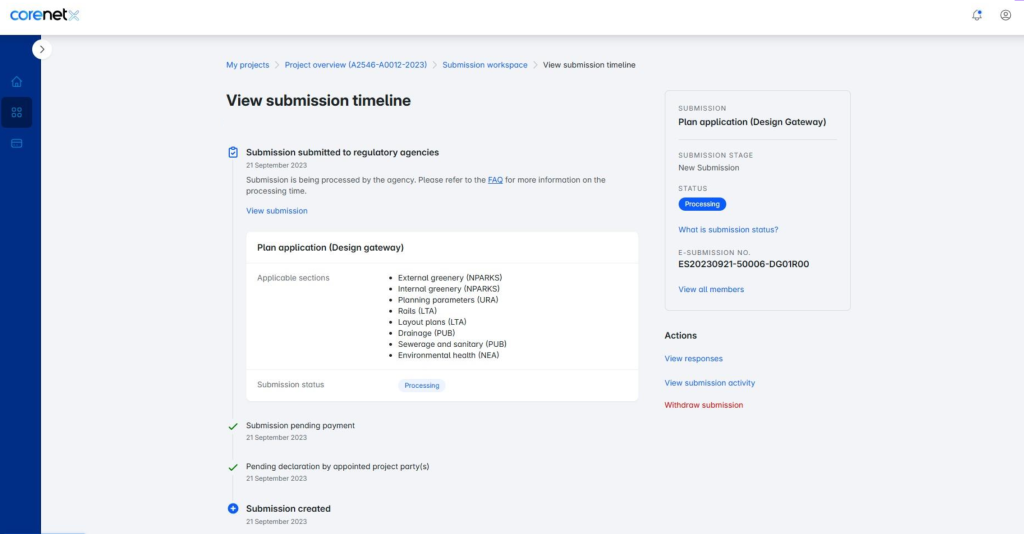
Overview of the building submission progress on the Corenet X platform / Photo credit: BCA
Corenet X also changes how design information is prepared. The platform is built around coordinated building information modeling (BIM) submissions and digital 3D models carrying key data about a building’s design, components, and systems. These models use the IFC format, an international openBIM format, including IFC+SG, which adds Singapore-specific parameters, so project teams and agencies can read and check model information more consistently.
“The shift to IFC+SG means we are communicating through standardized data, which reduces documentation errors and ensures that the design intent is communicated correctly,” Ong shares.
Another key feature is the Automated Model Checker. With this, project teams can run pre-submission checks on BIM models for basic compliance and modelling issues before they reach agencies for formal reviews.
Together, these features transform how stakeholders work together. Instead of addressing regulatory comments in isolated exchanges, project teams now have to coordinate building designs upfront and prepare plans for joint submission.
“The single-window approval process is a game changer,” says Ong. “It allows our teams to track feedback holistically rather than navigating disconnected portals.”
Front-loading is half the battle
Earlier coordination also means more upfront work. For all its promise, adopting Corenet X has not been a simple plug-and-play exercise.
In fact, KCL took about nine months to fully integrate the platform into its workflows, including technical familiarization, software development based on company standards, and process realignment among engineers, drafters, and administrative staff.
The transition required a steep learning curve, according to Kang.
“More importantly, it required a change in mindset – from reactive coordination to proactive, upfront integration,” he adds.
RSP echoes this sentiment. Taking a top-down approach, RSP set up an implementation task force that involved designers, project architects, BIM leaders, and its management team. It also upskilled architects and engineers through regulatory approval and IFC+SG training, supported by monthly internal workshops where project teams share lessons from live projects.
Firms cite BCA’s guidance materials, structured training, hands-on support, workshops, and consultation sessions as important enablers during adoption.
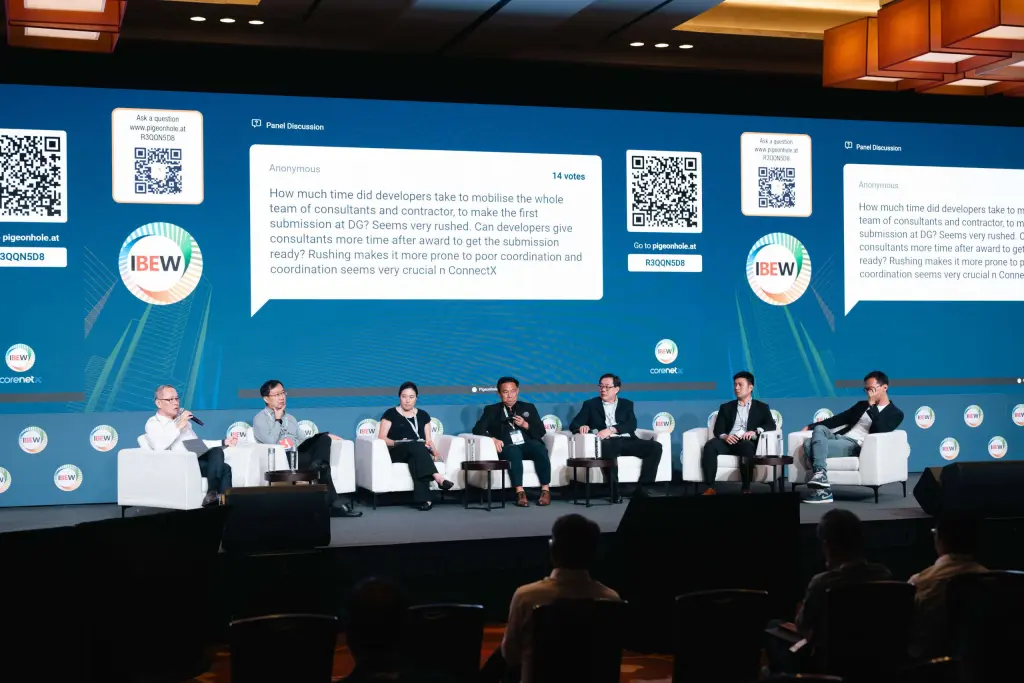
Panel session on Corenet X during the 2025 International Built Environment Week / Photo credit: BCA
“BCA has been an instrumental partner in this transition,” Ong says. “This high-touch collaboration has been vital in smoothing out the learning curve.”
Diving deeper into tech
With fewer touchpoints, clearer dashboards, and more predictable timelines, Corenet X seems like a speed story. But the more interesting shift is that it nudges the industry toward a collaborative, data-first manner of working.
RSP is already studying how formats similar to IFC+SG can be integrated into daily operations. Its digital team has also developed a prototype so it can use Corenet X data for quality control on IFC models, as well as an AI chatbot that can interact with submission data.
“It’s about making architecture a choice industry again,” Ong notes. “By automating the mundane, administrative aspects of compliance through Corenet X, it allows our architects, engineers, and project team members to focus on what they do best – designing purposeful, high-impact design.”
KCL also sees a long-term opportunity.
“Ultimately, the adoption of Corenet X positions Singapore at the forefront of digital transformation in the built environment,” Kang says.
As projects become more complex and sustainability requirements more stringent, the industry will need more efficient, transparent, and data-driven ways of working.
“Corenet X is the digital foundation that makes this possible,” concludes Chin. “By transforming how we collaborate and share data today, we are empowering our built environment sector to confidently design and deliver the sustainable, world-class Singapore of tomorrow.”
Corenet X is your all-in-one digital platform that streamlines approval for building works, ensuring your projects save time and money and are delivered with confidence and certainty. Learn more about Corenet X.
This content was produced by Tech in Asia Studios, which connects brands with Asia’s tech community. Learn more about partnering with Tech in Asia Studios.
Stay updated on the go with our mobile app.
Get latest insights with smoother, more personalized experience through TIA mobile app.
Recommended reads
 Flipkart’s costly late push into quick commerce and food delivery
 Inside Singapore’s government team that kills its own products
 Once an IPO hopeful, SCI Ecommerce nears collapse
 SEA financials tracker: Funding Societies grows revenue by 24%
 Who’s betting big on ChatGPT ads? Not Asian brands
 VC tracker: Granite Asia launches US$50 million fund
 GCash trims IPO ambitions to meet market realities
 Igloo CEO eyes global M&A: ‘We have an appetite to grow more’
 Why SBI paid a premium for Ajaib amid a tough market
 OpenAI warns building for today will cause technical debt





Editing by Stefanie Yeo and Mina Deocareza
(And yes, we’re serious about ethics and transparency. More information here.)