- Premium Content It takes our newsroom weeks - if not months - to investigate and produce stories for our premium content. You can’t find them anywhere else.
 Emmanuel Samarathisa · · 4 min read
Mapping Malaysia’s government tech entities
Dan Lain-Lain (Malay for “and others”) is a weekly column by TIA journalist Emmanuel Samarathisa that dissects the goings-on in the Malaysia tech scene but with a heavy mix of current affairs, policy and politics. Click here to read past articles.
If you’ve followed my coverage of Malaysia’s recently unveiled 2023 budget, then this piece comes as no surprise.

The Malaysian Finance Ministry’s headquarters in Putrajaya. The ministry owns many of the country’s tech agencies. / Pic credit: Putrajaya Insights
I’m not going to rehash many of the points in my previous articles, but I’m going to zero in on Malaysia’s government-backed agencies that target the tech and startup sectors.
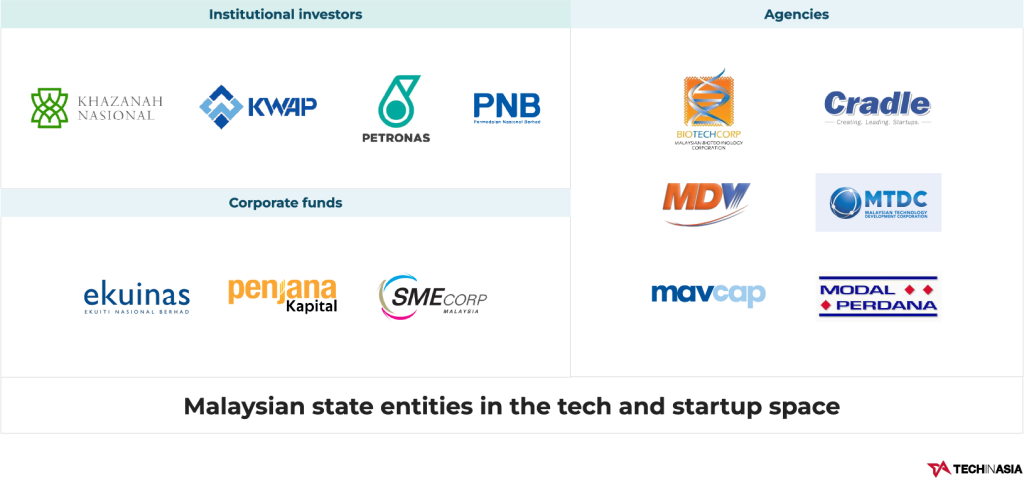
This is one of the reforms that Prime Minister Anwar Ibrahim announced in last Friday’s budget speech, where he said there’ll be a restructuring of government tech agencies. To get a glimpse of how “crowded” the space is, below is a landscape map:
Before I get into the nitty gritty, we need to bear in mind a few things.
A complex web
Firstly, Some of the names featured in the chart are agencies such as Mavcap and Malaysia Debt Ventures, which are specifically for tech or startup investments. Others are agencies such as SME Corp and Ekuinas, which dabbled in the VC space through an external partnership with established private VCs.
Still others are large state financial and non-financial institutions that have their own venture arms – for example, Petronas, Khazanah, asset manager Permodalan Nasional Bhd (PNB), and civil servants’ pensions pot Kumpulan Wang Pesaraan Diperbadankan (KWAP).
PNB was in talks to lead a 2021 funding round in Singapore-based car marketplace Carro while KWAP invested in Uber.
Secondly, Malaysia has a convoluted governance structure. For example, Mavcap falls under the purview of the Ministry of Science, Technology, and Innovation. But the Finance Ministry is its shareholder and dictates board appointments as well as mandates.
SME Corp, for example, is an agency under the Entrepreneur and Cooperatives Development Ministry.
Thirdly, I didn’t categorize these according to the funding lifecycle of a startup — seed to IPO — because these agencies do not have specific mandates to target a certain stage. That in itself is a problem because you end up not only with overcrowding but also cannibalizing certain segments while ignoring the rest.
A lack of political will?
Affirmative action policies: a bane
Stay ahead in Asia’s tech landscape
This is premium content. Subscribe to read the full story.
Jobs will be cut if the government decides to overhaul the sector.
We know this is not ideal. ⌛ Sign up in 20 seconds. Cancel anytime.
Our subscriber community includes professionals from these companies:





Stay updated on the go with our mobile app.
Get latest insights with smoother, more personalized experience through TIA mobile app.









📅 Upcoming Events
22 October 2026
Payoneer x CSPN Summit 2026