 Jonathan Chew · · 5 min read
Everything companies need to know before expanding into Hong Kong

If China’s Greater Bay Area (GBA) – which comprises Hong Kong, Macau, and nine mega cities in the Guangdong province – was a country, its overall gross domestic product (GDP) in 2020 would have made it one of the world’s top 10 economies.
That year, the megapolis’ GDP came in at a whopping US$1.6 trillion, putting it ahead of major economies like Canada and South Korea.
Hong Kong, in particular, has been a major contributor to the GBA’s economic success, being a popular entry point for foreign businesses to the mainland Chinese economy.

Hong Kong’s productive power has made it attractive for business expansion plans – foreign direct investment (FDI) inflows in the city-state reached US$119.2 billion in 2020, making it the third-most popular economy for foreign capital in the world behind the US and mainland China.
It’s also fertile ground for new businesses. The number of startups in the territory has hit 3,755 firms – a jump of 12% between 2020 and 2021, according to InvestHK. Further, 28% of these startups’ founders were not local residents.
That said, before companies decide to expand to Hong Kong, they need to consider how to safely capitalize on the specific business opportunities the territory presents.
Identifying key opportunities
The financial services market offers one of the biggest opportunities for business in Hong Kong.
The sector contributes greatly to the territory’s economic output. In 2020, it made up 23.4% of Hong Kong’s GDP and provided 273,000 jobs to the economy.
Much of this is driven by the large number of financial institutions in the city-state, which houses more than 163 licensed banks. This includes financial giants such as the Hong Kong and Shanghai Banking Corporation and Hang Seng Bank, to name a few.
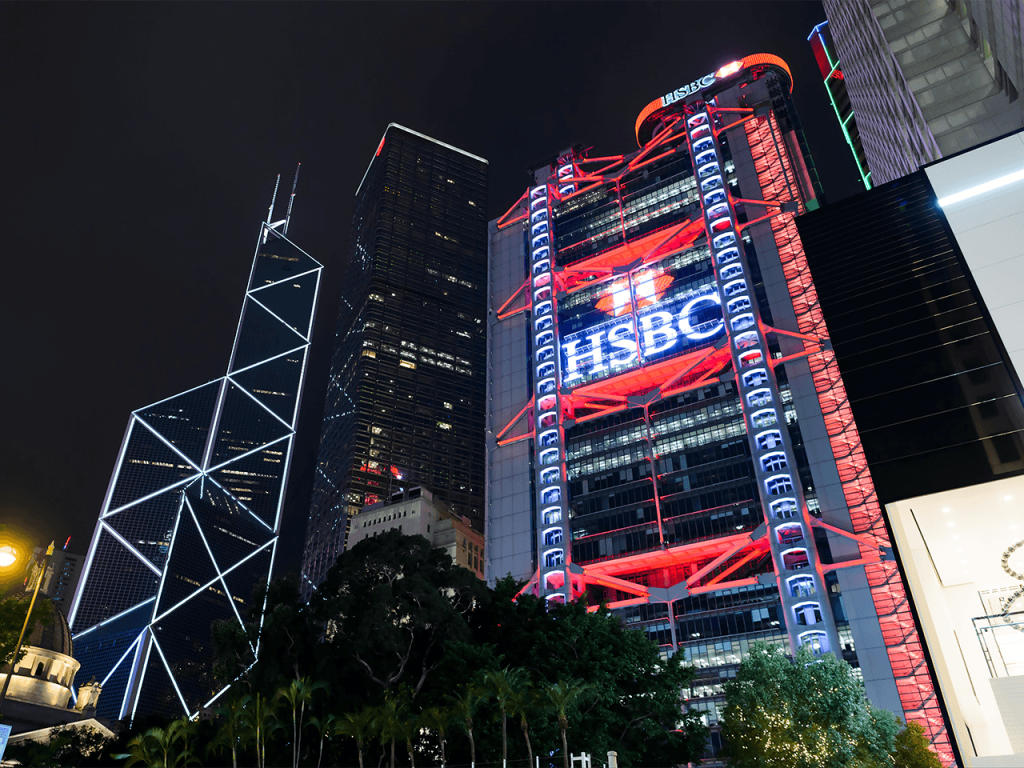
The large financial services sector has also spurred growth in fintech.
“All the larger financial institutions need to bring in new technologies to try them out,” says Charles Ferguson, Asia-Pacific general manager at global employment firm Globalization Partners. “Imagine all of the ancillary services and different sorts of ecosystem requirements needed to support that level of innovation.”
As such, it’s no surprise that the number of fintech businesses in the territory has exploded in recent years. In 2017, Hong Kong had just shy of 200 companies in the sector. By 2021, that figure had grown to more than 600 firms.
This should be welcome news for overseas startups that provide fintech solutions such as digital payments, securities settlements, insurtech, and wealth tech, among other services.
A strong financial services and fintech sector provides expansion opportunities for professional services that support it – such as accounting, tax advisory, and corporate formation and governance.
Legal services, in particular, stand out in Hong Kong. There are 85 overseas law firms operating in the city as of 2021, according to the Hong Kong Trade Development Council. Further, more than half of the 100 biggest global law firms are based in Hong Kong.
“If you want to engage with the legal sector, virtually nowhere else in the world has the same level of access, or the same level of penetration and legal services as Hong Kong does,” Ferguson points out.
A regulatory minefield
While firms may be keen to expand to Hong Kong, Ferguson warns that companies new to the territory have to grapple with unfamiliar regulations in many areas.
Entrants have to deal with legal hurdles such as corporate set-up, tax laws, or simply opening company bank accounts – a process that he notes is “notoriously painful.”
“Just because you have a Hong Kong entity doesn’t mean that you can open up a bank account,” he shares. “There are multiple working pieces you must have together in order to successfully apply for that.”
Companies must prepare several documents such as certificates of incumbency, incorporation, and good standing, just to name a few.

Flouting these regulations could lead to severe penalties. Even large organizations that might have been expected to be familiar with them have been punished, demonstrating how tricky regulations can be for newcomers.
Just last year, four banks – Switzerland-based UBS, Taiwan-based CTBC, the Industrial and Commercial Bank of China, and China Construction Bank – were fined a total of US$5.7 million by the Hong Kong Monetary Authority for anti-money laundering breaches.
With this in mind, Ferguson advises firms looking to expand to Hong Kong to hire someone based in Hong Kong remotely before formally setting up an entity in the city-state to test the market from a much safer vantage point.
“There are a litany of different ways and different business models that can be leveraged to exploit the opportunities inherent in Hong Kong and thus give you a clearer picture,” he adds.
One way to do this is to find a partner with expertise in business expansion and hiring in foreign territories. Globalization Partners, for instance, can help companies hire remotely and take care of all necessary paperwork as well as legal, tax, and compliance considerations around business regulations.
“It’s a no-brainer. We can onboard somebody in as little as six hours and you’re off to the races – you’ve got somebody on the ground and it’s totally legal, totally compliant, and we can help you pay their salaries,” he says.
Keeping a strong economy
As Hong Kong’s business landscape continues to evolve, Ferguson expects the appointment of the region’s new chief executive-designate, John Lee, to bring stability and consistency in the territory due to Lee’s favorable disposition toward mainland China.
Additionally, he believes that the city’s strong economic performance will continue to shine through this year, allowing it to retain its position among overseas firms as an enticing destination for expansion.
Though Hong Kong’s GDP is forecasted to grow by roughly 1% to 2% in 2022, Ferguson says he “wouldn’t be surprised” if this figure reaches even 3.8% by the end of this year, given how well Hong Kong is adapting to its changing political landscape.
“If you’re a business or startup, there’s so much going on, it’s unbelievable,” he says. “I think that’s a benefit if you understand how to leverage that to your advantage.”
Globalization Partners enables companies to hire global remote teams in a matter of days with its AI-driven and fully compliant global employment platform.
If you would like to find out more about how you can unlock Hong Kong’s growth opportunities for your startup, register for its webinar.
This content was produced by Tech in Asia Studios, which connects brands with Asia’s tech community. Learn more about partnering with Tech in Asia Studios.
Stay updated on the go with our mobile app.
Get latest insights with smoother, more personalized experience through TIA mobile app.
Recommended reads
 Indonesia’s UangTeman under scrutiny over alleged tax evasion
 Gobi-backed EWA firm Paywatch expands to Indonesia
 Bali may sanction tourists who use crypto for payments
 Trading platform Moomoo rolls out in Malaysia
 2C2P expands its remittance service to Cambodia
 Delivery Hero denies deal to sell Foodpanda to Grab was cancelled
 Can Indonesia’s new capital Nusantara rival the fintech hubs of SG and HK?
 Inflation and rising interest rates – not US default – will drive Asia to adopt crypto
 HSBC adds Bitcoin, Ethereum ETF support on HK exchange
 Wise pauses e-wallet features in Indonesia (Update)





Editing by Nathaniel Fetalvero and Arpit Nayak
(And yes, we’re serious about ethics and transparency. More information here.)





📅 Upcoming Events
22 October 2026
Payoneer x CSPN Summit 2026