This interview was conducted by Mohammad Fahmi of Games in Asia Indonesia with Alex Aniel from Brave Wave translating. It can be found in its original form here.
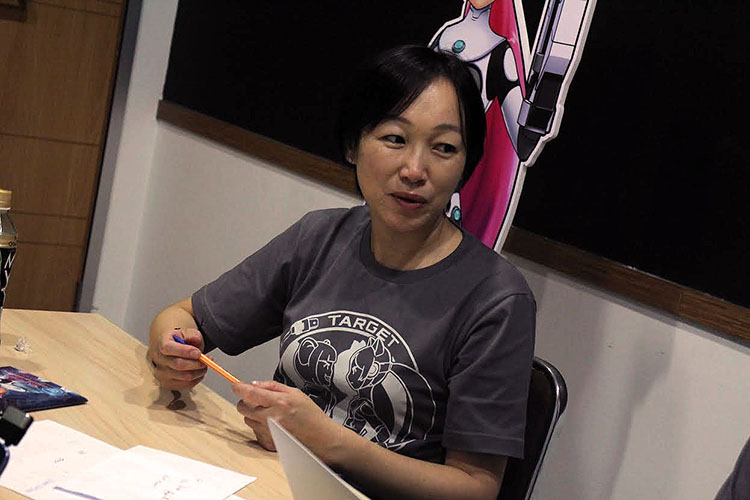
Manami Matsumae studied music at university. Classical piano formed the core of her education, though she studied other types of music as well. But the end of her university education was looming, there was no job offer on the horizon. Until one day, she looked at a campus bulletin board and saw a job opening as a video game composer at Capcom.
That was the start of Matsumae’s career with the video game industry giant. Matsumae, then better known by her maiden name Gotoh or credited as her alias, Chanchacorin, composed music for the original Mega Man game, as well as for titles like Dynasty Wars, SonSon II, and Carrier Air Wing. While Matsumae went freelance once she left Capcom in 1991, she has since returned to work on music for games like Mighty No. 9 and Shovel Knights.
These days, Matsumae also works on other non-video game projects, like jingles for schools in Japan. Matsumae has also been collaborating with Indonesian game studio Touchten Games on a Mega Man-inspired running game for mobile called Target Acquired. She recently visited the Touchten Games office in Indonesia, where we were able to spend some time with her.
Matsumae says composing video game music today is easier. Back in her days at Capcom, she says there were huge technological limitations on what they could include. “I could only enter a few notes for a very limited duration. Now I can put anything I want into my music and the game can still run it without any problems.”
She adds that she feels more comfortable working with smaller and independent teams. “In small teams communication is easier, so requests or explanations are conveyed easily as well. In large teams, there are a lot of layers that restrict communication and creativity.”
Matsumae says that with small teams, she’s able to compose music and present it directly to the team, who then immediately give feedback on whether they like it or not.
“I don’t really see a striking difference,” she says, of working with teams of different and diverse cultures in the past couple of decades. Matsumae says teams from Japan are the most different. “They could be said to have a great limitation and are very stringent about work quality. I often have to redo an entire song when working with a team from Japan.”
“Teams from other countries and cultures can be very flexible,” she adds.
Target Acquired is currently still in development and is expected to release in March 2015. You can keep up with it on its Kickstarter page.
See: Why this Japanese game developer left Capcom for his own startup
Editing by Paul Bischoff
(And yes, we’re serious about ethics and transparency. More information here.)





Stay updated on the go with our mobile app.
Get latest insights with smoother, more personalized experience through TIA mobile app.