- Premium Content It takes our newsroom weeks - if not months - to investigate and produce stories for our premium content. You can’t find them anywhere else.
 Putra Muskita · · 7 min read
Indonesia courts Tesla but faces EV roadblocks
For several consecutive years, the Honda Brio RS has been Indonesia’s most popular city car. Between 2021 and 2022, nearly 30,000 units of the hatchback were sold on a wholesale basis.
In 2021, the runner-up was the Suzuki Ignis, which sold a comparatively paltry amount of fewer than 2,000 units.
But in 2022, a new name took Ignis’ place: the Wuling Air EV, an electric vehicle from the Chinese car manufacturer. Similar in size to Mercedes-Benz-owned Smart cars, the Air EV was launched in September 2022, with 8,000 units sold in just three months.
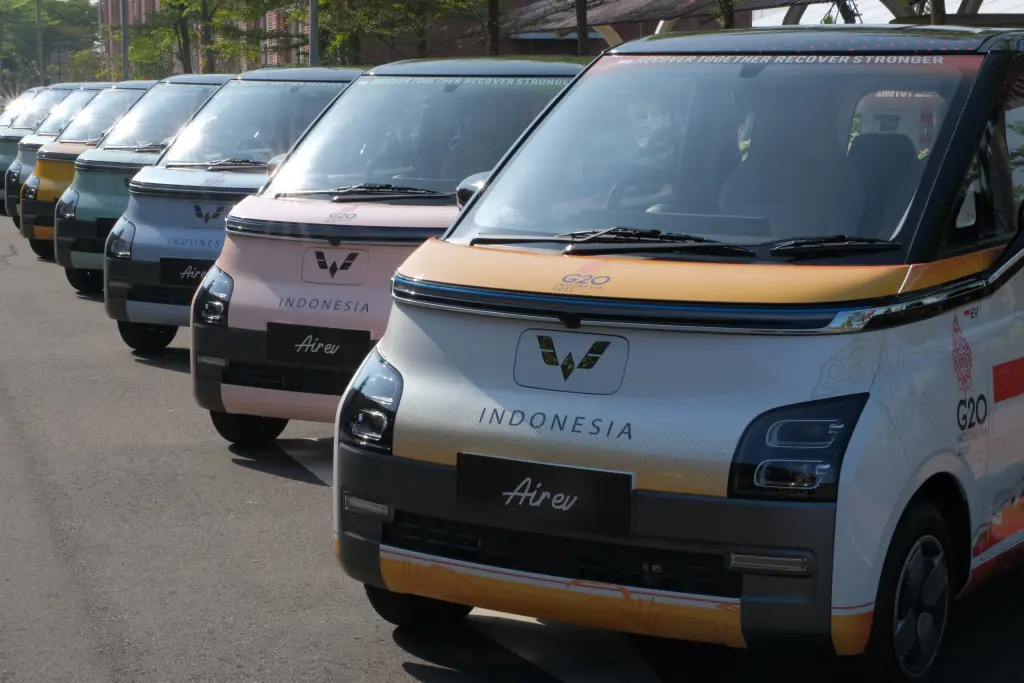
Wuling’s Air EV was the official car partner of the 2022 G20 Summit in Bali / Photo credit: Wuling
In the grand scheme of things, 8,000 units is not a lot. To compare, over 60,000 units of Honda Brio’s locally produced “low-cost green car” were sold in 2022, making it Indonesia’s top-selling car.
The success of Wuling Air EV – easily spotted around Greater Jakarta in its various shades of pastel – in such a short amount of time is yet another indication of Indonesia’s ambitions in the electric vehicle space. Aside from Wuling, other carmakers like South Korea’s Hyundai and China’s BYD are investing in the country.
Tesla is also reportedly closing in on a deal to build an Indonesian EV plant, which would produce 1 million cars a year.
EVs are likely to create a significant impact on the nation’s economy. In addition to having a large domestic market, the country is the world’s top exporter of nickel – a key ingredient for EV batteries – and has long been a car manufacturer for domestic and export markets.
Fully activating Indonesia’s potential, however, is easier said than done.
Missing a homegrown brand
Indonesia’s auto manufacturing sector contributed over 10% to its 2017 gross domestic product. In 2021, the country produced 1.1 million cars, making it the second-largest motor vehicle producer in Southeast Asia (after Thailand) and 14th globally.
Two factors make Indonesia particularly attractive for the auto industry, one being its local market.
Apart from being Southeast Asia’s largest auto market, Indonesia has relatively low car ownership rates. A Momentum Works report found that there are with 77 cars per 1,000 people in the archipelago, but Malaysia has 353 and even public transport-friendly Singapore has 94 cars per 1,000 people.
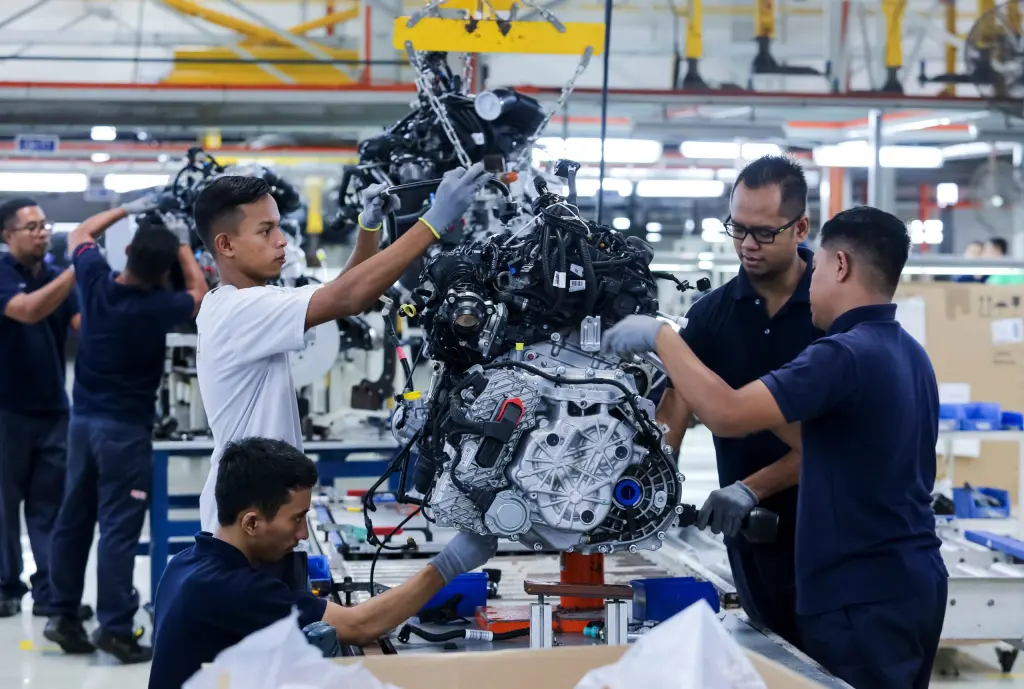
Workers assembles a car engine on an assembly line / Photo credit: 123RF
More pressing issues
Feasibility check
Stay ahead in Asia’s tech landscape
This is premium content. Subscribe to read the full story.
In spite of its nickel reserves, the country’s electric vehicle story has big challenges, including not having a local car brand.
We know this is not ideal. ⌛ Sign up in 20 seconds. Cancel anytime.
Our subscriber community includes professionals from these companies:





Stay updated on the go with our mobile app.
Get latest insights with smoother, more personalized experience through TIA mobile app.











📅 Upcoming Events
22 October 2026
Payoneer x CSPN Summit 2026