- Premium Content It takes our newsroom weeks - if not months - to investigate and produce stories for our premium content. You can’t find them anywhere else.
 Michael Tegos · · 7 min read
How Structo found its 3D printing niche in the booming dental industry
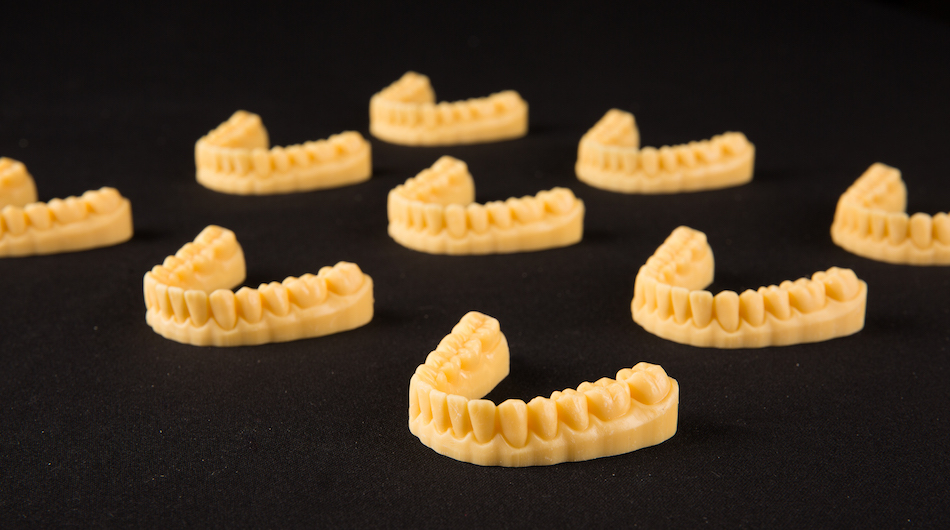
Photo credit: Structo
Remember the 3D printing craze a few years ago? It looked like the next consumer tech hit, with visions of people printing all kinds of things on their own 3D printers, from toys to computer accessories.
But as companies and users came to grips with the inconveniences of 3D printing – bulky and noisy machines, expensive and hard-to-find printing materials, high production and support costs – the trend fell away from the mainstream and returned to the laboratories of enthusiasts and hobbyists.
3D printing for business applications, on the other hand, has permeated several industries, including aerospace, architecture, and medicine. According to a report by consulting firm Wohlers, the global 3D printing industry grew 21 percent in 2017 to reach a value of US$7.3 billion – and that’s not counting corporations like Airbus, Ford, Adidas, and others investing internally in the technology.
Structo, a little startup from Singapore, managed to break into it almost by accident.
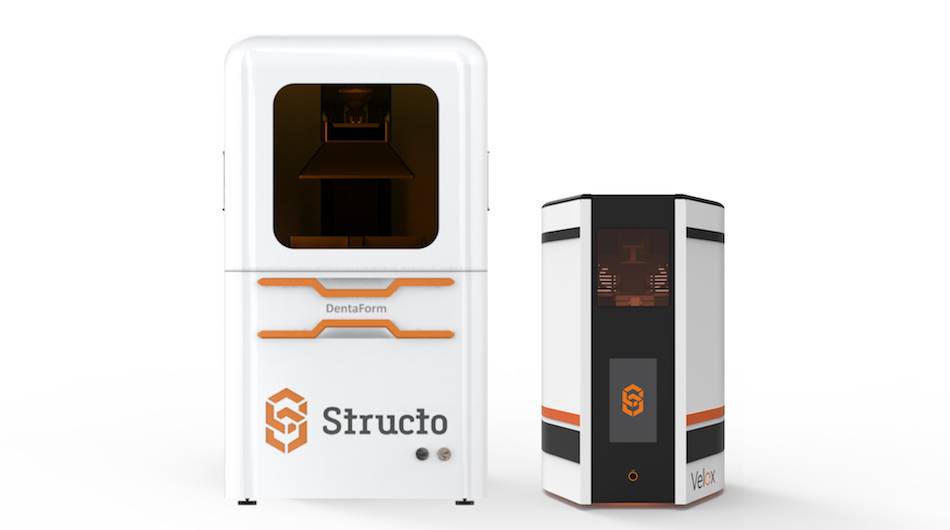
Structo operates within a niche of a niche. It makes and sells 3D printers and printing material – the “ink” of a 3D printer – to dental clinics and labs. Its customers need accurate 3D models of teeth and gums – the kind which had you waiting around with a mouth full of dental clay in order to get a cast made.
Based on digital scans from patients, 3D prints include orthodontic casts, crowns, dentures, and so on, tailor-made according to each patient’s needs. More ambitious applications include 3D jaw modelling for patients who need full jaw reconstruction.
A viable product vs a toy
Structo started out as a school project in 2012 – mechanical engineering students building things for fun. But the group decided to take it beyond the university and turn it into a real product. So after graduating in 2014, they founded the company. That’s when they discovered the market had a very specific idea of what 3D printing could be.
The group approached some investors with their project and most of them had the same idea. “They would say: Great, let’s go to Kickstarter, do a US$2,000 printer, and sell a whole bunch of them,” says Structo co-founder Huub van Esbroeck.
But that wasn’t where the team wanted to go. “We wanted something that was useful instead of just a toy,” he adds.
The Structo team finally found support from Singapore-based venture capital firm Wavemaker Partners. The next year-and-a-half was spent building their 3D printer, designing the software, and making the printing material.
Their first machine was a total of 50 components that were bought and assembled. Later, they started making their own printed circuit boards, which allowed them to plug in components and customize as needed. Through continuous iteration, the team has streamlined the process and created more sophisticated products.
These days, the average machine is made up of about 1,000 components from 100 different suppliers. Structo’s Singapore headquarters, where the magic happens, is a combination of office and workshop, the smell of resin and soldering irons thick in the air.
Sailing across the Pacific
How to make 3D teeth sexy
Focus as a competitive advantage
Stay ahead in Asia’s tech landscape
This is premium content. Subscribe to read the full story.
Within four years, Structo went from a student project to a growing 3D-printing business with clients globally.
We know this is not ideal. ⌛ Sign up in 20 seconds. Cancel anytime.
Our subscriber community includes professionals from these companies:





Stay updated on the go with our mobile app.
Get latest insights with smoother, more personalized experience through TIA mobile app.