 Samantha Cheh · · 6 min read
Korean wave is sweeping into Japan’s startup ecosystem

Korean dramas have been making waves in neighboring Japan for nearly 20 years.
The first K-drama to capture the hearts of Japanese viewers was the 2003 show Winter Sonata. In recent years, series like Crash Landing On You (2019) and Itaewon Class (2020) have also become massive hits in the country.

Crossing borders through more than one medium / Screenshot from: Anime News Network
There’s no doubt that hallyu – literally translated as “Korean wave” – is in Japan for the long haul. Dcamp, a South Korean growth partner for startups, has witnessed its rise, and now it’s looking to start a wave of its own within the Japanese tech space.
In early 2024, Dcamp announced a collaboration with TBS Innovation Partners – the corporate VC arm of Japanese broadcaster TBS Holdings, which owns several TV and radio networks. The goal was to help South Korean media, entertainment, and content startups enter the Japanese market.
The Japan connection
Hyelim Ha, who leads global operations at Dcamp, says the organization began exploring the Japanese market in 2023. This was in the wake of the government’s 2022 Startup Development Policy, a roadmap aimed at supporting the growth of a local ecosystem.
Dcamp started by running small networking programs, which helped it connect with several stakeholders in the Japanese startup scene. Through these relationships, the firm learned about Japanese organizations’ openness to global startups, particularly those from South Korea.
According to Ha, many of the Japanese CVC firms Dcamp engaged with were interested in how South Korea’s advanced tech could potentially support Japan’s digital transformation push.

Hyelim Ha. global operations lead at Dcamp / Photo credit: Dcamp
Through these engagements, Dcamp learned that TBS Innovation Partners was already looking into South Korean startups. This opened the door for potential collaboration and innovation.
“During our meetings with Japanese companies, we had a number of criteria that we wanted our partner to meet,” Ha recalls.
These prerequisites included a genuine interest to collaborate and clear expectations regarding which industries to work in.
“TBS met all our requirements, and we were especially thrilled by their strong interest in South Korean culture,” she adds. “Their production of South Korean-themed dramas has also contributed to creating a really positive partnership.”
Once it was clear that the two organizations’ values aligned, they signed a memorandum of understanding.
Dcamp’s “open innovation” gambit
The partnership with TBS Innovation Partners came about as part of Dcamp’s “open innovation” strategy. The goal was to build networks of corporate partners to identify specific needs that could be solved with South Korean innovation.
“South Korea and Singapore actually have a comparable number of unicorns, but the presence of South Korean startups abroad remains relatively low due to factors like having different business cultures or difficulty finding product-market fit,” says Ha. “We want to help them to form collaborations with global companies so they can reach their full potential.”
While building said collaborations can take a while, Dcamp has already seen some success. Its network now includes prominent Japanese firms like Sega Sammy Holdings, Bandai Namco Entertainment, and Shochiku Ventures.
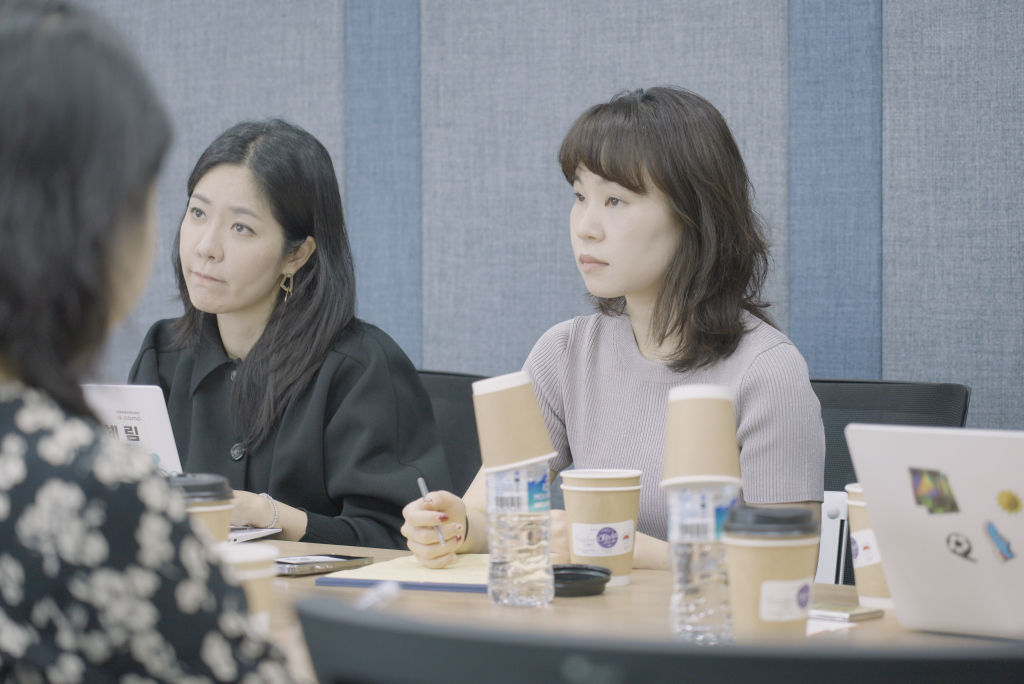
Ha (left), in a meeting with Dcamp’s global partners / Photo credit: Dcamp
The foundation then goes through its pool of South Korean startups to create a shortlist based on how well they meet the corporate partners’ needs. These are then put through an in-depth “cultivation” period.
“We get local industry experts to stress-test the startups’ business plans,” Ha explains.
After the reviews, founders join private events called MokTalks to pitch their startups to potential partners and investors. This gives founders a chance to assess how viable their business is while establishing sales channels.
Meanwhile, partners and investors get a more in-depth understanding and evaluation of a potential venture.
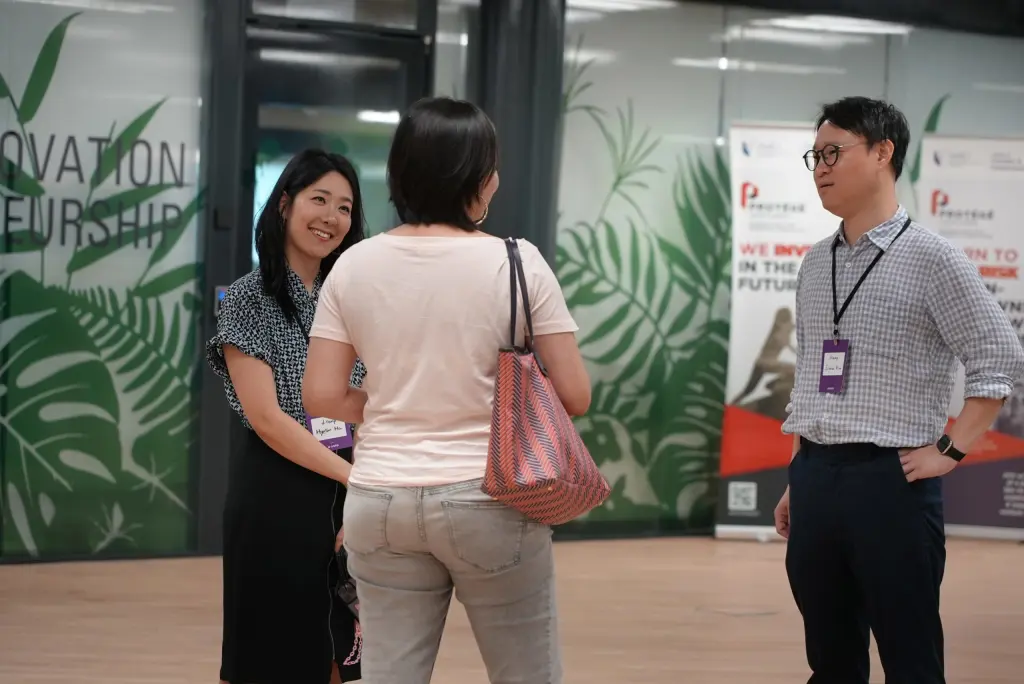
Ha (left), engaging with the aforementioned stakeholders at a MokTalk / Photo credit: Dcamp
Throughout the process, Dcamp acts as both an advocate for South Korean innovation and a mediator.
“Startups usually want to receive corporations’ opinions quickly, but big companies tend to have a relatively complex decision-making process, so how they view timelines and communicate may be different,” Ha says. “Dcamp’s role is to get both sides on the same page.”
Mutual synergies
What do Dcamp’s South Korean startups get from collaborating with Japanese firms?
Ha points out that Japan’s stock market highs of last year were led by tech investments, signaling the growing importance of the sector.
She further notes that Japan has over 700 corporate VC funds. Many of them are working to revitalize the country’s tradition of building more corporate-oriented startups.
Dcamp is also banking on government policies designed to supercharge its startup ecosystem.
Under Japan’s Startup Development Five-Year Plan, the government is set to invest US$63 billion into startups by 2027. It’s an ambitious roadmap aimed at building up 100,000 companies and fostering 100 unicorns.
These policies could further increase the presence of South Korean startups in Japan, especially in specific industries like mobility, information and communications tech, K-content, K-beauty, and digitalization, according to Ha.
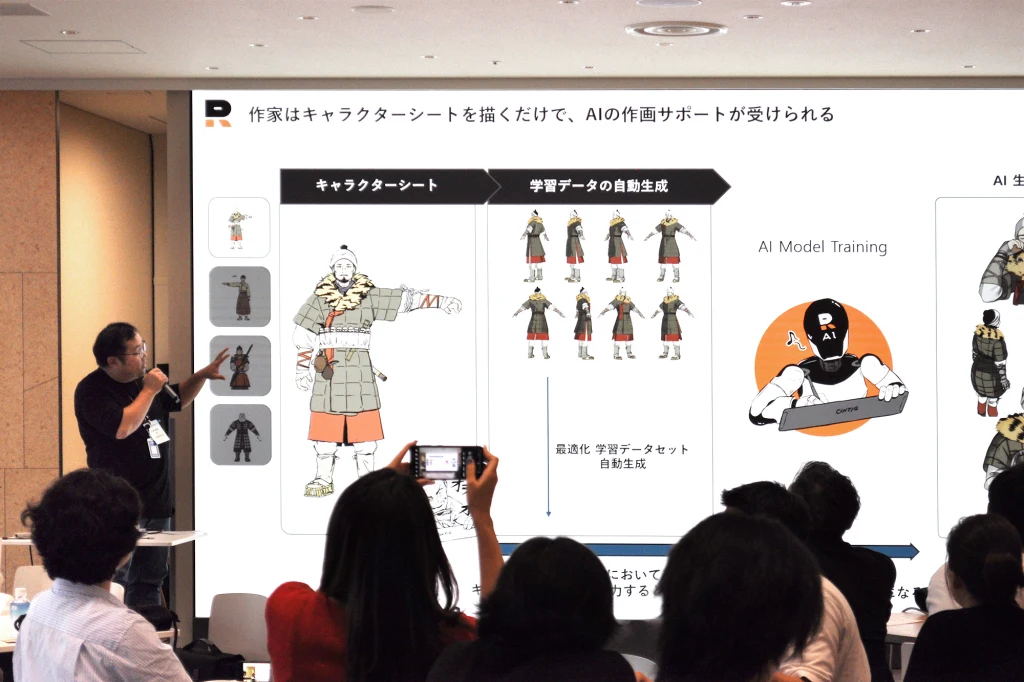
Thomas Choi, CEO of Realdraw, presents his startup’s AI-driven webtoon production solution at Dcamp’s joint event with TBS Innovation Partners / Photo credit: Dcamp
“These sectors are a priority as they play to our strengths, helping us showcase the excellence of South Korean startups and generating meaningful business outcomes,” she adds.
Among the startups that have been selected for Dcamp’s Japan push are creator platform Stayge Labs, virtual technology firm Adler, and digital talent agency Parable Entertainment. These firms were selected because they had a business reference from overseas; someone who could operate an overseas business; and interest from foreign investors.
Growing further afield
As the new year kicks into high gear, Dcamp is working on developing partnerships with Japanese telco KDDI and fintech firm Finolab, with plans to add more across different sectors.
“In the long term, we are particularly interested in collaborating with companies in industries that have longer lead times to establish partnerships, such as biotech and deeptech, so that our startups can get in early and make a bigger difference down the line,” Ha explains.
Looking beyond Asia, Dcamp is already expanding in the US.
“We weren’t active there previously because we had a limited number of resources, but this year, we will secure key partners in the US through our investment initiatives,” she shares.
These partnerships will lay the foundation for Dcamp to accelerate the entry of promising early-stage South Korean startups into the US via its Silicon Valley-Batch program.
“Our goal with Silicon Valley-Batch is to create successful case studies that we can pitch to more partners and support even more startups,” she says. “By building on our initial successes, we can guide South Korean startups to more investments and contracts, and ultimately help them further expand their operations abroad, whether it’s in Japan or elsewhere.”
Dcamp is a startup foundation that aims to support Korean companies with the resources, funds, and networks they need to gain global recognition and growth.
To find out more, check out its LinkedIn page.
This content was produced by Tech in Asia Studios, which connects brands with Asia’s tech community. Learn more about partnering with Tech in Asia Studios.
Stay updated on the go with our mobile app.
Get latest insights with smoother, more personalized experience through TIA mobile app.
Recommended reads
 60/40 Podcast: The challenges of building a startup in Japan
 These are the most active investors in Malaysia’s startups
 60/40 Podcast: Startups and VCs in the age of AI
 Rising sun, raising funds
 Unicorns out, zebras in
 Meet the 25 top-funded startups and tech companies in Malaysia
 SEA tech: scaling up or cutting back?
 Addressing First Frontier Borneo Capital’s response to our article
 How AI is warping VC timelines
 We’re searching for Southeast Asia’s first CTO of the Year





Editing by Winston Zhang and Mina Deocareza
(And yes, we’re serious about ethics and transparency. More information here.)




📅 Upcoming Events
22 October 2026
Payoneer x CSPN Summit 2026