 Jonathan Chew · · 6 min read
The official unofficial tier list of priorities for expansion in Asia

Superman might be one of the strongest superheroes in fiction, but apart from Kryptonite, he’s got another glaring weakness: He can’t be everywhere at once.
If someone as powerful as Superman can’t do that, imagine how your average startup founder must feel – everyone’s human after all.
No matter how capable they are, founders with limited resources can’t really afford to direct capital and personnel to every single effort at the same time.
Prioritization is key – and one of the most important times where your business will need to do that is when it’s expanding to other markets. New responsibilities – such as hiring new people and establishing new supply lines – abound, along with the need to ensure regular business success.
To help entrepreneurs in Asia expand successfully around the region, we enlisted the help of Young-duk Kim, CEO of South Korean startup hub Dcamp, to create a tier list of considerations to look out for.
S-Tier: product-market fit
“When going international, product-market fit is everything,” says Kim.
This has to be step one for every company before it decides on whether expansion within Asia is worth it. Founders will need to ask themselves whether their solutions are actually wanted in the market they’re targeting, as well as whether their solutions can solve market-specific needs.
Kim says that without knowing the answers to these questions, startups will rarely be able to direct efforts correctly, and they’ll be unable to provide additional or new value to that market’s customers. Eventually, they’ll end up not being competitive enough to survive.

(Right) Young-duk Kim, CEO of Dcamp / Photo credit: Dcamp
Kim shares the positive example of Gangnam Unni, a South Korean platform that provides medical information and reviews to domestic and foreign consumers who are looking for dermatology and plastic surgery services. The firm entered Japan only after locals seeking information on South Korean plastic surgery started sharing Japanese translations of the Gangnam Unni app screen through internet communities.
This, along with a formal evaluation process, proved the business viability of Gangnam Unni in Japan.
A-Tier: adapting to different customs
When in Rome, do as the Romans do. As a foreign company that’s entering another country to conduct business, it’s critical to ensure that the firm can adapt to the market’s specific behaviors.
How some markets’ businesses traditionally build trust with partners or gain market share can vary wildly from country to country. In some places, important stakeholders – such as business leaders or government regulators – heavily emphasize doing things by the book.
For instance, countries like Japan have customs such as using the right honorifics or exchanging business cards.
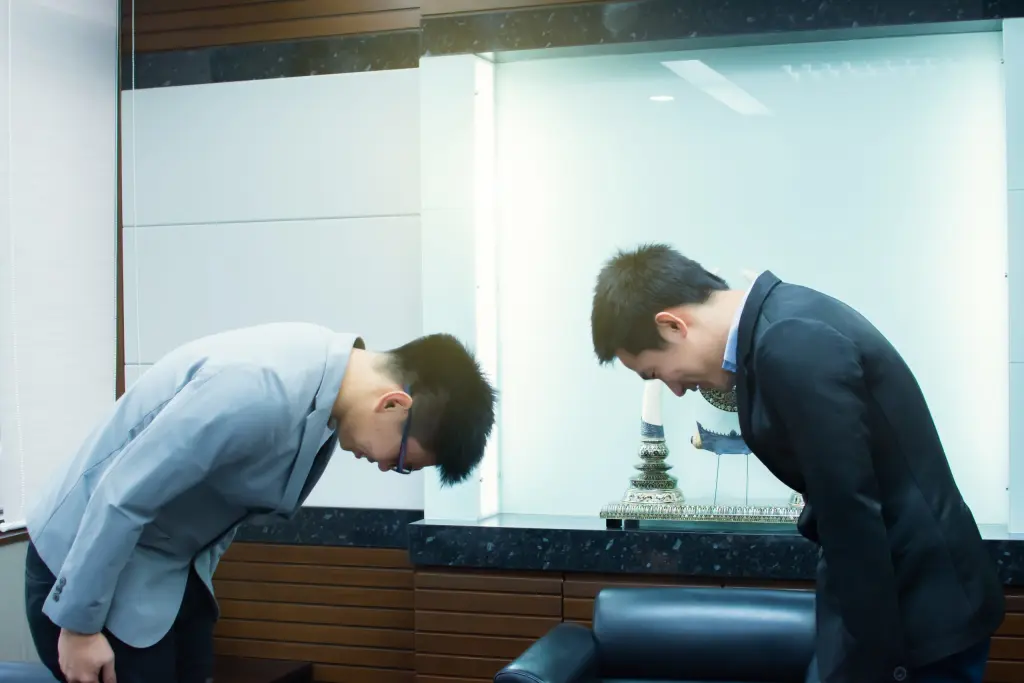
Photo credit: Shutterstock
Some markets in Asia also require founders to be more “street smart,” as Kim puts it. That’s due to the concept of Guanxi in China and some Southeast Asian countries where Confucianism has a strong cultural presence.
“In these markets, there is a kind of inner circle that’s based on trust, and this can affect business a lot,” says Kim.
In these cases, founders looking to expand may need to establish strong personal connections with potential partners before any sort of business-related steps can be made.
In doing so, founders can establish that they’re willing to help partners on a deeper, personal level, rather than only being obligated by business contracts. Naturally, this leads to stronger trust and a smoother working process when expanding.
“This way of doing things can be seen as less transparent, which may cause you some trouble if you’re not used to it. However, the benefits might be worth the effort,” Kim shares.
“It’s all about weighing out the pros and cons.”
B-Tier: finding the right intermediary
On the topic of trust, even knowing the right steps to take may sometimes not be enough. Additionally, having a strong track record in your home market may not be as helpful as some founders might think.
“Even if you have 10,000 customers in Korea, it doesn’t mean anything in a new market. You can claim that your service is good, but locals have to test it first too,” Kim says.
That’s where intermediaries come in – instead of having to slowly and painstakingly build trust with a large market, foreign startups should look for intermediaries to vouch for them and introduce them to the right local partners.

Photo credit: Shutterstock
“Without them, it can take five times as long to build trust as compared to your home market,” says Kim. “If you miscalculate this, you may delay your business expansion longer than expected and you could lose your foothold in that market entirely.”
Gangnam Unni, again, did this part right. It acquired Lucmo – a Japanese platform that lets consumers share post-cosmetic surgery photos and reviews – so that it could connect with domestic clinics, and then appointed an executive with extensive experience in the beauty sector to lead Gangnam Unni’s Japanese operations. The firm ultimately got 1,000 Japanese hospitals to register on the app, along with 900,000 users.
C-Tier: establishing trust with partners
It’s important for each side (the intermediary and the expanding startup) to establish a strong relationship because there’s a lot at stake – if one or both sides make a mistake, they could lose their connection and trust with local partners just as quickly as they got it.
One advice that Kim has for founders is to meet often with both intermediaries and local partners.
“There are things you can only find out with your five senses, such as the person’s facial expressions, tone of voice, demeanor, and small gestures. This allows you to know whether the person is trustworthy or just pretending, which shortens the time it takes to build trust,” he points out.
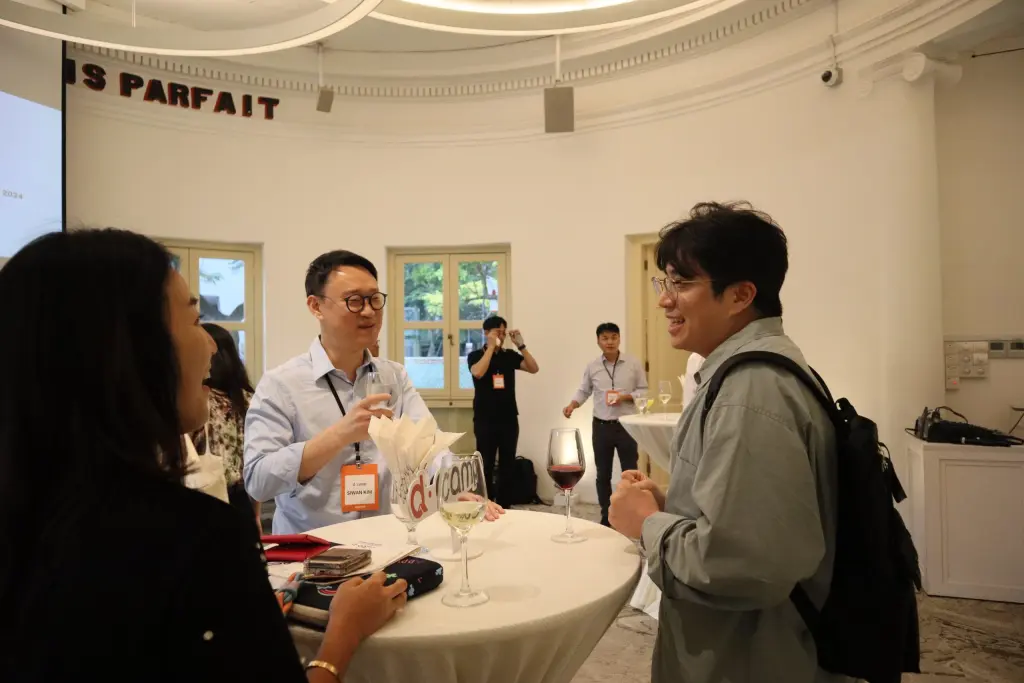
Photo credit: Dcamp
Jeon Jae-woong, CEO of South Korean metaverse platform Anipen, echoes this sentiment. He notes that when the firm was trying to expand to Japan, collaborative processes with partners often took “a long time” and required patience and endurance.
“There was a need for frequent face-to-face meetings to update each other and build trust, which necessitated frequent travel between Korea and Japan,” he shares.
Besides one-on-one meetings, another way to facilitate interactions with partners is through organized meetups. Dcamp, for example, hosts a series of startup community meetups called MokTalks, which are currently held on a monthly basis in Singapore and Tokyo.
“It’s all about creating a trusted network that can act as intermediaries for each other or even direct partners,” Kim says.
Laying a solid foundation
Overall, taking a look at these considerations in order should help give founders a clearer idea of what to prioritize when expanding to other countries in Asia.
That said, it’s also important to remember that all these factors need to be taken into account – otherwise, founders risk creating gaps in their expansion plans.
As a lot of the underlying conversation around these considerations surrounds trust, Kim believes that organizations like Dcamp – which have the know-how and connections – play an important role in helping startups foster said trust.
In the coming years, the organization plans to continue running regular MokTalks to construct a solid foundation and network for founders to tap into when expanding within the region.
“Ultimately, we hope that the level of trust within each market will get deeper through strong connections,” says Kim.
Established in 2013, Dcamp is Korea’s first-ever startup hub. It actively invests in early-stage startups and helps entrepreneurs realize their business goals. On May 16, it’s hosting a demo day event – called May Dday – in Tokyo as well as a MokTalk in conjunction with SusHi Tech, Japan’s largest startup festival. Sign up for the demo day here.
This content was produced by Tech in Asia Studios, which connects brands with Asia’s tech community. Learn more about partnering with Tech in Asia Studios.
Stay updated on the go with our mobile app.
Get latest insights with smoother, more personalized experience through TIA mobile app.
Recommended reads
 The event size dilemma: When to go big or small
 Where is Asia’s smart money going?
 $10b AUM – and Endowus is just warming up
 IJooz sees liquid gold in Japan
 Missing TIA Conference 2025 is a bad idea
 60/40 Podcast: The challenges of building a startup in Japan
 Toki’s short-lived pop culture party
 Cash-rich, action-lite Bukalapak
 60/40 Podcast: No such thing as a free lunch (or chocolate)
 We’re searching for Southeast Asia’s first CTO of the Year





Editing by Winston Zhang and Dhania Putri Sarahtika
(And yes, we’re serious about ethics and transparency. More information here.)




📅 Upcoming Events
22 October 2026
Payoneer x CSPN Summit 2026