Imran Khan · · 4 min read
How the travel industry in India is poised to grow by leaps and bounds


Photo credit: Kid Clutch
It’s difficult to think of an industry that the web has shaped faster or more dramatically than travel. The internet has made buying tickets, booking hotels, and figuring out what to do when you’re on a holiday an easy and instant process. Startups have gone from bootstrapping upstarts to behemoths dictating industry trends and human behavior. Booking.com, TripAdvisor, and Expedia have become household names globally.
China’s online travel industry has taken a swift turn, with Qunar launching their own airline. Chinese companies have also gotten involved in India’s rapidly growing travel market, with travel giant Ctrip investing US$180 million in India’s MakeMyTrip. India also has its own homegrown heroes in this space. Companies like ClearTrip have made a name for themselves in markets outside India.
Indian startup success stories have become more frequent in the last few years, and the government has been keen to support the growing community with programs such as Startup India. But travel in India is still a fairly untapped industry, and Lufthansa is keen to encourage new ideas in this space. Now hosting the fourth season of its Runway to Success program, Lufthansa is encouraging startups and small businesses to showcase their best ideas for the future of the Indian travel industry. In addition, along with The Indus Entrepreneurs, Lufthansa also hosted The Startup Expo, on April 23, as a one-day event for Indian startups and partners to participate, connect, and grow.
India’s online travel market keeps on growing
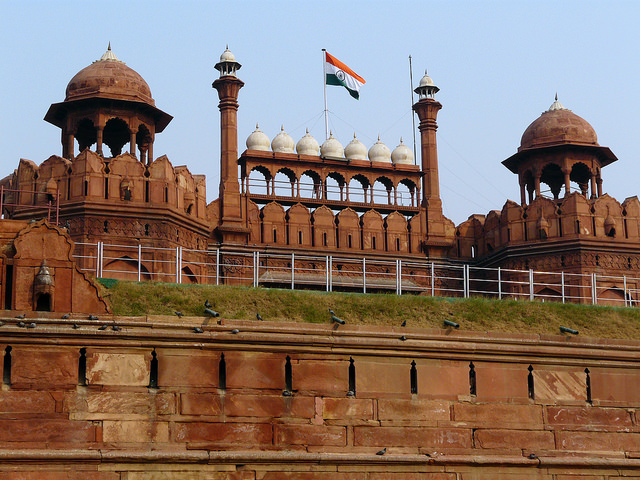
Photo credit: Partha S. Sahana
It’s easy to see why everybody is interested in India’s travel market. According to a report by Aranca, online travel is expected to grow by 17.8 percent from 2013 to 2016. The online bookings’ slice of the entire Indian travel booking market is also expanding, expected to make up 46 percent in 2017, up from 41 percent in 2014. Before the year 2020, over half the Indian market will be booking their next holiday online.
The push to get India and its rising middle class traveling is leading to a rapid growth in infrastructure as well. Budget hotels, new airports, new airlines, easing travel restrictions, everything is helping Indians travel both inside and outside the country. The travel industry is expected to be worth US$27.5 billion this year, up from US$19.7 billion in 2013, says the data from Aranca. The scope for growth is huge, as more people are brought online, and more technology is built and used by a mass audience.
Trust and great deals win customers

Photo credit: Anne Worner
Research shows that the Indian consumer’s path-to-purchase of anything travel-related online is driven by the best deals. 95 percent of consumers search online before making a purchase. While Indian users are willing to book travel tickets online, booking hotels and stays are still more of an offline habit. Trust is a key issue here, with consumers not fully happy with what they are promised online and what is actually delivered when it comes to hotels. It’s a problem startups like Oyo Rooms is looking to solve for Indian and international travelers alike.
But great deals are still a huge driver of India’s travel ecommerce. Over a third of travelers are willing to take an unplanned trip if given a good enough deal. And where do most of the travelers look for the best deals? Consider your own browsing habits. It’s very natural to open up multiple tabs in your desktop browser, each one logged into a different site, and curate the best possible deals from around the web. But app users are much more loyal.
In fact, mobile and social media are probably the best way to reach customers in the urban centers of India. With 136 million Facebook users in India, travel companies are beginning to use social media as their main communication driver when it comes to marketing to the Indian public, according to Himanshu Verma, CTO of Yatra.
It’s critical to note that all these elements are at play in a country that has an internet penetration of 30 percent. With Indians increasingly using smartphones in their daily lives, travel tech has to leverage the smaller screen for the Indian consumer. This brings with it its own challenges, but the speed and scope for growth is unparalleled globally.
The Startup Expo, powered by TiE and Lufthansa, is the first ever initiative in India to bring together an ecosystem to provide startups all the support they need to succeed. The unique one-day event on April 23, 2016 at The Epicentre, Gurgaon, brings together over 5,000 participants, 50 investors, 100 partners, 500 mentors. It gives Startups an opportunity to showcase their offerings, participate in workshops, benefit from mentorship, and access a valuable network of business experts, investors, VCs, accelerators, industry associations, service organizations, corporates and more. The Startup Expo is a collaborative effort to build a bridge to success for startups. It adds a new dimension to India’s largest SME platform, Runway to Success, a partnership between Lufthansa and TiE, that has benefited over 100,000 budding entrepreneurs over the past four years, with an aim to nurture them into future business leaders.
Stay updated on the go with our mobile app.
Get latest insights with smoother, more personalized experience through TIA mobile app.
Recommended reads
 🇮🇳 Roundup: GlobalBees buys fitness brand Reach, more
 Revolut to invest $45m in India, hire 300 employees
 Nykaa’s financial health in 5 charts
 Inside the tsunami of NFTs in India
 Hmlet’s not backing down without a fight
 Is JustCo Southeast Asia’s co-working unicorn?
 The rise of the Southeast Asian startup ecosystem
 Property startup 99 Group acquires Singapore Real Estate Exchange
 After his iProperty and Iflix exits, Patrick Grove starts new proptech venture in Malaysia
 Pinduoduo to outpace JD, Alibaba in GMV by 2024, says report





Editing by Malavika Velayanikal and Steven Millward
(And yes, we’re serious about ethics and transparency. More information here.)