Osman Husain · · 4 min read
KeepTruckin wants to digitize fleet management for the logistics industry
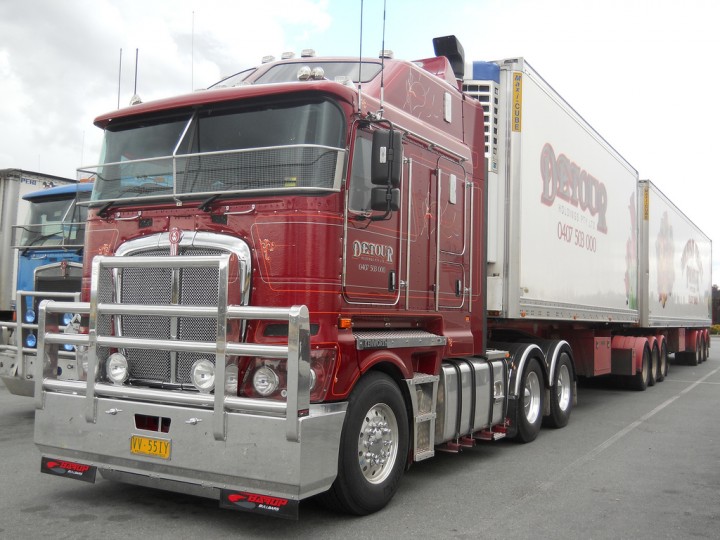
The US logistics and transportation industry in 2012 was estimated to be worth US$1.33 trillion, representing approximately 8.5 percent of the country’s gross domestic product. The sector’s growth is directly proportional to overall economic growth – there will always be a need to ship products to consumers. Despite its gargantuan size, the logistics and transportation industry has not undergone significant disruption – but slowly more entrepreneurs are realizing the enormous potential it holds.
Shoaib Makani, founder of enterprise startup KeepTruckin, joined Google straight after graduating from the London School of Economics. He was given the opportunity to work in product management and marketing for the Google checkout service, an initiative to have a Google-managed payment method within the web. While Makani describes the experience to work on a completely new product as “invaluable”, he explains that “entrepreneurship was always on my mind.” After a short stint at Google, he left for an opportunity to join mobile advertising startup Admob.
Makani worked at Admob for a few years and helped build the startup into a disruptive, technologically innovative firm. Admob was then acquired by Google, after which Makani found himself back at the company where he started his career. He proceeded to spend another year at Google, after which the entrepreneurial urge resurfaced.
Too good to refuse
However, whilst transitioning out of Google, Makani was approached to be part of Khosla Ventures – a venture capital firm investing in early stage disruptive tech startups. “It was a really interesting opportunity,” Makani tells Tech in Asia. “I couldn’t turn it down.”
During his time at Khosla Ventures, Makani says he got a broad, diverse perspective on a number of different industries. “I had the platform to evaluate and analyze companies across several markets,” he adds. “This helped me analyze where opportunities were, paving the way for my own entrepreneurial career.”
One of the verticals that Makani examined closely while at Khosla Ventures was the logistics and distribution industry. As he analyzed companies that were trying to disrupt this space, Makani realized there was an opportunity for him to carve out a niche. The specific problem lay in improving the efficiency of how freight was transported. Current processes were manual and labor-intensive, and firms had little opportunity to monitor and oversee drivers once on the road.
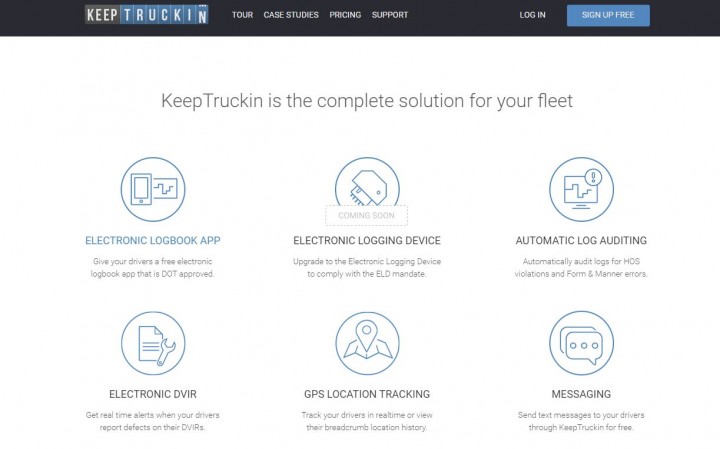
KeepTruckin is, essentially, an electronic logbook app for commercial vehicle drivers. Commercial drivers in the US are required by law to keep logs of hours driven and miles traversed. However, existing practices are paper-intensive, where ‘log books’ are maintained, with drivers manually clocking in and out. “Four million drivers do this on paper every single day,” says Makani. “To me it seemed obvious that this behavior should move to mobile.”
No looking back
In June 2013 Makani quit Khosla Ventures with this specific product vision in mind. He was able to raise US$2.2 million in a seed funding round led by Google Ventures and some other investors, which he used to hire a team and work on building the product. In December 2013, KeepTrucking launched iOS and Android apps that allowed drivers to record their logs electronically, whilst also maintaining remote communication with their fleet managers. Soon traction built around KeepTrucking; drivers loved the ease and comfort the service provided them and recommended the product to others. “Word of mouth helped in getting many early adopters,” says Makani.
While the basic electronic logbook app is free to use, KeepTruckin has a monetization strategy which revolves around complementary solutions for fleet managers. With these solutions, managers can communicate with drivers, view logs, and access detailed analytics pertaining to freight management. “Essentially we’re trying to bring efficiency and technology solutions to an industry that has been drastically underserved,” adds Makani. “The fact that most drivers still use paper is shocking.”





Stay updated on the go with our mobile app.
Get latest insights with smoother, more personalized experience through TIA mobile app.