 Eva Xiao · · 7 min read
How Alibaba, JD are expanding their empires offline by offering data to retailers

Image credit: Pexels.
One trillion dollars. That’s how much Chinese consumers are on track to spend online by the end of this year – about half of the ecommerce market worldwide. But in China, that’s less than a quarter of all retail sales. No wonder the country’s largest ecommerce giants, JD and Alibaba, are gunning for the brick-and-mortar sector.
Over the past year, both companies have ramped up efforts to expand their empires offline – without taking on the burden of owning and setting up physical shops around the country. For JD and Alibaba, the battle offline is about data.
“In China, we are ready for conversion of both [offline and online] – this is ‘new retail,'” said Stéphane Rinderknech, CEO of L’Oreal China, at a pre-Singles Day event organized by Alibaba on Tuesday. “It’s a collaboration around data, the data being the consumer.”
“New retail” has been Alibaba’s slogan all year, a catchphrase meant to emphasize the integration of online and offline retail. In a nutshell, it means tracking customers wherever they’re shopping – on their phone, in a physical outlet, or even via smart speaker. JD calls it “borderless retail.”
By following shoppers no matter where they are, Alibaba and JD aim to know China’s consumers – and what triggers them to buy – better than any company in the world.
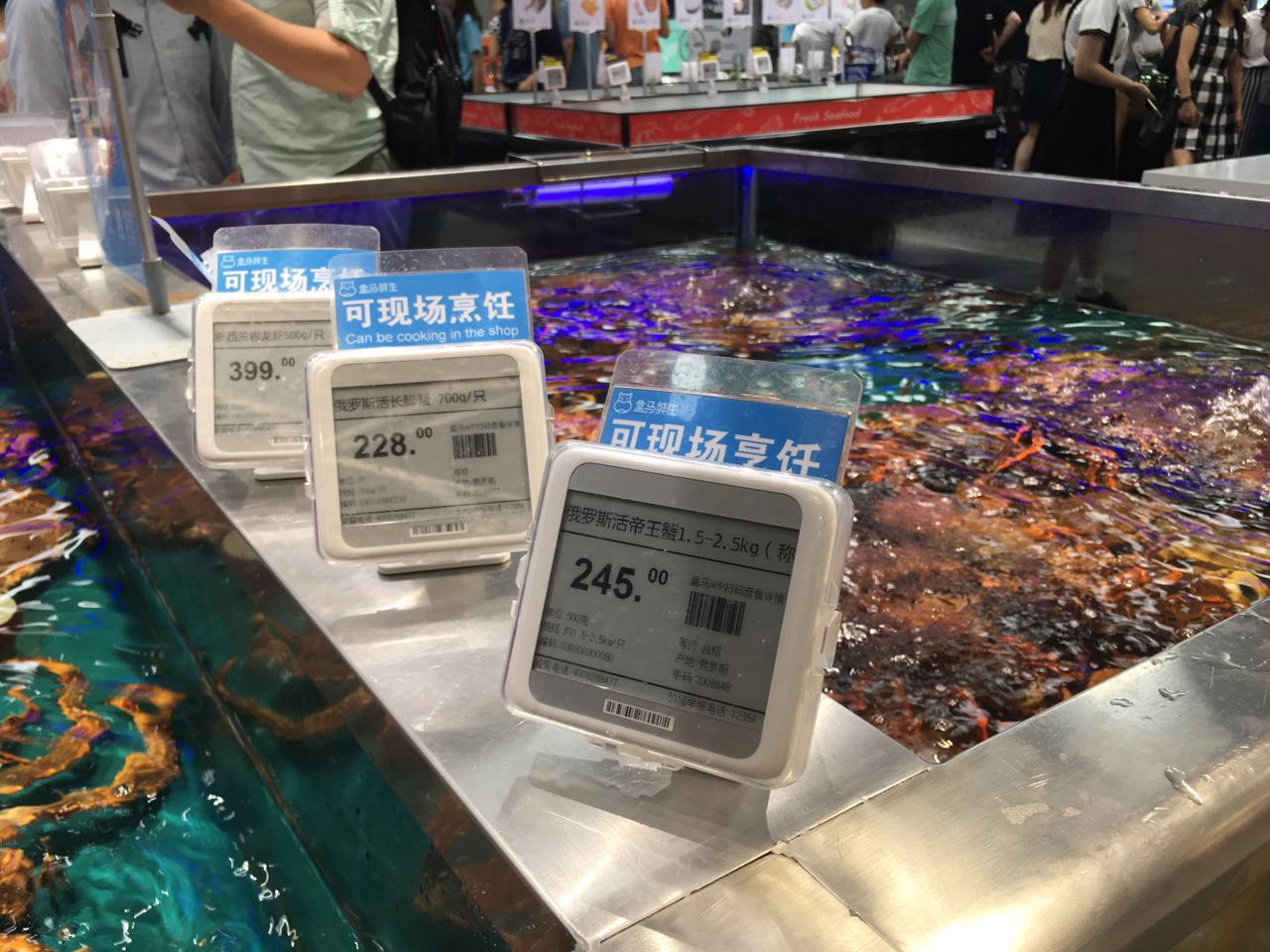
Alibaba’s grocery store Hema is supposed to epitomize “new retail” with both online and offline features: in-store dining and cooking, online delivery, mobile payments. Each Hema store is also a fulfillment center. Photo credit: Tech in Asia.
The traditional retail industry has seen its market share decline as consumers increasingly opt for shopping online. Last year, China’s largest shopping holiday Singles Day broke its record yet again, pulling in US$17.7 billion.
However, at the same time, overall growth in the ecommerce industry has steadily slowed since 2013. Chinese consumers are also growing savvier and more sophisticated, making physical experience centers and in-store service more important than ever.
Because JD and Alibaba are dominant, retailers don’t have a choice. If you’re not in it, you’re going to miss out.
To expand their role in the offline shopping experience and drive more sales, both JD and Alibaba are wooing brands with a variety of tech-driven services, including location-based inventory management, precision marketing, and even facial recognition-based payment systems. Winning over retailers will be paramount as data-sharing goes both ways – though to be fair, brands don’t have many alternatives.
“No retailer wants to be on another channel that they can’t control and forced into heavy marketing competition,” says Sicheng Peng, president of APAC for 7thonline, which helps apparel brands in China with inventory management and optimization analytics.
But in China, “because JD and Alibaba are dominant, retailers don’t have a choice,” he says. “If you’re not in it, you’re going to miss out.”
Retail as a service
Advertising or ecommerce?





Stay updated on the go with our mobile app.
Get latest insights with smoother, more personalized experience through TIA mobile app.








📅 Upcoming Events
22 October 2026
Payoneer x CSPN Summit 2026