Daniel Tay · · 5 min read
As this Russian startup found out, moving to a tropical paradise isn’t as easy as it sounds
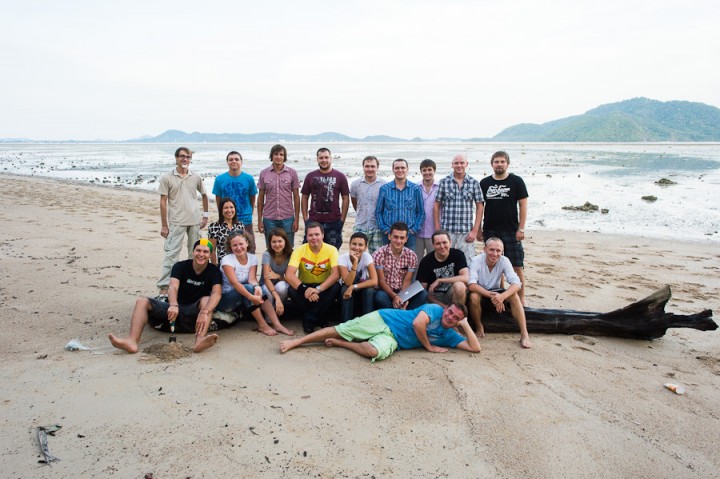
Competition for talent has always been hot among big companies, but with the rise of nimble startups and their killer perks, it has reached a level like never seen before. In this new world, salary has become secondary – employees want ping pong tables, remote working arrangements, and rock climbing walls instead. Those who offer the best perks naturally get the best employees.
Still, it might seem a little far-fetched for a startup to move halfway across the world just to attract talent. Apparently, this is exactly what travel search engine JetRadar’s founder Konstantin Kalinov had in mind when he uprooted himself and five other employees from St. Petersburg – the second largest city in Russia – and relocated to the beach paradise of Phuket, Thailand.
“Basically, we wanted to go somewhere interesting and amazing for a working place. That gave us a great advantage in our homeland headhunting market. We got the best employees we could possibly have, because they all wanted to live and work in a real paradise – jungles, beaches, sea, and so on,” explains CEO Max Kraynov.
It’s quite a paradise, too. Google, eat your heart out:
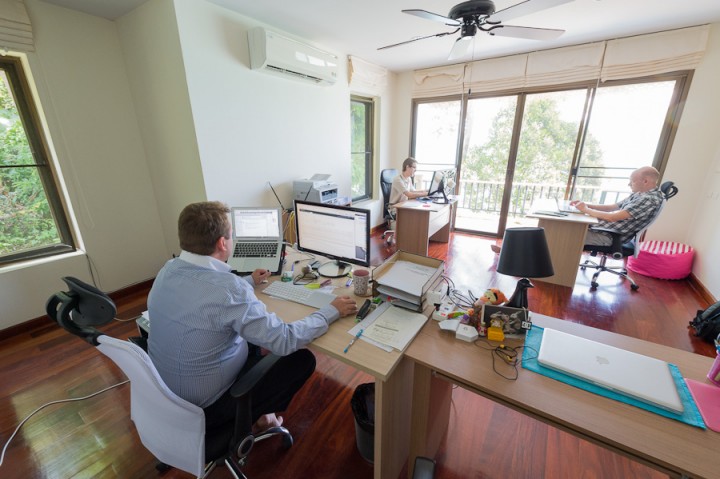
Inside, it looks like any normal startup office. But outside…

Pool party! No, just work as per usual.
Of course, they were able to do this thanks in large part to the US$10 million that they had raised earlier this year.
Another reason why they decided to come to Thailand was because it did not have any online travel search platforms at that time, as compared to Russia, where JetRadar faced competitors such as Skyscanner, Kayak, and Momondo. “We found it interesting, since Thais are actually much more experienced in the online space than Russian customers,” says Kraynov.
Many problems to overcome
In exchange for having the sun, sand, and sea at their doorstep, however, they had to tackle a host of accompanying problems that foreign companies typically face when operating out of Thailand.
The first hurdle they had to cross was in staying on the right side of the law. “There are strict requirements for the number of foreign employees and its ratio to local ones, as well for foreign investment capital and general ownership share,” Kraynov explains. “This slowed down the migration process, and made it really complicated.”





Stay updated on the go with our mobile app.
Get latest insights with smoother, more personalized experience through TIA mobile app.