Seed Planning, a market research and consulting firm, recently released a report projecting massive growth in Japan’s smartphone gaming market. In short, the report forecasts 30-fold market growth from 2010 to 2015. Specifically, this is an increase from 8.5 billion yen (approx. US$110 million) in 2010 to an expected 255 billion yen (approx. $3.3 billion) in 2015.
The research firm’s report breaks down the 2015 market revenue generated by ads, and by revenue generated from user’s purchases. User purchases will account for the majority of the market size, roughly 11 times more than ad revenue. This ratio is not substantially different from what Japanese gaming giant DeNA currently experiences.
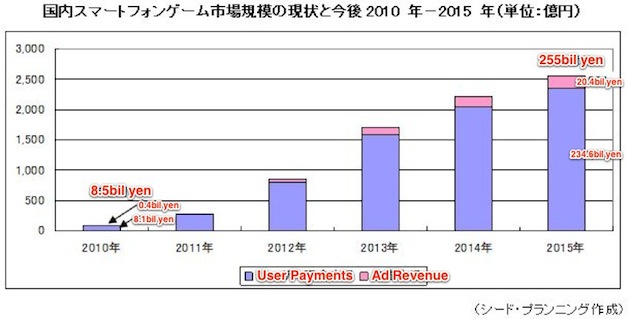
Japan's expected smartphone gaming growth from 2010 to 2015
What I find most interesting about Seed Planning’s projections is that market growth and smartphone growth are not proportional. By the end of fiscal year 2010 approximately 7.5 million smartphones had been sold in Japan. For those wondering, the breakdown was 2.5 million from NTT Docomo, 1.1 million from KDDI, and approximately 3.9 million iPhones. Seed planning expects 76 million smartphone users by 2015. This figure is in line with other reputable companies’ projections, and means that from 2010 to 2015 there will be a 10-times increase in smartphone usage.
If during the same six-year period smartphone users increase 10-fold but the smartphone gaming market increases 30-fold, the question that begs to be answered is why?
Unfortunately, Seed Planning does not directly answer this question. At least not in its teaser report. The company does however give some interesting insight on the affect of smartphones on console gaming. 44 percent of polled smartphone users claimed to have lessened their console gaming or stopped all together. This suggests that smartphone gaming will act as a replacement for not just how console gamers spend their time, but also how they spend their money.
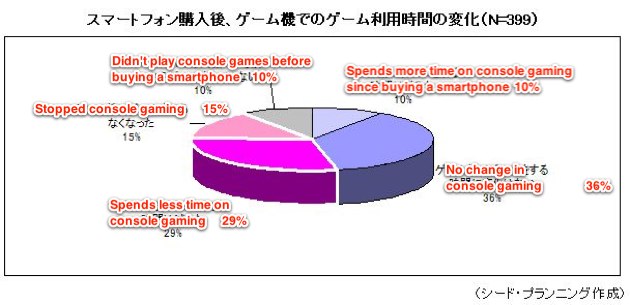
How console gaming use has changed by those who bought smartphones
What is unsaid by the research company – but I suspect to be a reason for such large market growth – is that the 2010 market size is smaller than it could have been. Japan’s key players, DeNA and Gree, only recently released smartphone versions of their game platforms. So while there were millions of smartphone users in 2010, their gaming options were limited. Not that expected growth from now to 2015 isn’t impressive or inaccurate, but the 30-fold figure should be taken with a pinch of salt since usage in 2010 was somewhat stunted.
[Source: Seed Planning]





Stay updated on the go with our mobile app.
Get latest insights with smoother, more personalized experience through TIA mobile app.










📅 Upcoming Events
22 October 2026
Payoneer x CSPN Summit 2026