- Premium Content It takes our newsroom weeks - if not months - to investigate and produce stories for our premium content. You can’t find them anywhere else.
 Putra Muskita · · 5 min read
He’s planning to disrupt logistics in Southeast Asia – without owning a single van
Ecommerce logistics is becoming big business in Southeast Asia, but in early 2018, Ng Jun Kai noticed a gap. Last-mile players like Ninja Van were raising high funding rounds, but no one was focusing specifically on cross-border logistics.
Instead, merchants relied on incumbents like DHL and FedEx. But these companies typically employ full-time delivery men and own fixed assets, which drive up prices.
The cost of logistics “is about 30 to 40 percent of your entire average order value (AOV),” says Ng, the CEO and co-founder of logistics startup Janio. “The unit economics don’t make sense.”
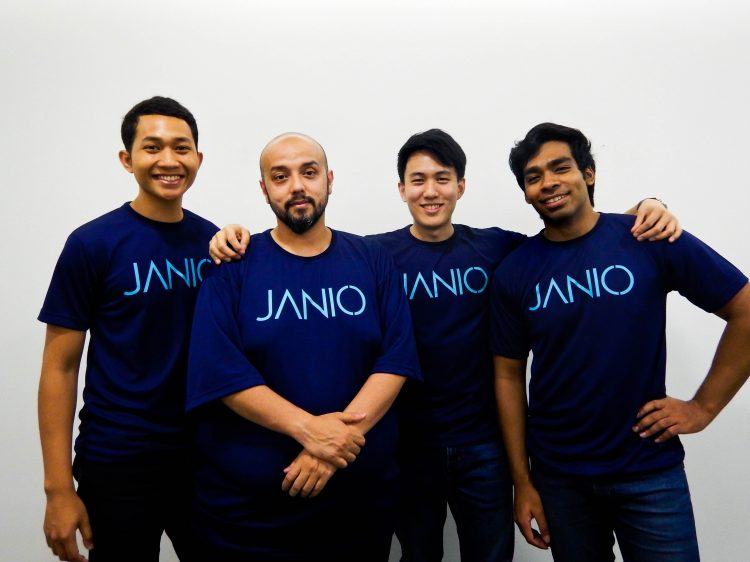
Janio’s founders (L-R): technology boss Mohamed Afiq, chief operating officer Syed Ali Reza Madihid, CEO Ng Jun Kai, and marketing head Nathaniel Yim / Photo credit: Janio
The key, as the Janio team found, is an asset-light model. Instead of purchasing warehouses, vans, or trucks, the startup would create a platform for merchants to access services from its partners – logistics players around Southeast Asia.
While it’s still early days – Janio was founded in March 2018 – volume has picked up. The company currently counts fashion startup Zilingo and US athletic brand Under Armour as customers.
Why going local works
From the customers’ standpoint, there isn’t much difference between Janio and the likes of DHL or FedEx: they can go to Janio and expect end-to-end logistics solutions. But unlike the incumbents, the newcomer operates like a middleman.
Janio looks at the supply chain at every stage – anything from first-mile to last-mile – and curates the best logistics partners for every phase. Then, it matches its customers (merchants, marketplaces, and brands) with these partners.
The startup works with many local partners. In Indonesia, for example, Janio’s partners include established service providers like JNE, SAP Express, and Wahana. Most of these local players have zero overseas presence, and using the platform gives customers access they otherwise don’t have.
Working with local partners also helps with the cost structure, allowing Janio to price themselves very competitively compared to what the incumbents charge. Local players tend to charge lower prices to begin with, and customers can save on handling fees or other hidden costs that incumbents often include in their end-to-end pricing.
Initially, Janio targeted small and medium-sized enterprises. There’s no minimum volume requirement, says Ng, though the startup has since built up capacity to handle larger volumes.
Janio curates partners based on not just capacity and capabilities, but also on performance and service-level agreements (SLAs), which gives the company flexibility and better service from providers.
Customers can also tap into partners’ local know-how. For instance, postal codes in Indonesia are generally unreliable, and there are even parts of Jakarta where street and house numbers are not in order.
Another important advantage is payment methods. “In Indonesia, 70 percent of ecommerce transactions are still done through cash on delivery (COD). Some service providers handle COD, some don’t,” says Ng.
The five-year goal
Stay ahead in Asia’s tech landscape
This is premium content. Subscribe to read the full story.
Janio makes cross-border logistics more efficient by using an asset-light model.
We know this is not ideal. ⌛ Sign up in 20 seconds. Cancel anytime.
Our subscriber community includes professionals from these companies:





Stay updated on the go with our mobile app.
Get latest insights with smoother, more personalized experience through TIA mobile app.









📅 Upcoming Events
22 October 2026
Payoneer x CSPN Summit 2026