Paul Bischoff · · 4 min read
5 Reasons Alibaba’s Smart TV Shopping Platform Won’t Work
Yesterday, Alibaba revealed it has made a smart TV OS that will later appear on various smart TVs and it’ll also launch an internet TV set-top box. They all come with Alibaba’s custom-made OS, Xiami music service, online bill payments, and online shopping. At the press conference in Beijing, speakers pitched the shopping feature hard, but after watching the demo in the room, I’m not convinced. Here are five reasons why.
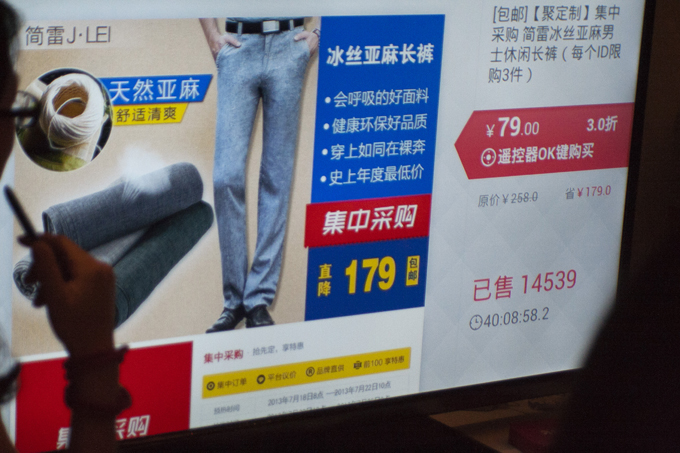
A demo of Alibaba’s Smart TV shopping platform from Tuesday’s press event.
1. No Taobao
At launch, the various brand of TVs and the Wasu Rainbow set-top box (the hardware is made by Wasu Media) will not be able to shop on China’s most popular e-commerce site, Taobao, or its sister site, Tmall. Even though Alibaba owns both of those entities, it has elected to use its lesser-known daily deals website Juhuasuan as a guinea pig. Alibaba says shopping on Taobao is in the works, but it gave no time period for when that might happen. Until then, convincing would-be early adopters to shop on a website they might have never heard of will be a difficult selling point.
2. No keyboard
Unless Alibaba’s smart TV OS integrates speech recognition, online shopping necessitates a keyboard, either physical or on a touch screen. What’s the point of shopping if I can’t type in what I’m looking for? Instead, the Wasu Rainbow comes with a simple remote that looks similar to what you get with Xiaomi’s set-top box. Also like Xiaomi, they do offer an app that allows users to control Rainbow with their smartphone. The app has a keyboard, but at that point, why wouldn’t you use your phone to instead shop at a website you actually buy things from? It’s not clear if the smart TVs that’ll launch in Q4 will have a keyboard.
3. No selection
Instead of allowing you to search for products, Alibaba’s Juhuasuan chooses which items it thinks you should buy and allows you to browse. So even if you have a keyboard, you can’t search for whatever you want. First off, that’s pretty presumptive of Alibaba. Secondly, it cuts out your ability to do comparison shopping for alternatives, which is one of the most effective parts about shopping online.
4. No demand
So let’s say Alibaba either figures out how to solve the above problems, or I’m wrong and they just don’t bother customers that much. I still have to wonder where the demand is coming from. Shopping from a laptop, tablet, and smartphone are all already pretty convenient. Most people are pretty comfortable with how they shop online and don’t need to set up their accounts on yet another device. At Alibaba’s press event, they pointed out PCs and mobile devices might be too complicated for the very young and very old, and Wasu Rainbow and the smart TVs running Aibaba’s OS will simplify the process. That’s a weak argument. Let’s face it; old people aren’t going to buy very many Wasu Rainbows. And kids who don’t know how to use a computer yet probably shouldn’t be able to spend their parents’ money online, anyway.
5. No point
The internet is an interactive experience. TV is one-way, from broadcaster to viewer. A web TV box should repackage content from the internet into a TV-like experience. Audiences still crave the passive, one-way, audio-visual entertainment that TV provides. That’s the whole point of web TV boxes existing. When Alibaba added an interactive shopping platform, they diluted the purpose of smart TVs as a whole. If I want an all-in-one digital device, I buy a smartphone or a PC. But TV serves a different purpose. It’s like selling a hammer with an FM radio in the handle.
In conclusion…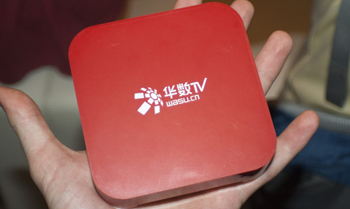
I don’t think the shopping platform will make or break Alibaba’s smart TV offerings. Its overall success depends on whether or not it can beat out strong rivals like LeTV and Xiaomi in price and content. The integration of Xiami‘s music service – which was acquired by Alibaba at the start of this year – is also a definite plus. The added value to the set-top box and smart TVs from shopping, however, is no more than a gimmick. It’s poorly implemented and it just doesn’t fit. What do you think? Would you buy into Alibaba’s smart TV OS? And would you shop from your TV?
(Editing by Steven Millward)





Stay updated on the go with our mobile app.
Get latest insights with smoother, more personalized experience through TIA mobile app.