Rebecca Liew · · 5 min read
How this company is capturing India’s nascent data center market

Up until now, Singapore had been viewed as the gateway for connectivity and cloud computing solutions in Asia, thanks to its stable political and business climate and well-situated location within the region that keeps it safe from natural disasters.
But the land-starved country’s 60 data centers are fast running out of storage space – and nothing can be done about it. At least, not for now.
Last year, the local government issued a moratorium on the construction of data centers amid sustainability and land shortage concerns in line with its commitment to the Paris Climate Agreement, which 196 other countries are party to. Through the treaty, governments work to reduce their respective countries’ carbon emissions.
“For data center companies, one hurdle is finding ways to expand to locations that our customers want us to be. The other challenge lies in expanding sustainably while coping with the demand for more data center solutions,” says Michael Goh, general manager of Iron Mountain Data Centers (IMDC) in APAC, a global provider of data center and colocation services.

Michael Goh, general manager at Iron Mountain Data Centers in APAC. / Photo credit: Iron Mountain
A solution would naturally be tapping into a resource-rich country – and one whose market holds potential for growth. For IMDC, the answer was simple: populous India. The country has a 1.35 billion-strong population, making it the world’s second largest after China. It also holds claim to having the world’s second largest telco market worth an estimated US$9.09 billion, in large part expedited by the Covid-19 pandemic, which saw more mobile data users from India’s urban and rural parts coming online in the past year.
Untapped potential
“India is one of the world’s most capacity-hungry data center markets,” notes Goh. “Despite having one of the largest telco markets globally, the country still draws a lot of its IT infrastructure needs from Singapore.”
India’s untapped potential was something that IMDC had been prescient about from as early as 2019, when the firm expanded into Asia through its Singapore site. Over the next two years, Goh and many senior executives from Iron Mountain – including Mark Kidd, executive vice president and general manager for IMDC – made multiple trips to India for talks with local colocation providers to develop a sound strategy for entering the market.
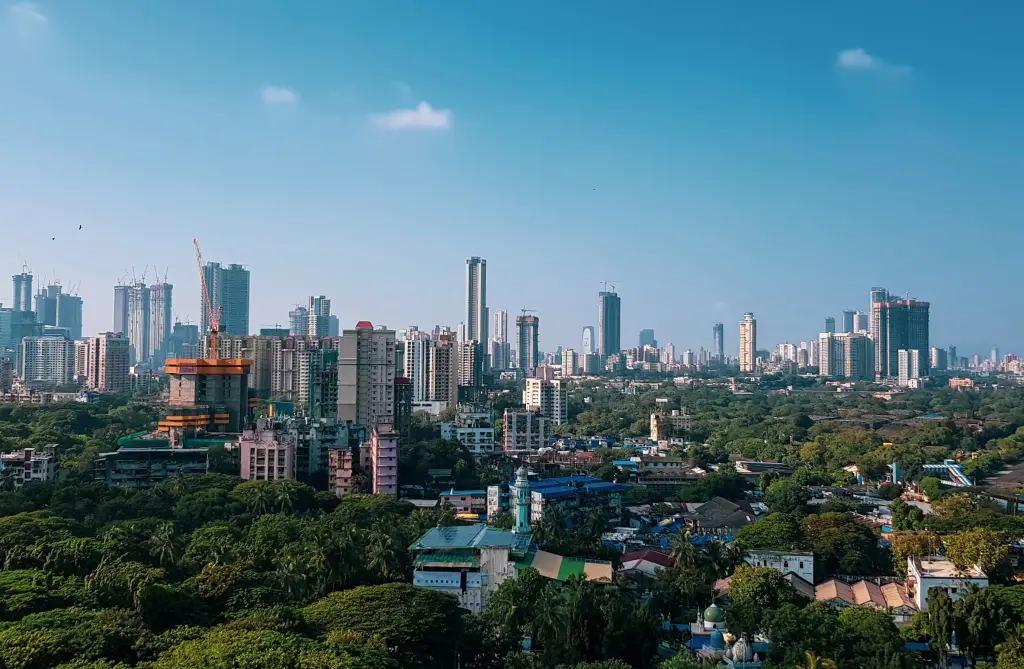
IMDC’s joint venture agreement with India’s Web Werks covers the cities of Mumbai (above), Pune, and the National Capital Region (NCR). / Photo credit: Hardik Joshi via Unsplash
This was fueled by the strong demand from IMDC customers who were looking to enter India’s data center market – a fact backed by independent consulting and research group Structure Research, which estimates that large and emerging markets in the Asia-Pacific region will account for half of the world’s colocation market by 2025.
In February this year, IMDC entered a joint venture agreement with India’s Web Werks, a well-established Indian colocation provider with a presence in the cities of Mumbai, Pune, and the National Capital Region (NCR), which covers Delhi and its surrounding states including Haryana and Uttar Pradesh.
With the joint venture, IMDC’s customers would now be able to draw on Web Werks’ existing data centers that are powered entirely by renewable sources, as well as build on both companies’ shared pool of resources to grow IMDC’s presence in India.
“Web Werks was founded by two brothers who bootstrapped the business from scratch in 1996,” Goh shares. “What appealed to us was their knowledge of the country’s regulatory landscape, data center ecosystem, and the wider telco market.”
These – together with both companies’ shared vision of expanding into the rest of the pan-Indian region – had a hand in the joint venture, which will see IMDC investing US$150 million in Web Werks over two years as the colocation provider moves into the cities of Bangalore, Hyderabad, and Chennai.
A stage for change
Admittedly, India’s data center industry is in its nascent stages . The country still lacks the infrastructure to cope with the demand from its 688 million internet users that Netflix had to lower the streaming quality of its content amid the pandemic to lighten the load on India’s congested networks.
While this may sound like an insurmountable and expensive hurdle to overcome, Goh remains “very bullish” about India’s data center industry.
“The barriers to entry for securing renewable [sources] such as solar farms in India are generally low, so it makes economic sense to use clean energy. This falls in line with our vision of using only renewable energy to power our data centers,” IMDC’s senior director says.

With IMDC’s expansion into India, the load has been lightened for the company’s Singapore data center (above). / Photo credit: Iron Mountain
The joint venture also comes at an opportune time. Last year, the Indian government passed data sovereignty laws stipulating that companies would now have to store certain kinds of data in physical data centers in India as opposed to overseas. With the mandate in place, Goh believes more data centers will soon emerge – which would mean more investments in the country.
Sustainable growth is key
This certainly translates to more competition from large data center players, as in the case of Equinix’s US$161 million acquisition of India’s GPX Global Systems last August.
Where IMDC differentiates itself, however, is through its focus on seeking out local talent and expertise in order to create tailored hyperlocal solutions for its customers.
“We’re an established and long-standing brand, working with an equally established local player that understands India’s unique landscape,” Goh says, adding that the agreement will allow both companies to share their respective operational expertise, as well as the best methods for building and growing IMDC’s local presence. This might include building more solar plants and wind farms and ensuring that its data centers remain sustainable through energy-efficient cooling systems and a reliance on clean energy.
IMDC’s continued focus on sustainability is something that the wider data center industry is slowly turning to, as users grow more conscious of how their online activities could impact the environment.
“We’re seeing more customers colocating their IT infrastructure in sustainable data centers,” says Goh. “This demand will only gain more traction, greening the grid with renewable sourced power as it expands.”
Iron Mountain Data Centers (IMDC) is a global data center platform that currently serves 18 data centers in three continents. Find out more about how its sustainable practices are changing the data industry by visiting the IMDC website.
This content was produced by Tech in Asia Studios, which connects brands with Asia’s tech community. Learn more about partnering with Tech in Asia Studios.
Stay updated on the go with our mobile app.
Get latest insights with smoother, more personalized experience through TIA mobile app.
Recommended reads
 Indonesian AI startup goes global
 Forrest Li on scaling Sea, building smarter bots, and founder grit
 An AI assistant that joins sales calls and scores team skills
 SGX’s CEO says it doesn’t need a unicorn to win
 SMEs want AI too, but not the kind Big Tech is selling
 Oatside’s alt-milk rise hits a profitable gear
 Alibaba’s financial health in 12 charts
 Asia’s telcos bundle AI into mobile plans. Will it pay off?
 M-Daq chases bigger clients as revenue falls, losses grow
 VC tracker: Accel raises US$3.5b, including US$550m for India





Editing by Nathaniel Fetalvero and September Grace Mahino
(And yes, we’re serious about ethics and transparency. More information here.)